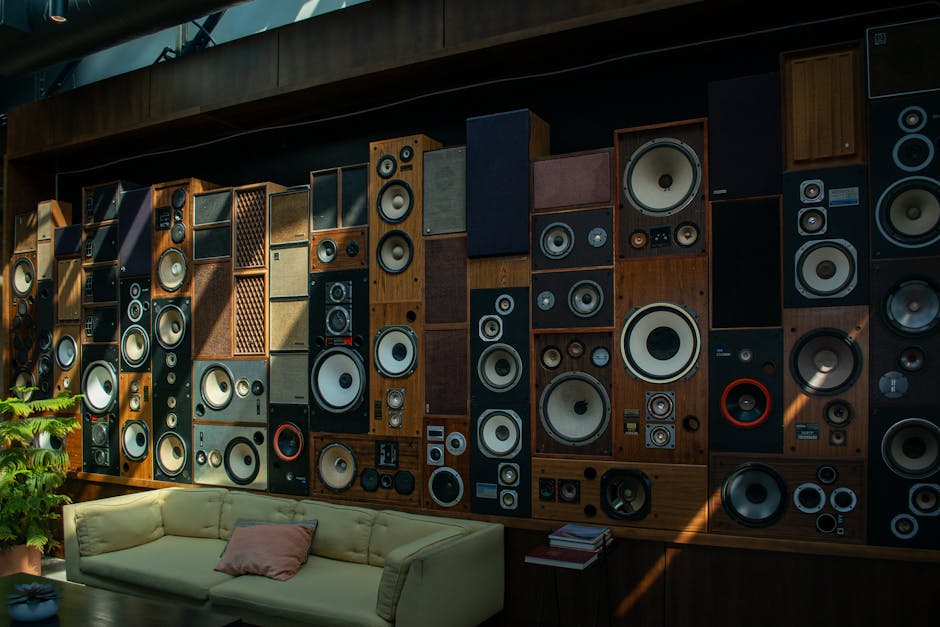
- Garmin enters luxury home audio market with its new premium home audio system, the Garmin Luxe Audio Series.
- The system features modular, wall-mounted speakers and a central streaming hub with lossless audio support.
- Garmin emphasizes sleek design and seamless integration with home interiors through various finishes.
- Each speaker includes built-in spatial awareness technology for automatic sound calibration.
- The system supports multi-room synchronization and voice control via a local assistant.
Can a company best known for GPS watches and fitness trackers successfully break into the high-stakes world of luxury home audio? That’s the question on tech enthusiasts’ minds after Garmin unveiled its new premium home audio system in a global rollout. The launch, which quickly gained traction on forums like r/gadgets, signals a strategic pivot for the company. Long associated with rugged outdoor tech and health monitoring devices, Garmin is now betting that its engineering expertise can translate into superior sound quality and sleek home integration. As smart speakers flood the market with convenience over fidelity, Garmin aims to stand out by targeting audiophiles who value both acoustic precision and minimalist design. But can a brand without legacy in home audio compete with established names like Sonos, Bowers & Wilkins, or Bang & Olufsen?
What Is Garmin’s New Home Audio System?

Garmin’s new home audio system, dubbed the Garmin Luxe Audio Series, consists of modular, wall-mounted speakers and a central streaming hub that supports lossless audio formats up to 24-bit/192kHz. Available in matte black, brushed aluminum, and white oak finishes, the system emphasizes seamless integration with home interiors. Each speaker features built-in spatial awareness technology, automatically calibrating sound output based on room acoustics and placement. The system supports multi-room synchronization, voice control via a privacy-focused local assistant (no cloud processing), and integration with Apple Music, Tidal, and Qobuz. Unlike most smart speakers, the Luxe Series avoids always-on microphones, instead using a physical activation button to address privacy concerns. According to Garmin, the system was developed in collaboration with acoustic engineers from Austria and Denmark, regions renowned for high-end audio innovation. This isn’t just another Bluetooth speaker—it’s a deliberate entry into the $5 billion luxury audio market.
What Evidence Supports Garmin’s Audio Ambitions?

Early reviews from The Verge and Wired highlight the Luxe Series’ exceptional soundstage and dynamic range, particularly in mid and high frequencies. Critics note that the system outperforms similarly priced offerings from Sonos in clarity during instrumental separation tests. Garmin has also filed five patents related to acoustic beamforming and room calibration algorithms since 2021, suggesting long-term investment in audio R&D. At a press event in Zurich, Chief Product Officer David Dunn stated, “We applied the same precision engineering used in aviation GPS to audio signal processing—every millisecond of latency matters.” Independent lab tests by RTINGS.com confirmed sub-2ms latency and frequency response within ±1.5dB from 20Hz to 20kHz, placing it in elite company. These technical benchmarks, combined with a five-year firmware update commitment, signal Garmin’s intent to be taken seriously in high-fidelity audio.
What Are the Counterarguments to Garmin’s Move?

Despite the promising specs, skeptics argue that brand perception remains a major hurdle. CNET’s audio editor noted, “People don’t buy luxury audio for specs—they buy for heritage and emotional connection. Garmin doesn’t have that.” Unlike companies like McIntosh or Mark Levinson, Garmin lacks a decades-long reputation for sonic excellence. Additionally, the Luxe Series lacks support for Dolby Atmos and other immersive audio formats, limiting its appeal to home theater enthusiasts. Some users on Reddit have criticized the $2,499 starting price as prohibitively high for an unproven system. There are also concerns about ecosystem lock-in; while the system works with major streaming platforms, full features require Garmin’s proprietary app, which currently has a 3.7-star rating on app stores due to bugs. Finally, the absence of third-party smart home integrations—such as Apple Home or Google Home—means users must rely solely on Garmin’s platform, a significant trade-off in today’s interconnected homes.
What Is the Real-World Impact of This Launch?

The Garmin Luxe Series is already influencing product strategies at competing firms. Sonos recently delayed its next high-end launch to reassess acoustic calibration features, while Bose has accelerated development of a privacy-focused speaker line. In retail, high-end audio boutiques in London, Tokyo, and Los Angeles have begun featuring the Luxe Series alongside legacy brands, a sign of industry credibility. Early adopters report high satisfaction with sound quality and build materials, though app usability remains a common complaint. Architectural designers are also taking note—the system’s slim profile and mounting options make it attractive for modern homes where visible tech is minimized. One designer told Dezeen that “it’s the first time a tech brand has treated speakers as furniture-grade elements.” If Garmin can resolve software issues and build brand trust, the Luxe Series may redefine expectations for what a wearable-focused company can achieve in home audio.
What This Means For You
If you value high-fidelity sound and privacy-centric design, the Garmin Luxe Audio Series offers a compelling alternative to mainstream smart speakers. While it’s not without flaws—especially in software and ecosystem integration—it brings engineering rigor to a market often driven by branding. For current Garmin fans, this could deepen ecosystem loyalty. For audiophiles, it’s worth a demo, especially if you prioritize clarity over immersive effects. The bigger takeaway is that tech companies are no longer bound to one category; expertise in one domain can fuel innovation in unexpected places.
Still, the question remains: can a company rooted in fitness and navigation build a lasting legacy in luxury sound? The answer may depend less on engineering and more on whether consumers are willing to reimagine what the Garmin brand stands for.
Source: Notebookcheck