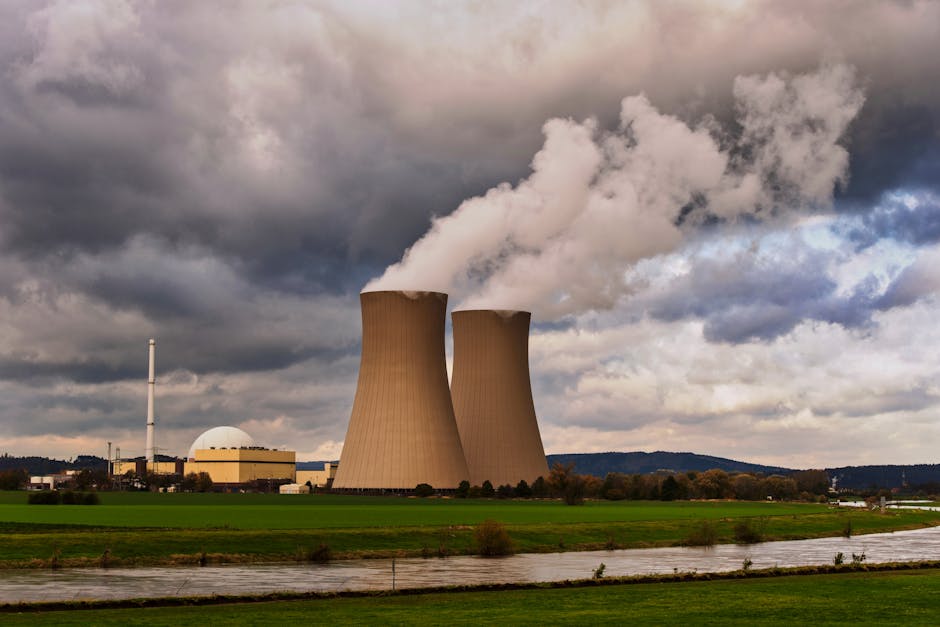
- The 1954 New York City sprinkler incident highlights the widespread, unforeseen consequences of early hydrogen bomb testing.
- Nuclear testing in the 1950s resulted in radioactive contamination of rainfall, milk, and even human bone marrow globally.
- Sarah Chen’s ‘Clouds of Contamination’ details how scientists rapidly recognized the dangers of nuclear fallout.
- The book examines the delayed policy response to the identified health risks posed by radioactive contamination.
- New science writing focuses on the complex intersection of scientific discovery, ethical considerations, and public understanding.
It was a morning like any other in 1954 when children in New York City played under sprinklers fed by rooftop tanks—unaware that the water cascading over them had been tainted by radioactive isotopes from a hydrogen bomb test half a world away. This haunting image, resurrected in one of the year’s most compelling science books, captures the eerie intersection of human progress and unintended consequence. In dim government laboratories and remote Pacific atolls, the atomic age left traces not just in geopolitics but in rainfall, milk, and bone marrow. Now, a new generation of science writers is revisiting these moments—not just to explain the physics, but to illuminate the fragile, often flawed, process of discovery. These narratives do more than recount facts; they expose the tension between scientific rigor and public perception, between theoretical brilliance and ethical responsibility.
Radioactive Rain and the Fallout of Progress

In Clouds of Contamination: Science and Society in the Atomic Age, historian Sarah Chen reconstructs how nuclear testing altered the planet’s chemistry in real time. When the Castle Bravo test at Bikini Atoll released unexpectedly high levels of strontium-90 and cesium-137 into the atmosphere, those particles traveled globally, condensing into rain and infiltrating food chains. What’s startling is how quickly scientists identified the threat—yet how slowly policy responded. Chen draws on declassified meteorological reports and personal letters from geophysicists who tracked fallout plumes across continents. Their work, published in journals like Nature and Science, revealed that even rain in Central Park contained measurable radioactivity. One study, cited in the book, found that milk in Chicago had strontium levels 50 times above pre-bomb norms. Despite this, public warnings were muted, caught in Cold War secrecy. The book shows that the real danger wasn’t just radiation—it was the lag between knowledge and action.
How Relativity Was Proved in the Amazon

The story of Einstein’s general theory of relativity hinges on a single eclipse in 1919, when Sir Arthur Eddington journeyed to Príncipe Island to measure the bending of starlight. But in Shadows of Light: The Relativity Expedition Revisited, physicist and writer Marcus Bell re-examines not just the science but the logistical chaos behind it. Equipment delays, tropical storms, and skeptical colleagues nearly derailed the mission. Bell argues that Eddington’s success was as much about persuasion as precision—he had to convince a war-weary scientific community that space itself could warp. The author traces how photographic plates taken under humid, uncertain conditions became icons of modern physics. Nature’s original coverage of the findings called it a “revolution in science,” but Bell reveals the quiet debates and statistical finessing that preceded that verdict. The expedition didn’t just prove relativity—it redefined how science gains consensus.
The People Behind the Proof

Robinson’s own curation highlights how individual obsession fuels scientific breakthroughs. In The Clockmaker’s Universe, he explores how amateur astronomers and overlooked technicians often laid the groundwork for major discoveries. One chapter focuses on Gladys Owens, a meteorologist at the U.S. Weather Bureau who first mapped the transcontinental spread of radioactive rain but was excluded from major publications. Similarly, Shadows of Light underscores Eddington’s dual role as Quaker pacifist and empire-funded scientist, navigating moral contradictions while advancing theory. These books collectively argue that science is not a linear march of facts but a human enterprise riddled with bias, ambition, and serendipity. The figures who emerge are not infallible geniuses but persistent questioners, often working at the margins of institutions.
Consequences for Science and Society

The implications of these narratives extend far beyond historical interest. When scientific findings are politicized or suppressed—whether in 1950s nuclear policy or today’s climate debates—the public pays the price in trust and safety. Books like Clouds of Contamination serve as cautionary tales about transparency, showing how delayed disclosure erodes credibility. Meanwhile, the retelling of Eddington’s journey reminds us that even the most elegant theories require empirical courage. For educators and policymakers, these works underscore the need to support not just big names but the networks of observers, data analysts, and skeptics who uphold scientific integrity. The fallout from a bomb, like the shadow of an eclipse, doesn’t discriminate—it affects everyone, making the communication of science a shared responsibility.
The Bigger Picture
What unites these books is their insistence that science is inseparable from context—geopolitical, ethical, and personal. They reject the myth of the lone genius in a lab coat, replacing it with a richer tapestry of collaboration, conflict, and consequence. In an era of misinformation and rapid technological change, understanding how scientific consensus forms—and falters—is more crucial than ever. These narratives don’t just inform; they inoculate against certainty, reminding readers that every discovery is provisional, every measurement subject to interpretation.
As new editions of classic texts and fresh investigations continue to emerge, the role of science writing evolves from mere translation to critical inquiry. The next chapter may not involve hydrogen bombs or solar eclipses, but the same questions will persist: Who gets to speak for science? How do we act on uncertain knowledge? And when the rain falls, what invisible histories are we absorbing? The best science books don’t offer final answers—they invite us to look up, question, and remember.
Source: Nature