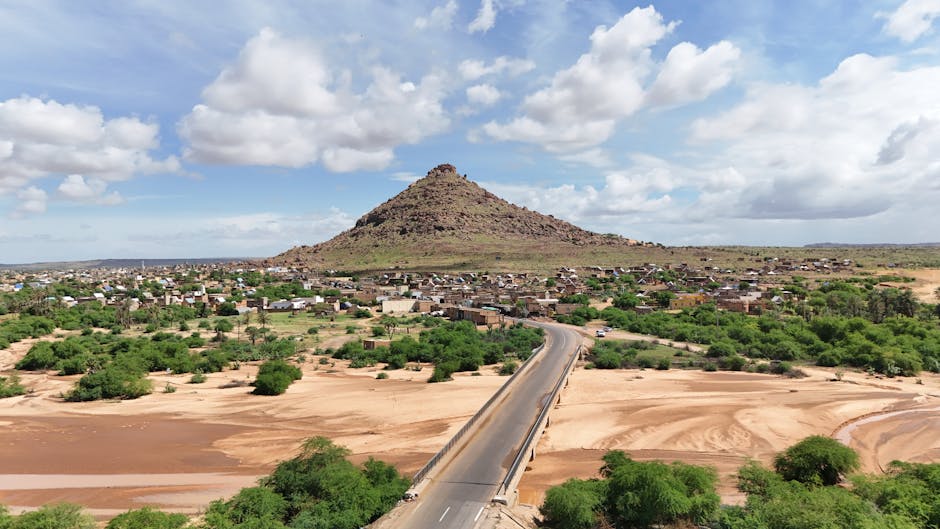
- Al-Qaeda-linked fighters stormed ‘Africa’s Alcatraz’ prison in Mali, freeing hundreds of inmates and disrupting supply chains.
- The prison, located in northern Mali, holds high-value prisoners, including jihadists and militants.
- The attack is a significant blow to the Malian government’s efforts to combat terrorism in the region.
- The prison’s proximity to the Algerian and Mauritanian borders makes it a crucial location for detaining and interrogating suspected militants.
- The attack raises concerns about the security forces’ ability to protect key infrastructure and personnel.
In a daring move, Al-Qaeda-linked fighters have stormed a prison in Mali, known as ‘Africa’s Alcatraz’, freeing hundreds of inmates and disrupting crucial supply chains to the capital, Bamako. The prison, which detains high-value prisoners, including jihadists and militants, was attacked on Friday, leaving a trail of destruction and chaos in its wake. The attack is a significant blow to the Malian government, which has been struggling to contain the spread of Islamist militancy in the region. According to Reuters, the attack is one of the most brazen in recent years, highlighting the growing instability in the Sahel region.
The Strategic Importance of the Prison

The prison, which is located in the northern part of the country, is a strategic facility that holds many high-profile inmates, including leaders of Al-Qaeda in the Islamic Maghreb (AQIM) and other militant groups. The prison’s proximity to the border with Algeria and Mauritania makes it a crucial location for the Malian government to detain and interrogate suspected militants. The attack on the prison is a significant blow to the government’s efforts to combat terrorism in the region, and it raises concerns about the ability of the security forces to protect key infrastructure and personnel. The prison’s reputation as ‘Africa’s Alcatraz’ is due to its notorious security record, with many considering it to be one of the most secure facilities on the continent.
The Attack and Its Aftermath

According to eyewitnesses, the attack began early on Friday morning, with a group of heavily armed fighters storming the prison and freeing hundreds of inmates. The fighters, who were reportedly linked to Al-Qaeda, used explosives and gunfire to breach the prison’s security perimeter, before making their way to the cellblocks to release the prisoners. The attack was well-coordinated and seemed to catch the prison authorities off guard, with many of the guards and security personnel fleeing the scene in panic. The aftermath of the attack has seen a significant disruption to the supply chains that feed the capital, Bamako, with many trucks and vehicles being blocked or diverted by the fighters.
Analysis of the Attack

The attack on the prison is a significant escalation of the conflict in Mali, and it highlights the growing strength and sophistication of the Al-Qaeda-linked groups operating in the region. The use of explosives and gunfire to breach the prison’s security perimeter suggests a high level of planning and coordination, and it raises concerns about the ability of the security forces to counter such attacks. According to BBC reports, the attack is part of a broader campaign by Al-Qaeda-linked groups to destabilize the region and create chaos and uncertainty. The attack also highlights the need for greater international cooperation and support to combat terrorism in the Sahel region.
Implications of the Attack

The attack on the prison has significant implications for the people of Mali, particularly those living in the capital, Bamako. The disruption to the supply chains has already led to shortages of food and other essential supplies, and it is likely to exacerbate the humanitarian crisis in the country. The attack also raises concerns about the ability of the government to protect its citizens and maintain law and order, and it may lead to a further escalation of the conflict in the region. The international community has condemned the attack, with many calling for greater support and cooperation to combat terrorism in the Sahel region.
Expert Perspectives
Experts have warned that the attack on the prison is a significant escalation of the conflict in Mali, and it highlights the need for greater international cooperation and support to combat terrorism in the region. According to Dr. Lori-Anne Theroux-Benoni, a regional security expert, ‘the attack on the prison is a wake-up call for the international community, and it highlights the need for a more coordinated and effective response to the threat posed by Al-Qaeda-linked groups in the Sahel region.’ Others have warned that the attack may be a precursor to further violence and instability in the region, and it highlights the need for a more nuanced and sustainable approach to combating terrorism.
As the situation in Mali continues to unfold, it is clear that the international community will need to take a more active and engaged role in supporting the government and people of Mali. The attack on the prison is a stark reminder of the threats posed by Al-Qaeda-linked groups in the region, and it highlights the need for a more coordinated and effective response to the threat. As the Associated Press has reported, the attack is part of a broader campaign by Al-Qaeda-linked groups to destabilize the region, and it will require a sustained and collective effort to combat the threat and restore stability to the region.
Source: Al Jazeera