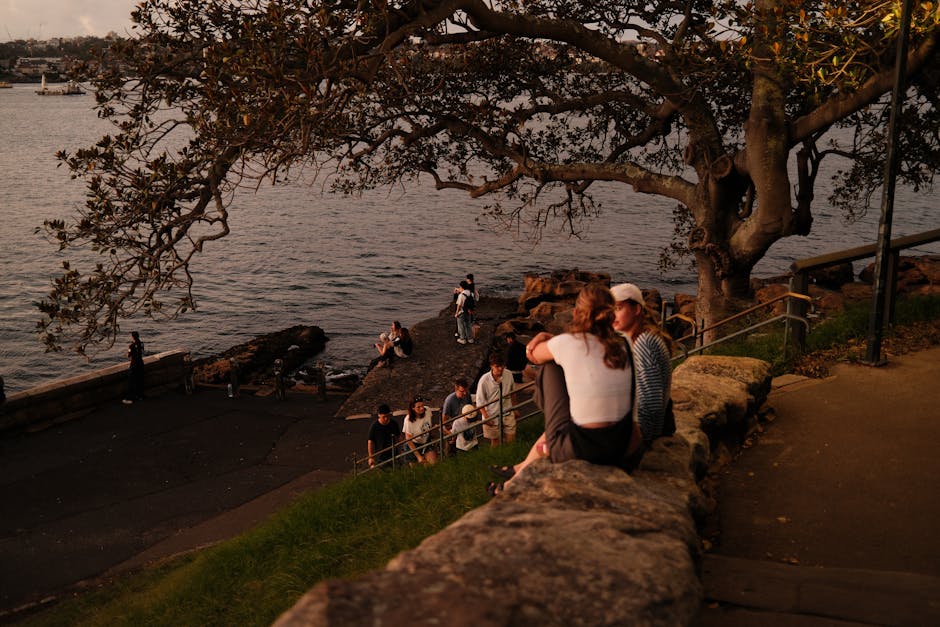
- A 32-year-old migrant, Bikram Lama, died unnoticed in Sydney’s Hyde Park, highlighting urban invisibility
- Over 122,000 people experience homelessness in Australia on any given night, with many slipping through the cracks
- Lama’s death underscores the need for more effective systems to identify and support vulnerable individuals
- A community-led vigil was held to honor Lama and raise awareness about homelessness
- The incident has sparked concerns about the city’s ability to care for its most vulnerable citizens
Under the sprawling fig trees of Sydney’s Hyde Park, where joggers weave through morning mist and office workers sip lattes on benches, a 32-year-old man lay dead for up to a week before anyone noticed. Bikram Lama, a Nepalese migrant known to locals for his quiet demeanor and worn backpack, became a tragic symbol of urban invisibility when his body was discovered near a footpath frequented by thousands daily. His final days—and the silence that followed—have shaken a nation proud of its egalitarian ideals. More than 122,000 people experience homelessness on any given night in Australia, according to the Australian Bureau of Statistics, and Lama’s death underscores how easily individuals can slip through the cracks of even the most developed cities.
A Vigil for the Invisible

The dusk gathering beneath the fig canopy transformed into an impromptu memorial, where strangers lit candles, laid flowers, and shared stories of fleeting encounters with Lama. Some recalled offering him spare change; others remembered brief conversations about the weather or the cold nights. One attendee, Sarah Nguyen, a nurse who often walked through the park, said she saw him sleeping on a bench just two nights before his body was found. “I thought he was just resting,” she said, voice trembling. “It breaks my heart that no system saw him, cared for him, or even noticed when he was gone.” The vigil, organized by local outreach group Justice for the Unhoused, drew over 200 mourners, many wearing red ribbons to symbolize visibility for the homeless. Lama’s fate has ignited public debate over how a person could die in such proximity to emergency services, luxury hotels, and bustling transit hubs—yet remain unseen.
Who Was Bikram Lama?

Bikram Lama arrived in Australia on a temporary work visa in 2021, reportedly seeking better opportunities after working in construction in Qatar. Friends from the Nepalese community in Sydney say he struggled to find stable employment after his visa status became uncertain. He was last in contact with his family in Pokhara, Nepal, in early April, according to a cousin who spoke to The Guardian. Lama had been seen regularly in the Hyde Park area for at least six months, often sleeping under trees or in doorways. Outreach workers from Mission Australia confirmed they had offered him shelter, but he declined, possibly due to overcrowding, fear of violence, or mental health struggles. His death has spotlighted the precarious situation of undocumented or visa-limited migrants who fall outside the safety nets of public housing and healthcare.
A Crisis of Visibility and Policy

Lama’s death is not an anomaly but a symptom of systemic gaps in Australia’s approach to homelessness. While the country spends over A$1.2 billion annually on homelessness services, demand far outpaces supply. In New South Wales alone, there are more than 28,000 people experiencing homelessness, with waitlists for social housing stretching years. Experts point to a toxic mix of soaring rents, inadequate mental health services, and fragmented government coordination. Dr. Elise McCloskey, a social policy researcher at the University of Sydney, notes that public spaces like Hyde Park have become de facto shelters. “Cities are designed for movement and commerce, not for people to rest or survive,” she said. “When someone dies unnoticed in such a space, it reflects not just personal tragedy but institutional failure.” A 2025 audit by the Australian National Audit Office found that only 40% of at-risk individuals receive timely intervention.
Who Is Accountable?

The question of responsibility echoes through Lama’s story. Was it the state’s duty to ensure his safety? The local council’s to monitor public spaces? Or society’s, to see and acknowledge those on the margins? Sydney City Council has since announced a review of nighttime welfare checks in major parks, while federal housing minister Julie Collins called Lama’s death “a national shame.” Advocacy groups are demanding urgent reforms, including expanded crisis housing, mobile health units, and real-time monitoring of vulnerable individuals through coordinated outreach databases. Yet, structural challenges persist: housing approvals lag behind population growth, and private rental vacancy rates in Sydney hover near 1%. Lama’s case has prompted calls for a royal commission into homelessness, echoing the model used in Australia’s inquiry into aged care neglect.
Expert Perspectives
“This wasn’t just a failure of services—it was a failure of human recognition,” says Dr. Amina Khalid, a sociologist specializing in urban marginalization. Others, like economist Peter Tran, argue that economic pragmatism must drive change: “Every dollar spent on stable housing saves three in emergency health and policing costs.” Meanwhile, some policymakers caution against overreach, emphasizing personal responsibility. Still, the consensus among frontline workers is clear: early intervention saves lives. As one outreach coordinator put it, “We’re not asking for miracles—just the ability to see people before they vanish.”
As investigations into the circumstances of Lama’s death continue, his story has become a rallying cry. Memorial organizers plan to petition the New South Wales government for a permanent plaque in Hyde Park. Advocates warn that without systemic change, others will follow—dying not from illness or violence alone, but from being unseen. The challenge ahead is not just to house the homeless, but to ensure they are never rendered invisible again.
Source: The Guardian