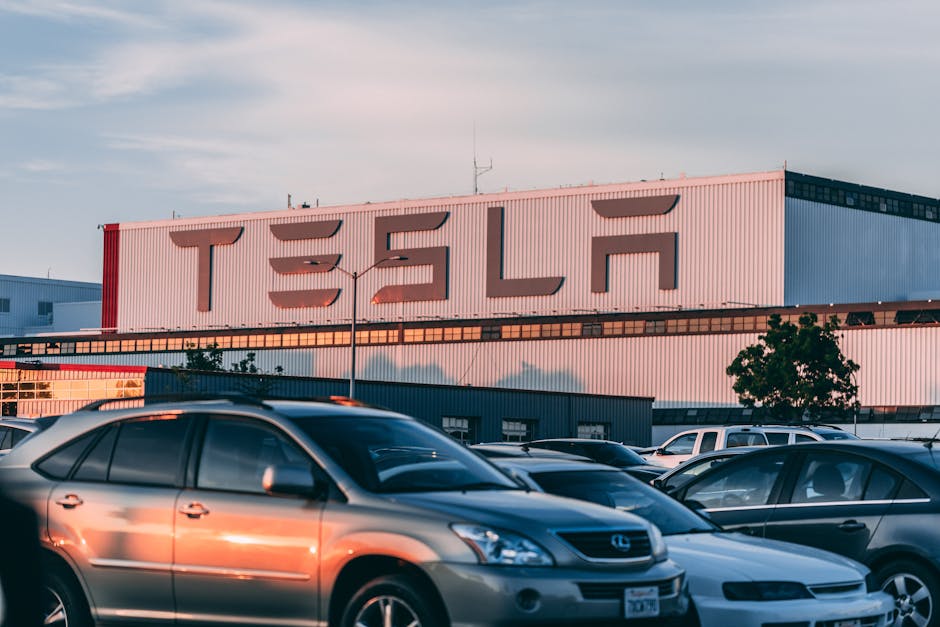
- Elon Musk attempted to hire OpenAI founders to establish an AI unit within Tesla, highlighting his pursuit of innovation.
- Tesla’s Autopilot system is one of the most advanced autonomous driving technologies in the industry.
- The AI market is projected to grow exponentially in the coming years, with the automotive sector driving growth.
- Musk’s move suggests he is aware of the need to accelerate Tesla’s AI capabilities to maintain its competitive edge.
- Tesla must continually innovate to stay ahead of the curve in the rapidly evolving AI landscape.
The tech world is abuzz with the latest revelation that Elon Musk, the visionary CEO of Tesla and SpaceX, attempted to hire the founders of OpenAI, a pioneering artificial intelligence research organization, to establish an AI unit within Tesla. This move underscores Musk’s relentless pursuit of innovation and his determination to stay at the forefront of the AI revolution. As the news broke, the tech community was left wondering what this could mean for the future of AI development and its potential applications in the automotive and energy sectors.
The Current State of AI at Tesla

Currently, Tesla is at the vanguard of autonomous driving technology, with its Autopilot system being one of the most advanced in the industry. However, the company faces stiff competition from other players, including Waymo, Cruise, and Argo AI. Musk’s attempt to hire the OpenAI founders suggests that he is keenly aware of the need to accelerate Tesla’s AI capabilities to maintain its competitive edge. With the AI landscape evolving rapidly, Tesla must continually innovate to stay ahead of the curve. According to a report by Reuters, the AI market is projected to grow exponentially in the coming years, with the automotive sector being a key driver of this growth.
A Brief History of OpenAI and Tesla’s AI Ambitions

The story behind Musk’s attempt to hire the OpenAI founders dates back to 2015 when OpenAI was founded by Musk, along with other prominent figures in the tech industry, including Sam Altman, Greg Brockman, and Ilya Sutskever. Initially, OpenAI was established as a non-profit organization, with the goal of promoting and developing AI in a way that benefits humanity. However, in 2019, OpenAI transitioned to a for-profit model, with Microsoft investing $1 billion in the company. Musk’s attempt to hire the OpenAI founders for Tesla suggests that he may have been looking to replicate the success of OpenAI within his own company. For more information on OpenAI’s history, visit Wikipedia.
The Key Players in Tesla’s AI Pursuit

The individuals involved in Musk’s attempt to hire the OpenAI founders are some of the most influential figures in the AI community. Musk himself has been a long-time proponent of AI, and his vision for Tesla’s future is inextricably linked to the development of autonomous driving technology. The OpenAI founders, on the other hand, have been at the forefront of AI research, with their work focusing on the development of more advanced and sophisticated AI systems. Their motivations for potentially joining Tesla would likely have been driven by the desire to apply their research in a real-world setting and to contribute to the development of more autonomous and sustainable transportation solutions.
Consequences of Musk’s AI Ambitions

The implications of Musk’s attempt to hire the OpenAI founders are far-reaching, with potential consequences for stakeholders across the tech industry. If successful, this move could have accelerated Tesla’s AI development, enabling the company to further solidify its position as a leader in the autonomous driving sector. However, the failure to secure the OpenAI founders may have set back Tesla’s AI ambitions, potentially allowing competitors to gain ground. As the AI landscape continues to evolve, companies like Tesla must be prepared to adapt and innovate to remain competitive. For insights into the latest AI trends, visit Nature.
The Bigger Picture
The broader significance of Musk’s attempt to hire the OpenAI founders lies in the ongoing debate about the role of AI in shaping the future of humanity. As AI technology becomes increasingly sophisticated, questions about its potential impact on society, the economy, and the environment are becoming more pressing. The development of more autonomous and sustainable transportation solutions, such as those being pursued by Tesla, has the potential to revolutionize the way we live and work. However, it also raises important questions about the ethics of AI development and the need for responsible innovation. According to the World Health Organization, the responsible development of AI is crucial for ensuring that its benefits are shared by all.
In conclusion, Elon Musk’s attempt to hire the OpenAI founders to establish an AI unit within Tesla underscores the intense competition in the AI sector and the relentless pursuit of innovation by tech industry leaders. As the AI landscape continues to evolve, it will be interesting to see how companies like Tesla navigate the challenges and opportunities presented by this rapidly developing field. With the future of AI holding much promise, one thing is certain – the next chapter in this story will be worth watching.
Source: Ars Technica