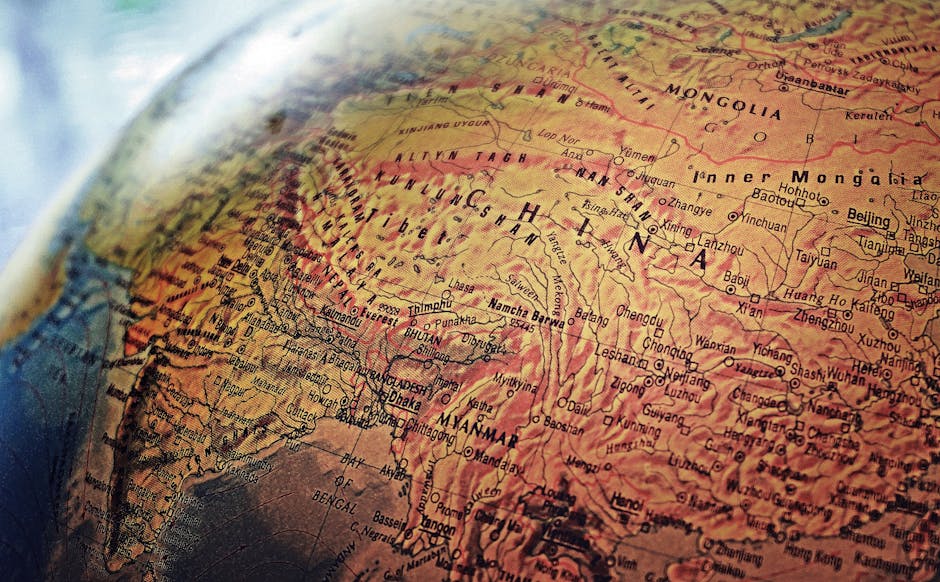
- Nepal is protesting India over a recent agreement with China to resume a pilgrimage through the contested Lipu Lekh pass.
- The Lipu Lekh pass is a strategically important and religiously significant area claimed by Nepal as its own territory.
- Nepal views the India-China pilgrimage resumption as a violation of its sovereignty and a provocative act.
- The current tensions are rooted in a long-standing border dispute between Nepal and India, with claims of territorial encroachment.
- Nepal’s foreign ministry has condemned the agreement as a ‘unilateral decision’ and is seeking diplomatic resolution.
As tensions between Nepal and India continue to rise, a long-running border dispute has once again come to the forefront. The question on everyone’s mind is: what sparked the latest protest from Nepal against its southern neighbor? The answer lies in a recent agreement between India and China to resume a religious pilgrimage through a contested Himalayan pass, a move that Nepal sees as a violation of its sovereignty.
Understanding the Border Dispute

The direct answer to the current tensions lies in the complex history of the border dispute between Nepal and India. The two countries have been at odds over the demarcation of their shared border, with Nepal claiming that India has encroached on its territory in several areas. The latest incident involves the Lipu Lekh pass, a strategic and sacred site for Hindus, which Nepal claims is part of its territory. India and China’s decision to resume the pilgrimage through this pass has been seen as a provocative move by Nepal, which has led to the current diplomatic standoff.
Evidence of the Dispute

Data and quotes from officials on both sides back up the claim that the border dispute is a long-standing and contentious issue. According to reports from the BBC, Nepal’s foreign ministry has issued a statement saying that the agreement between India and China is a “unilateral decision” that violates Nepal’s sovereignty. Meanwhile, Indian officials have maintained that the pilgrimage route has been in use for decades and that Nepal’s objections are unfounded. A report by Reuters quotes a Nepalese official as saying that the country will not back down on its claim to the disputed territory.
Counter-Perspectives

Not everyone agrees that Nepal’s protests are justified, with some skeptics arguing that the country is being overly sensitive to a longstanding issue. Some analysts point out that the pilgrimage route has been in use for decades without major incident, and that Nepal’s objections may be motivated by domestic politics rather than a genuine concern for sovereignty. Others argue that India and China’s agreement is a pragmatic move to promote regional cooperation and people-to-people exchanges. However, these views are not universally accepted, and the majority of Nepalese citizens and officials remain adamant that their country’s territorial integrity must be respected.
Real-World Impact

The current diplomatic standoff between Nepal and India has real-world consequences for the people living in the region. The closure of the border crossing at the Lipu Lekh pass has disrupted trade and commerce between the two countries, affecting the livelihoods of thousands of people who depend on cross-border trade. Furthermore, the tensions have also raised concerns about regional security, with some experts warning that the dispute could escalate into a larger conflict if not managed carefully. The situation is a reminder that even seemingly intractable disputes can have a significant impact on the daily lives of ordinary people.
What This Means For You
So what does this mean for the average person? In practical terms, the dispute highlights the importance of respecting national sovereignty and territorial integrity. It also underscores the need for diplomacy and dialogue in resolving complex border disputes. As the situation continues to unfold, it is essential for both Nepal and India to engage in constructive talks to find a mutually acceptable solution that respects the rights and interests of both countries.
As the world watches the developments in the Nepal-India border dispute, one question remains: how will this dispute be resolved, and what will be the long-term consequences for the region? The answer to this question will depend on the ability of both countries to put aside their differences and work towards a peaceful and negotiated settlement. Only time will tell if they can succeed in this endeavor, but one thing is certain – the fate of the region hangs in the balance.
Source: Al Jazeera