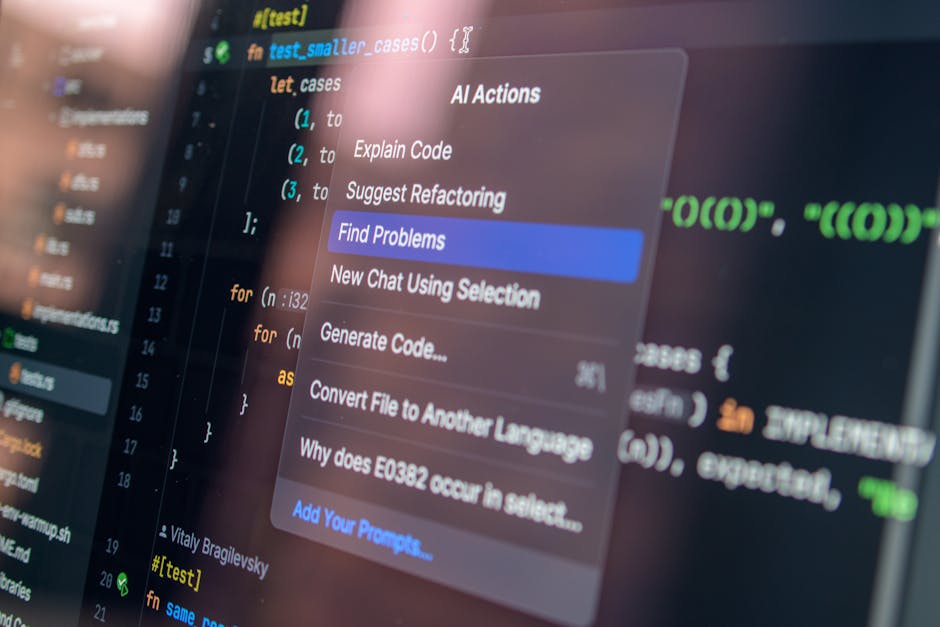
- Codex is a leading AI coding model that generates functional code from simple English prompts.
- With 1.5 million developers using GitHub Copilot, Codex has transitioned from an experimental novelty to an essential tool.
- Codex bridges the gap between human intent and machine execution, enabling accurate, efficient, and idiomatic code generation.
- Unlike previous models, Codex can scaffold entire functions, debug errors, and write tests based on natural language descriptions.
- Codex’s rise suggests a future of coding where AI blurs the lines between human and machine authorship.
Is OpenAI’s Codex currently the most powerful AI coding model available? That’s the question rippling through developer communities, tech forums, and AI research labs. With GitHub Copilot — which runs on Codex — now used by over 1.5 million developers as of 2023, the model has moved from experimental novelty to essential tool. Its ability to generate functional code from simple English prompts has sparked a quiet revolution in software development. But what’s driving this surge in adoption? Is it superior performance, strategic integration, or simply perfect timing? As AI continues to blur the lines between human and machine authorship in programming, understanding Codex’s rise offers insight into the future of coding itself.
What Makes Codex Stand Out Right Now?

Codex stands out because it bridges the gap between human intent and machine execution more effectively than any previous coding AI. Trained on billions of lines of public code from GitHub, it understands not just syntax but context — enabling it to generate accurate, efficient, and often idiomatic code across dozens of programming languages. Unlike earlier models that struggled with coherence beyond a few lines, Codex can scaffold entire functions, debug errors, and even write tests based on natural language descriptions. According to OpenAI, Codex powers GitHub Copilot, which suggested code in 46% of all code edits made by subscribers in 2023. This level of integration into daily workflows marks a turning point in how developers interact with AI.
What Evidence Supports Codex’s Leading Position?

Benchmarks and real-world usage both confirm Codex’s dominance in the AI coding space. In a 2021 study published by OpenAI, Codex solved 28.8% of programming problems on the HumanEval dataset without any additional tuning — a dramatic leap from previous models. Later iterations have only improved, especially when integrated within IDEs like Visual Studio Code. Developers report time savings of up to 55% on repetitive coding tasks, according to a 2022 study in Nature. Companies like Amazon and Salesforce have piloted internal Copilot-like tools inspired by Codex’s architecture, signaling industry-wide recognition. Moreover, its multilingual support — including Python, JavaScript, Go, and Ruby — ensures broad applicability. The fact that it runs efficiently in real-time within cloud-connected environments gives it an edge over heavier, less responsive models.
Are There Competitors Challenging Codex’s Lead?

While Codex is currently the most widely adopted, it’s not without competition. Google’s AlphaCode and Meta’s Code Llama have demonstrated strong performance on competitive programming challenges, sometimes matching or exceeding Codex in narrowly defined benchmarks. Code Llama, released in 2023, is open-source and free to use, appealing to developers wary of vendor lock-in. Similarly, Amazon’s CodeWhisperer offers comparable functionality with tighter AWS integration. Skeptics also point out that Codex can generate insecure or inefficient code if prompts are poorly framed, raising concerns about overreliance. Some researchers argue that true innovation will come not from scaling existing models, but from building systems that can reason about software design at a higher level — something no current AI, including Codex, consistently achieves.
How Is Codex Changing Real-World Development?

Codex is already transforming software workflows in tangible ways. Startups use it to prototype MVPs in days instead of weeks, while large enterprises deploy it to standardize code quality across global teams. Educational platforms like Khan Academy and freeCodeCamp have experimented with Codex-powered tutors that guide learners through coding exercises in real time. One notable example is the UK-based fintech firm Revolut, which reported a 40% reduction in boilerplate coding time after rolling out GitHub Copilot company-wide. Open-source contributors use it to automate documentation and unit tests, accelerating project maintenance. Even non-developers — such as product managers and data analysts — are leveraging Codex to write simple scripts, democratizing access to automation. These shifts suggest a future where coding fluency is less about memorizing syntax and more about articulating logical intent.
What This Means For You
Whether you’re a seasoned developer or just starting out, Codex represents a fundamental shift in how code is written. It won’t replace programmers, but it will redefine productivity, emphasizing problem-solving over rote coding. Learning to write effective prompts and review AI-generated code will soon be as essential as mastering version control. For students and career changers, tools powered by Codex lower the barrier to entry, making software development more accessible. However, vigilance is required — blindly accepting AI output can introduce bugs or security flaws. The smart approach is to treat Codex as a collaborator, not a replacement.
Still, the question remains: as models grow more capable, how much of software development can — or should — be automated? And when AI begins to design entire architectures autonomously, what new skills will developers need to stay ahead? The answers may reshape not just coding, but the very nature of technical creativity.
Source: I