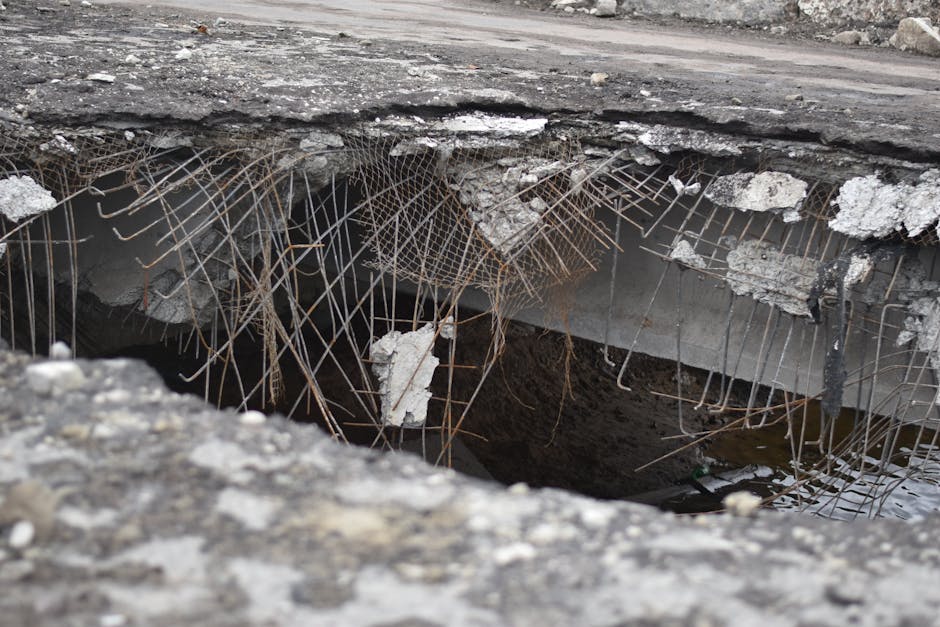
- A Russian drone strike narrowly missed a school bus carrying 40 Ukrainian children in central Ukraine’s Cherkasy Oblast on October 22, 2023.
- The children suffered minor injuries from shattered glass, but no fatalities were reported in the incident.
- The Cherkasy incident is not an isolated case, with over 200 drone strikes targeting civilian areas in Ukraine since September 2023.
- Russian forces have increasingly deployed Iranian-made Shahed drones to target civilian infrastructure and stretch Ukraine’s air defenses.
- The rising toll on civilian infrastructure has sparked international condemnation and raised questions about the Kremlin’s targeting protocols.
In a chilling near-miss, a Russian drone strike exploded just meters from a school bus carrying 40 Ukrainian children in central Ukraine’s Cherkasy Oblast on October 22, 2023. The children, aged between 6 and 11, were en route to a music festival when the drone, identified as a Shahed-136 ‘kamikaze’ model, slammed into a field beside the road. Shrapnel tore through the bus windows, and several children suffered minor injuries from glass shards, but no fatalities were reported. The incident, captured on dashcam and later verified by Ukraine’s State Emergency Service, has sparked international condemnation and raised urgent questions about the Kremlin’s targeting protocols as civilian infrastructure comes under increasing assault.
A Rising Toll on Civilian Infrastructure

While active combat zones in eastern Ukraine have endured relentless bombardment since the full-scale invasion began in February 2022, attacks on central and western regions—once considered relatively safe—have surged in recent months. The Cherkasy incident is not isolated: since September 2023, Ukrainian authorities report over 200 drone strikes targeting civilian areas, including schools, hospitals, and residential districts. According to BBC News analysis, Russian forces have increasingly deployed Iranian-made Shahed drones to stretch Ukraine’s air defenses and instill terror far from the front lines. Such tactics erode the psychological safety of non-combatants and strain emergency response systems already stretched thin.
The Narrow Escape Near Zolotonosha

The school bus was traveling from the village of Mala Divytsia to Zolotonosha, a city of about 30,000 people, when the drone struck approximately 100 meters from the roadway. Local officials confirmed the vehicle was clearly marked with school transport signage and traveling during daylight hours. Drone debris, later analyzed by Ukraine’s Security Service (SBU), matched components from previous Shahed-136 models supplied by Iran. The children were evacuated to local clinics for evaluation, with seven treated for shock and two for lacerations. No adult supervisors were seriously injured. Ukrainian President Volodymyr Zelenskyy addressed the nation the following evening, calling the event a ‘deliberate act of terror’ and urging Western allies to expedite delivery of advanced air defense systems.
Escalation in Drone Warfare Tactics

Military analysts point to a strategic shift in Russian tactics: rather than focusing solely on military depots or command centers, recent drone campaigns appear designed to maximize civilian disruption. Data from the Kyiv Independent and Reuters indicate a 40% increase in drone launches against central Ukraine in Q3 2023 compared to the previous quarter. The Shahed-136, with a range of up to 2,500 kilometers and low radar signature, allows Russia to strike deep inside Ukrainian territory at low cost. However, its inaccuracy—often missing intended targets by hundreds of meters—raises serious concerns about compliance with international humanitarian law, particularly the principle of distinction between combatants and civilians.
Human and Strategic Consequences

The psychological impact on the children and their families is expected to be long-lasting. Child trauma specialists in Ukraine report a surge in anxiety, sleep disorders, and school absenteeism, particularly in regions experiencing repeated attacks. Beyond the human toll, the strike undermines Ukraine’s ability to maintain normal societal functions—education, healthcare, and transportation—during wartime. Economically, the need to reinforce air defenses in previously secure zones diverts resources from reconstruction and frontline support. Internationally, the incident strengthens Ukraine’s case for expanded military aid, though Western policymakers remain cautious about direct escalation with Moscow.
Expert Perspectives
Dr. Olha Kruk, a conflict analyst at the Ukrainian Prism think tank, argues that ‘these strikes are part of a broader strategy of societal exhaustion.’ She notes that targeting children, even if not intentional, serves Russia’s goal of demoralizing the population. Conversely, Dr. Pavel Felgenhauer, a Russian military analyst in exile, suggests the Cherkasy strike may have been a navigation error exacerbated by Ukrainian electronic warfare, rather than a deliberate act. ‘Shahed drones are not precision weapons,’ he stated in a recent interview, ‘but their use in populated areas is reckless regardless of intent.’
As Ukraine prepares for a prolonged defense, the incident underscores the urgent need for more effective counter-drone technologies and reinforced civilian protection protocols. With winter approaching and energy infrastructure already under strain, the risk of further attacks on soft targets remains high. The international community now faces a critical question: how to respond to near-misses that skirt the line of war crimes without triggering broader conflict. Monitoring drone launch patterns and enforcing accountability through bodies like the International Criminal Court may become essential in deterring future atrocities.
Source: Rferl