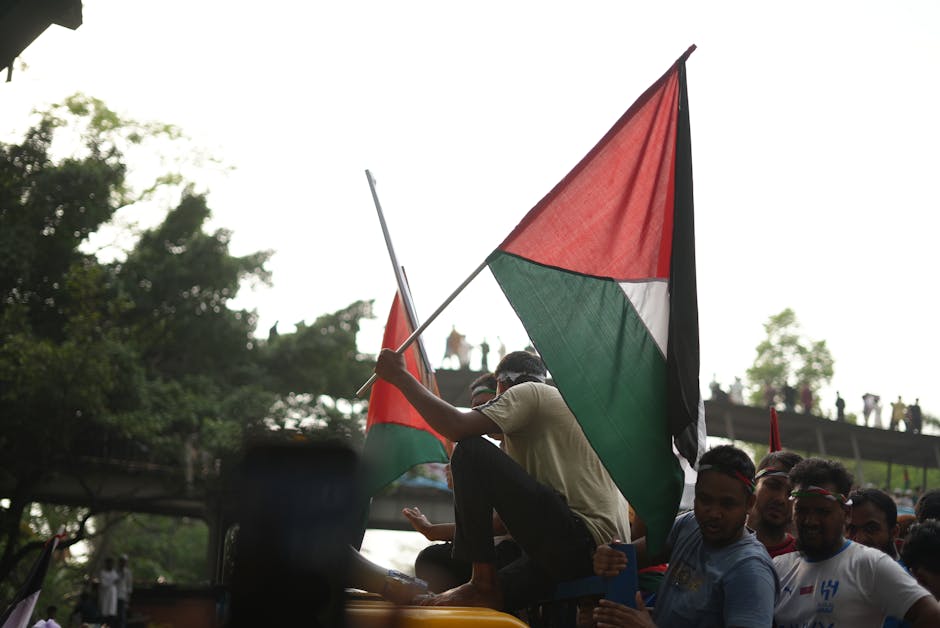
- Over 100 journalists have been killed in Gaza since October 2023, making it the deadliest conflict for the press.
- The vast majority of victims are Palestinian journalists, highlighting the disproportionate risk they face.
- Evidence suggests many journalists in Gaza were specifically targeted, rather than caught in crossfire.
- The Committee to Protect Journalists and International Federation of Journalists have condemned the toll as ‘catastrophic and deliberate’.
- The situation raises urgent questions about the protection of press freedom in active war zones.
As the world marked World Press Freedom Day on May 3, 2024, Gaza became a somber epicenter of mourning and defiance. Palestinian journalists, working amid rubble and relentless bombardment, commemorated their slain colleagues — many killed in what press freedom advocates describe as the deadliest period for media workers in modern conflict. The question echoing across newsrooms and refugee camps alike: How did Gaza become the most dangerous place on Earth to be a journalist? With Internet blackouts, targeted strikes, and entire news teams wiped out, reporters in Gaza are not only documenting war — they are dying while doing so. Their struggle raises urgent questions about the protection of press freedom in active war zones, especially when international law appears increasingly ignored.
How Dangerous Is Journalism in Gaza Right Now?

The answer is stark: unprecedentedly lethal. According to the Committee to Protect Journalists (CPJ), at least 108 journalists and media workers have been killed in Gaza since October 7, 2023 — the vast majority Palestinian — making it the deadliest conflict ever recorded for the press. The International Federation of Journalists (IFJ) calls the toll “catastrophic and deliberate.” Unlike in other war zones where journalists are occasionally caught in crossfire, evidence suggests many reporters in Gaza were specifically targeted. Israel has claimed some were affiliated with Hamas, a charge disputed by media organizations and human rights groups. Regardless, international humanitarian law mandates that journalists be protected as civilians, even in conflict zones. Yet in Gaza, press credentials have not shielded reporters from drone strikes, artillery fire, or building demolitions.
What Evidence Supports Claims of Targeted Attacks?

Multiple investigations point to patterns that go beyond collateral damage. In April 2024, Reuters reported that Israeli forces struck a compound housing several journalists in southern Gaza, killing three. Satellite imagery and communication logs reviewed by the CPJ indicate the location was known to Israeli authorities. The United Nations Special Rapporteur on Freedom of Expression, Irene Khan, stated in a preliminary report that “the scale and specificity of the attacks suggest a systematic failure to distinguish between combatants and media personnel.” Additionally, the Gaza-based news outlet Anadolu Agency documented cases where journalists were called by Israeli numbers minutes before strikes, a tactic seen as both a warning and a form of psychological warfare. Even when journalists flee, their displacement offers little safety — evacuation orders often cover areas where bombing continues.
Are There Alternative Views on Journalist Fatalities?

Israeli officials maintain that they do not intentionally target journalists and assert that many media workers in Gaza have ties to Hamas, either as members or through familial relationships. The Israel Defense Forces (IDF) released a statement in March 2024 claiming that at least 20 of the killed journalists were Hamas operatives, a claim challenged by the CPJ and Reporters Without Borders. These watchdogs argue that mere association — especially in densely populated areas where militant groups operate — does not nullify civilian status under international law. Some Western media analysts also caution against drawing universal conclusions, noting that war reporting inherently carries risk and that communication breakdowns in fast-moving combat environments can lead to tragic errors. Still, even skeptics acknowledge the death toll is anomalously high, raising questions about adherence to the principle of proportionality in military operations.
What Is the Real-World Impact of These Killings?

The consequences extend far beyond individual tragedies. Newsrooms in Gaza have been decimated, with Al Jazeera, AFP, and local outlets like Shehab News Agency losing multiple staff. This erosion of local reporting has created an information vacuum, allowing misinformation to flourish and limiting global understanding of conditions on the ground. Surviving journalists operate under constant threat, often reporting without protective gear or secure transmission lines. In some cases, they file reports from tunnels or basements using low-bandwidth connections. The psychological toll is immense — many suffer from PTSD, yet mental health support is nearly nonexistent. Moreover, the silencing of Palestinian voices skews global narratives, with stories of civilian suffering, displacement, and survival often filtered through distant or military sources.
What This Means For You
Even if you’re far from Gaza, the suppression of press freedom in conflict zones affects the integrity of global information. When journalists are silenced, accountability erodes, and propaganda fills the void. The events in Gaza underscore that protecting reporters isn’t just about heroism — it’s a cornerstone of democratic transparency and informed public discourse. Supporting press freedom means advocating for international mechanisms to investigate attacks on journalists and holding states accountable under bodies like the International Criminal Court.
As the war continues, one question remains unresolved: Will the international community treat the killing of journalists in Gaza as a war crime — or merely a tragic byproduct of war?
Source: Al Jazeera