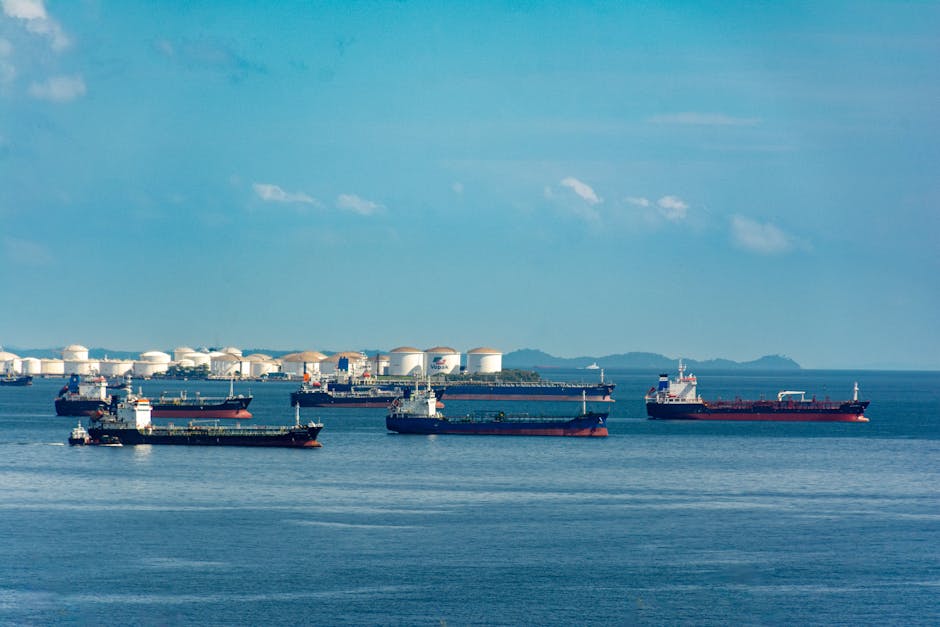
- A bulk carrier was attacked by fast-moving small craft 11 nautical miles west of Sirik, Iran, in a brazen assault.
- The crew remained safe and no environmental damage was reported, but the attack’s nature is still under investigation.
- The incident highlights concerns over asymmetric threats in the Persian Gulf, where state and non-state actors test naval patrols and shipping protocols.
- The attack occurred in international waters near a critical approach to the Strait of Hormuz, a key oil trade route.
- Maritime analysts believe the ship’s brief alteration of course and reduced speed suggest prior reconnaissance by the attackers.
Executive summary — a bulk carrier has come under attack by several fast-moving small craft approximately 11 nautical miles west of Sirik, Iran, in a brazen assault that underscores the persistent vulnerability of commercial shipping in one of the world’s most contested maritime corridors. The UK Maritime Trade Organisation (UKMTO) confirmed the incident, noting that the crew remained safe and no environmental damage had been reported, though the precise nature of the attack remains under investigation. With this latest episode, concerns are mounting over the resurgence of asymmetric threats in the Persian Gulf, where state and non-state actors have increasingly tested the resilience of international naval patrols and shipping protocols.
Incident Data and Geographic Context

The attack occurred in international waters just 20 kilometers off Iran’s southern coastline, a region that serves as a critical approach to the Strait of Hormuz—through which nearly 20% of globally traded oil passes annually. According to UKMTO’s situational report, the vessel, whose identity has not been disclosed for security reasons, was approached by multiple high-speed craft in a coordinated maneuver suggestive of prior reconnaissance. Satellite AIS data reviewed by maritime analysts indicates the ship briefly altered course and reduced speed during the engagement, a common defensive tactic. No distress signals were transmitted automatically, but the master initiated a voice report to the UKMTO operations center in Bahrain within 30 minutes of the encounter. Notably, no explosives, boarding attempts, or physical damage were confirmed, distinguishing this event from prior incidents involving magnetic mines or drone strikes seen in 2019 and 2021. Reuters cited naval sources indicating infrared signatures of armed personnel on the craft, though no weapons fire was recorded.
Key Regional and Military Actors

The incident implicates a complex web of regional powers and maritime forces operating in the Gulf. Iran’s Islamic Revolutionary Guard Corps Navy (IRGCN) maintains a fleet of fast attack craft capable of swarm tactics and has previously detained or harassed foreign vessels under disputed legal pretexts. While Tehran has not claimed responsibility, its pattern of indirect coercion—often attributed to proxy or deniable units—aligns with the modus operandi observed. On the other side, the U.S. Navy’s Fifth Fleet, headquartered in Bahrain, leads international efforts through Combined Task Force 153, which focuses on maritime security in the region. The UKMTO, operated by the British Royal Navy, serves as a coordination hub for merchant vessels, issuing navigational advisories and relaying threat assessments. Commercial shipping firms, meanwhile, are increasingly reliant on private maritime security teams and real-time intelligence sharing via platforms like Intelsat and Windward. The absence of immediate attribution underscores the fog of maritime conflict, where ambiguity often serves strategic purposes for state actors seeking to apply pressure without triggering open warfare.
Strategic Trade-offs and Escalation Risks

The attack presents difficult trade-offs for both commercial operators and policymakers. For shipping companies, rerouting vessels around the Strait of Hormuz adds days to transit times and increases fuel and insurance costs—Lloyd’s List estimates a 12–18% spike in war risk premiums during periods of high tension. Yet, maintaining standard routes exposes crews and cargo to unpredictable threats. Naval coalitions face their own dilemma: a robust response could deter future attacks but risks escalation with Iranian forces, whereas restraint may be perceived as weakness, encouraging further provocations. Moreover, the environmental calculus is significant; a successful attack resulting in an oil spill near the fragile ecosystems of the Gulf could trigger a regional ecological disaster. The current incident, while non-destructive, reveals a dangerous normalization of harassment as a tool of geopolitical signaling—one that erodes the predictability essential to global trade.
Why the Timing Suggests Strategic Intent

This attack comes at a moment of heightened regional volatility, following recent Israeli airstrikes in Syria and Iran’s retaliatory drone launches toward Israel in April 2024. Analysts at the International Institute for Strategic Studies (IISS) suggest that maritime provocations often precede or mirror escalations in other theaters, serving as calibrated instruments of hybrid warfare. The proximity to Sirik—a known naval and logistical hub—adds symbolic weight, suggesting the attackers sought maximum visibility without crossing thresholds that would trigger a kinetic response. Additionally, the timing coincides with seasonal weather patterns that favor small-craft operations, indicating possible planning cycles. Unlike earlier incidents tied to specific diplomatic standoffs, this event appears less reactive and more operational, pointing to a potential shift from crisis-driven actions to sustained asymmetric pressure campaigns.
Where We Go From Here
Over the next six to twelve months, three scenarios appear plausible. In the first, Iran or affiliated groups conduct additional low-level harassment operations—targeting commercial vessels with drones or fast boats—while avoiding catastrophic damage, aiming to raise insurance costs and sow uncertainty. Second, a miscalculation during a similar encounter could lead to casualties or a vessel seizure, prompting a multinational naval response and possible retaliatory strikes. Third, diplomatic backchannels—possibly mediated by Oman or the EU—could yield de-escalation agreements, including mutual restraints on maritime activity and expanded monitoring mechanisms. The trajectory will depend heavily on broader Middle East dynamics, particularly the status of nuclear negotiations and regional de-confliction efforts between Israel and Iran’s allies.
Bottom line — while no lives were lost or oil spilled this time, the attack on the bulk carrier near Iran reveals a dangerous return to asymmetric maritime coercion, threatening the stability of global energy supply routes and demanding a coordinated, rules-based international response.
Source: Al Jazeera