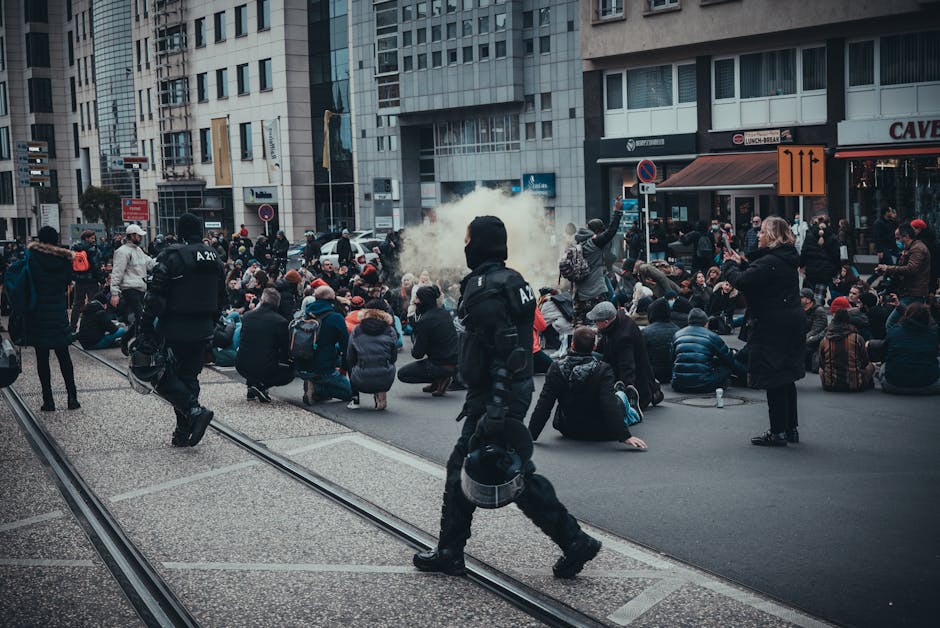
- US political violence has surged by over 50% since Donald Trump took office, with experts linking his presidency to this trend.
- The rise of political violence has raised concerns about American democracy’s stability and citizens’ safety.
- Leadership plays a crucial role in promoting or mitigating violent behavior, sparking debate over Trump’s influence.
- Historically, the US has experienced periods of political unrest and violence, but the current wave is distinct in intensity and frequency.
- Divisive rhetoric and policies, particularly from the Trump administration, have contributed to the escalation of political violence.
The United States has witnessed a striking surge in political violence over the past few years, with many experts pointing to the presidency of Donald Trump as a catalyst for this trend. According to a recent study, the number of violent incidents at political rallies and protests has increased by over 50% since Trump took office. This disturbing trend has raised concerns about the stability of American democracy and the safety of its citizens. The rise of political violence has also sparked a heated debate about the role of leadership in promoting or mitigating violent behavior. As the country grapples with this issue, it is essential to examine the underlying causes and consequences of political violence in the US.
Historical Context of Political Violence

The rise of political violence in the US is not a new phenomenon, but it has taken on a new dimension under the Trump presidency. Historically, the US has experienced periods of political unrest and violence, from the civil rights movement to the anti-war protests of the 1960s. However, the current wave of violence is distinct in its intensity and frequency. Many experts argue that the divisive rhetoric and policies of the Trump administration have contributed to the escalation of violence. The president’s rhetoric, in particular, has been criticized for promoting a culture of intolerance and hatred, which has emboldened extremist groups and individuals to engage in violent behavior. As the country becomes increasingly polarized, the risk of political violence is likely to grow.
Key Incidents and Players

Several high-profile incidents have highlighted the rise of political violence in the US. The 2017 Unite the Right rally in Charlottesville, Virginia, was a pivotal moment in this trend, as it brought together white nationalist and neo-Nazi groups, resulting in the death of a counter-protester. More recently, the 2020 US presidential election saw a significant increase in violent incidents, including the storming of the US Capitol by Trump supporters. The role of social media in promoting and organizing violent events has also come under scrutiny. Many experts argue that social media platforms have enabled extremist groups to spread their ideology and recruit new members, contributing to the growth of political violence. The involvement of law enforcement and government agencies in responding to these incidents has also been a subject of controversy.
Causes and Consequences of Political Violence
The causes of political violence in the US are complex and multifaceted. Experts point to a range of factors, including economic inequality, social media amplification, and the normalization of violent rhetoric. The consequences of political violence are equally far-reaching, from the physical harm inflicted on individuals to the erosion of trust in democratic institutions. According to Professor Robert Pape, a leading expert on political violence, the US is experiencing a perfect storm of conditions that are conducive to violent behavior. Pape argues that the combination of economic stress, social media amplification, and political polarization has created an environment in which extremist groups and individuals feel emboldened to engage in violent acts. As the US struggles to address these underlying causes, it is essential to consider the potential consequences of inaction, including the further destabilization of American democracy.
Implications of Rising Political Violence
The implications of rising political violence in the US are profound and far-reaching. The most immediate concern is the safety of citizens, particularly those from marginalized communities who are often the targets of violent attacks. The rise of political violence also has significant implications for the health of American democracy, as it undermines trust in institutions and creates an environment of fear and intimidation. Furthermore, the normalization of violent rhetoric and behavior has the potential to embolden extremist groups and individuals, leading to further escalation of violence. As the US navigates this challenging landscape, it is essential to consider the potential consequences of rising political violence and to develop strategies for mitigating its effects.
Expert Perspectives
Experts are divided on the best approach to addressing the rise of political violence in the US. Some argue that the key to reducing violence is to address the underlying economic and social causes, such as inequality and social isolation. Others contend that the focus should be on promoting counter-narratives and challenging extremist ideologies. Professor Pape emphasizes the importance of addressing the root causes of political violence, including economic stress and social media amplification. In contrast, other experts argue that the primary focus should be on disrupting and dismantling extremist groups, using a combination of law enforcement and community-based approaches. As the debate continues, one thing is clear: the rise of political violence in the US requires a comprehensive and multifaceted response.
Looking ahead, the key question is what the future holds for political violence in the US. Will the country experience a continued escalation of violence, or will efforts to address the underlying causes and promote counter-narratives begin to bear fruit? As the US navigates this uncertain landscape, it is essential to remain vigilant and to continue monitoring the trends and patterns of political violence. By doing so, experts and policymakers can develop more effective strategies for mitigating the effects of violence and promoting a more stable and peaceful democracy. Ultimately, the rise of political violence in the US serves as a stark reminder of the importance of protecting and preserving democratic institutions and promoting a culture of tolerance and respect.