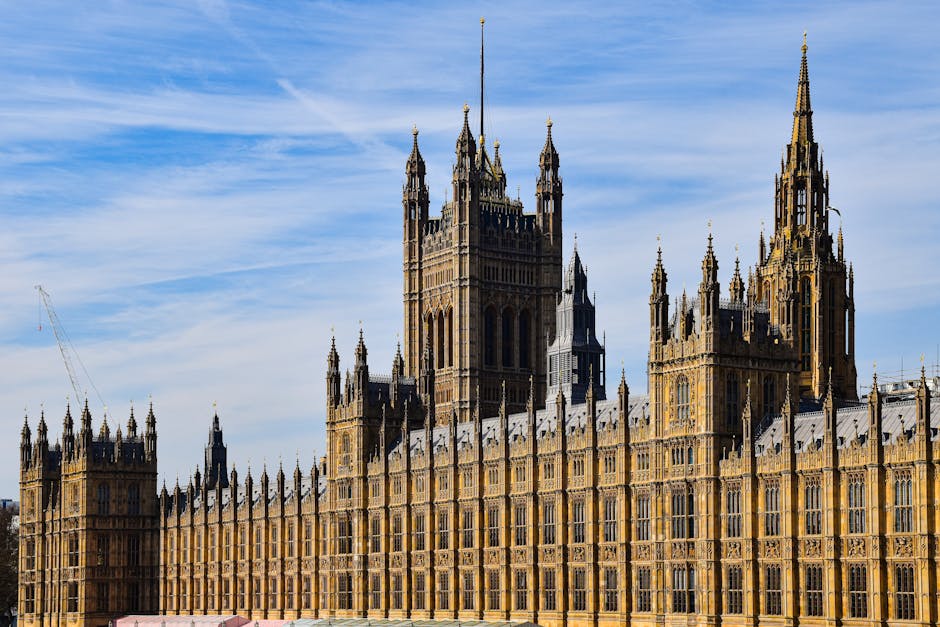
- UK politics is facing significant turmoil, with rising anti-Semitic incidents and internal party conflicts.
- The Prime Minister’s leadership is under scrutiny, with mounting criticism from within his own party and opposition leaders.
- Ongoing geopolitical tensions and internal conflicts have weakened the UK government’s stance, both domestically and internationally.
- The rise in anti-Semitic incidents has sparked widespread concern, with calls for more decisive action to combat hate.
- The UK’s political landscape is at a crossroads, with the country’s leadership and approach to pressing issues under critical examination.
The United Kingdom’s political landscape has witnessed significant turmoil in recent weeks, with the Prime Minister facing mounting criticism from within his own party and from opposition leaders. A striking fact that underscores this tumultuous period is the stark rise in anti-Semitic incidents, which have increased by over 20% in the last year alone. This alarming trend, coupled with the ongoing geopolitical tensions and internal party conflicts, has set the stage for a critical examination of the country’s leadership and its approach to these pressing issues. The PM’s recent interview with the Today Programme served as a pivotal moment in addressing these concerns and drawing a contrast with his critics.
Understanding the Backdrop

The current state of UK politics is complex, with multiple factors contributing to the heightened sense of urgency and division. The recent wars and the escalating tensions on the global stage have necessitated a strong, unified response from the UK government. However, internal party disputes and criticisms over the handling of these issues have weakened the government’s stance, both domestically and internationally. The rise in antisemitism, in particular, has sparked widespread concern, with many calling for more decisive action to combat this hate. It is against this backdrop that the PM’s efforts to draw a contrast with his critics, both within his party and beyond, must be understood.
Key Developments and Players

Sir Keir Starmer’s interview with the Today Programme was a key moment in the unfolding narrative of UK politics. During the interview, he addressed a range of topics, from the government’s response to international conflicts to the issue of rising antisemitism. His comments were closely watched, as they provided insight into the opposition’s stance on these critical matters. The interview also highlighted the deep divisions within the political sphere, with Sir Keir Starmer’s comments drawing both praise and criticism. The involvement of various political figures and the reaction of the public have further complicated the situation, making it a challenging task for the PM to navigate these treacherous waters and establish a clear, effective strategy.
Analysis and Implications
An analysis of the current situation reveals a multifaceted challenge for the UK government. The causes of the rising antisemitism are complex, rooted in a combination of societal, economic, and political factors. The effects are far-reaching, impacting not only the Jewish community but also the broader fabric of UK society. Data suggests that the increase in hate crimes is linked to a rise in extremist ideologies and a breakdown in community cohesion. Expert opinions point to the need for a comprehensive approach that includes education, community engagement, and legislative action. The PM’s strategy, as outlined in his recent interview, has been met with skepticism by some, who argue that it does not go far enough in addressing the root causes of the problem.
Broader Implications and Future Directions
The implications of the current situation are profound, affecting not only the political landscape but also the social cohesion of the UK. The rise in antisemitism and the divisions within the political parties have the potential to undermine trust in institutions and exacerbate social tensions. The PM’s ability to address these challenges effectively will be crucial in determining the future trajectory of UK politics. As the situation continues to evolve, it is essential to consider who is affected and how. The Jewish community, in particular, has been at the forefront of the impact of rising antisemitism, but the broader implications for society as a whole cannot be overstated.
Expert Perspectives
Experts in the field offer contrasting viewpoints on the best approach to combat rising antisemitism and heal the divisions within the political sphere. Some argue for a more aggressive legislative response, while others emphasize the need for community-led initiatives and education. The debate underscores the complexity of the issue and the need for a multifaceted strategy that addresses both the symptoms and the causes of the problem. As one expert noted, “The solution to rising antisemitism will require a concerted effort from all segments of society, including political leaders, community organizations, and individuals.”
Looking forward, the question on many minds is what the future holds for UK politics and how the current challenges will be addressed. As the political landscape continues to shift, it will be essential to watch for signs of unity and division within the parties, as well as the government’s response to pressing issues like antisemitism. The open question remains whether the PM and the opposition can find common ground and work towards a more cohesive and effective strategy for addressing the country’s challenges. The answer to this question will have significant implications for the future of the UK and its position on the global stage.