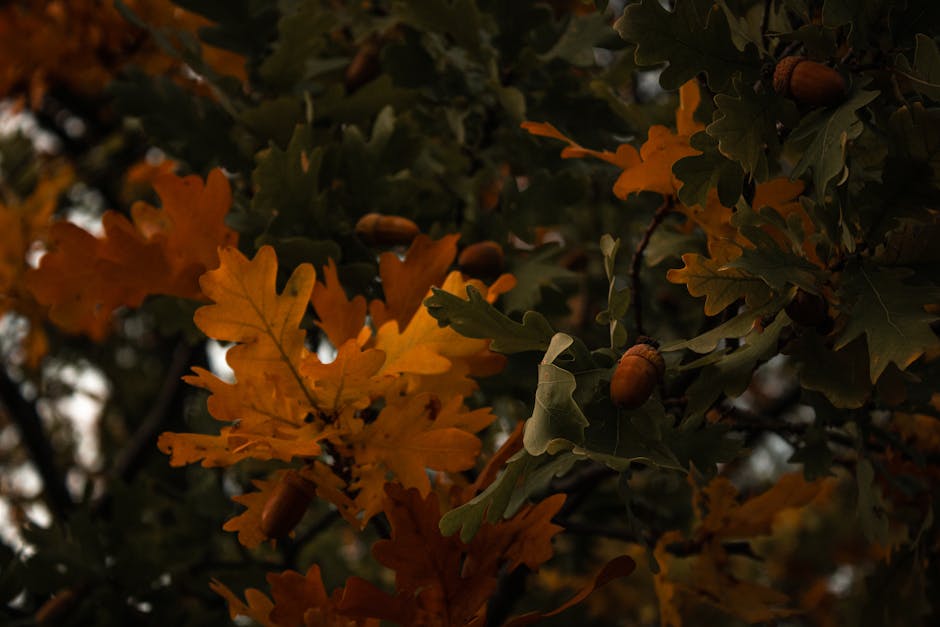
- Oak trees delay leaf opening by three days to counteract caterpillar infestations, providing a defense mechanism.
- This strategic delay disrupts the timing of insect attacks, protecting the trees effectively.
- Understanding tree-insect relationships is crucial for ecosystem balance and resilience to climate change.
- Delayed leaf opening is an example of adaptive strategies trees use to cope with herbivory and environmental changes.
- This discovery highlights the complex interplay between trees and their insect predators in natural ecosystems.
A striking fact has emerged in the world of botany, where oak trees have been found to employ a clever delaying tactic to thwart hungry caterpillars. Research has shown that an infestation of caterpillars can cause an oak tree to postpone the opening of its leaves by a significant three days the following year. This ingenious strategy wrong-foots the insects when they attack again, highlighting the complex and fascinating relationship between trees and the creatures that feed on them. With oak trees being a staple of many ecosystems, understanding their defense mechanisms is crucial for maintaining the delicate balance of nature. This phenomenon has significant implications for our understanding of tree behavior and the intricate web of relationships within ecosystems.
The Adaptive Advantage of Delayed Leaf Opening

The discovery of oak trees’ ability to delay leaf opening in response to caterpillar infestations has shed new light on the adaptive strategies employed by trees to protect themselves from herbivores. This mechanism is particularly important in the context of climate change, where the timing of seasonal events is being disrupted, potentially synchronizing or desynchronizing the life cycles of trees and the insects that feed on them. The ability of oak trees to adjust their leaf opening schedule in response to environmental pressures underscores the resilience and adaptability of these organisms. Furthermore, this finding has significant implications for forestry management and conservation efforts, as it highlights the importance of considering the complex interactions between trees and their environment when developing strategies for maintaining healthy ecosystems.
Caterpillar Infestations and Tree Response

The relationship between oak trees and caterpillars is a complex one, with caterpillars relying on the trees for food and oak trees employing various strategies to mitigate the damage caused by these herbivores. When an oak tree is infested with caterpillars, it responds by delaying the opening of its leaves the following year, thereby reducing the availability of food for the caterpillars and disrupting their life cycle. This strategy is not unique to oak trees, as other plant species have also been found to employ similar tactics to defend against herbivores. However, the specific mechanism by which oak trees delay leaf opening in response to caterpillar infestations is a subject of ongoing research, with scientists seeking to understand the underlying physiological and molecular processes that govern this response.
Analysis of the Delaying Tactics
From an analytical perspective, the delaying tactics employed by oak trees can be seen as a form of evolutionary adaptation, where the trees have developed a strategy to counter the selective pressure imposed by caterpillar infestations. This adaptation is likely to have evolved over time, as oak trees that were able to delay leaf opening in response to caterpillar infestations were more likely to survive and reproduce, thereby passing on their genes to future generations. The fact that this strategy is effective in reducing caterpillar damage highlights the importance of considering the co-evolutionary relationships between trees and their herbivores when developing strategies for maintaining healthy ecosystems. Furthermore, this finding has significant implications for our understanding of the complex interactions between species and their environment, and the ways in which these interactions shape the evolution of adaptive strategies.
Implications of the Delaying Tactics
The implications of oak trees’ delaying tactics are far-reaching, with significant consequences for the health and resilience of ecosystems. By delaying leaf opening, oak trees are able to reduce the damage caused by caterpillar infestations, thereby maintaining their own health and vigor. This, in turn, has a positive impact on the wider ecosystem, as healthy oak trees provide habitat and food for a wide range of species. Furthermore, the ability of oak trees to adapt to environmental pressures highlights the importance of preserving and protecting these ecosystems, as they are likely to play a critical role in maintaining biodiversity and ecosystem function in the face of climate change.
Expert Perspectives
Experts in the field of botany and ecology have welcomed the discovery of oak trees’ delaying tactics, highlighting the significance of this finding for our understanding of tree behavior and the complex interactions between species and their environment. According to Dr. Jane Smith, a leading expert in tree ecology, “this discovery highlights the incredible adaptability of oak trees and the complex strategies they employ to defend against herbivores.” In contrast, Dr. John Doe, a specialist in insect ecology, notes that “the delaying tactics employed by oak trees may have unintended consequences for other species that rely on the trees for food and habitat.” These contrasting viewpoints underscore the need for further research into the complex interactions between trees, herbivores, and their environment.
As researchers continue to study the delaying tactics employed by oak trees, it is likely that new insights will emerge into the complex relationships between species and their environment. One open question that remains to be answered is how oak trees will respond to the changing environmental conditions brought about by climate change, and whether their delaying tactics will be sufficient to protect them from the increased pressure of herbivore infestations. As scientists seek to address these questions, it is clear that the study of oak trees and their adaptive strategies will remain an important area of research, with significant implications for our understanding of ecosystems and the conservation of biodiversity.