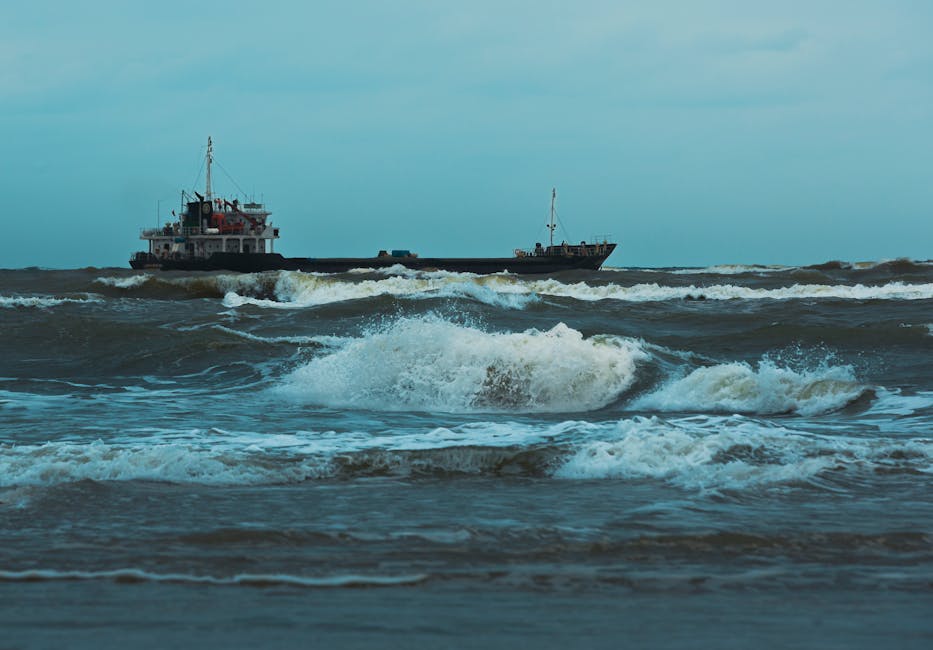
- Maritime laws are failing to secure the seas due to rising incidents of piracy, armed robbery, and territorial disputes.
- The global economy’s growth highlights the importance of secure seas, which are critical to global supply chains.
- Maritime laws are outdated and not equipped to handle emerging threats like nationalism, protectionism, and advanced technologies.
- Territorial disputes between nations, such as China, the US, and Iran, are increasing due to the rise of nationalism and protectionism.
- The consequences of insecure seas include disrupted global supply chains, escalating tensions, and threatened livelihoods of millions.
The world’s oceans, which cover over 70% of the Earth’s surface, are becoming increasingly insecure. A striking fact is that nearly 90% of global trade is carried out by sea, yet maritime laws are failing to secure the seas. This is evident in the rising number of incidents of piracy, armed robbery, and territorial disputes in critical shipping lanes. The consequences are far-reaching, with the potential to disrupt global supply chains, escalate tensions between nations, and threaten the livelihoods of millions of people who depend on the sea for their income. As the global economy continues to grow, the importance of secure seas cannot be overstated, and it is imperative that maritime laws are strengthened to address these emerging challenges.
The Evolution of Maritime Threats

Maritime laws have been in place for centuries, but they are no longer effective in addressing the complex and evolving threats that the world’s oceans face today. The rise of nationalism and protectionism has led to an increase in territorial disputes, with countries such as China, the United States, and Iran vying for control of strategic waterways. Furthermore, the proliferation of advanced technologies, such as unmanned underwater vehicles and cyber warfare capabilities, has created new vulnerabilities that maritime laws are not equipped to handle. As a result, the rules of global shipping are being rewritten, and it is essential that policymakers and industry leaders work together to develop new frameworks that can effectively address these emerging challenges and ensure the long-term security of the seas.
Key Incidents and Flashpoints

In recent years, there have been several high-profile incidents that have highlighted the weaknesses of maritime laws. The seizure of the Ukrainian ships by Russia in the Kerch Strait, the detention of the British tanker Stena Impero by Iran, and the attacks on oil tankers in the Gulf of Oman are just a few examples of the types of incidents that are becoming increasingly common. These events have significant implications for global trade and economies, as they can disrupt the flow of goods and drive up costs. Moreover, they also have the potential to escalate into full-blown conflicts, as nations seek to protect their interests and assert their authority. It is therefore crucial that maritime laws are strengthened to prevent such incidents from occurring and to provide a framework for resolving disputes peacefully.
Analysis of the Root Causes
The root causes of the failures of maritime laws are complex and multifaceted. One major factor is the lack of effective enforcement mechanisms, which has created a culture of impunity among nations and non-state actors. Another factor is the ambiguity and inconsistencies in existing laws, which can create confusion and disputes over issues such as territorial claims and freedom of navigation. Furthermore, the rapid evolution of technologies and the increasing militarization of the seas have also contributed to the weaknesses of maritime laws. To address these challenges, it is essential that policymakers and industry leaders work together to develop new frameworks that can effectively address these emerging challenges and provide a stable and secure environment for global shipping.
Implications for Global Trade and Economies
The implications of the failures of maritime laws are far-reaching and have significant consequences for global trade and economies. The disruption of shipping lanes and the increase in costs can have a major impact on the livelihoods of millions of people who depend on the sea for their income. Moreover, the potential for conflicts to escalate and the rise of protectionism can also have a negative impact on global trade and economies. It is therefore essential that policymakers and industry leaders work together to develop new frameworks that can effectively address these emerging challenges and provide a stable and secure environment for global shipping. By doing so, they can help to mitigate the risks and ensure that the world’s oceans continue to play a vital role in facilitating global trade and economic growth.
Expert Perspectives
Experts have differing opinions on the best way to address the failures of maritime laws. Some argue that a more robust and enforceable framework is needed, while others believe that a more cooperative and diplomatic approach is required. According to Dr. Sarah Kendzior, a maritime security expert, “the key to securing the seas is to develop a comprehensive and inclusive framework that takes into account the interests of all nations and stakeholders.” In contrast, Rear Admiral John Richardson, a retired naval officer, believes that “a more robust and enforceable framework is needed to deter aggression and ensure the freedom of navigation.” These differing perspectives highlight the complexity of the issue and the need for a nuanced and multifaceted approach to addressing the challenges facing the world’s oceans.
Looking ahead, it is clear that the security of the seas will remain a major challenge in the years to come. As the global economy continues to grow and the world’s oceans become increasingly important for trade and economic development, it is essential that policymakers and industry leaders work together to develop new frameworks that can effectively address the emerging challenges and provide a stable and secure environment for global shipping. One key question that remains to be answered is how to balance the need for security with the need for cooperation and diplomacy. By addressing this question and working together to develop new frameworks, it is possible to create a more secure and stable environment for global shipping and to ensure that the world’s oceans continue to play a vital role in facilitating global trade and economic growth.