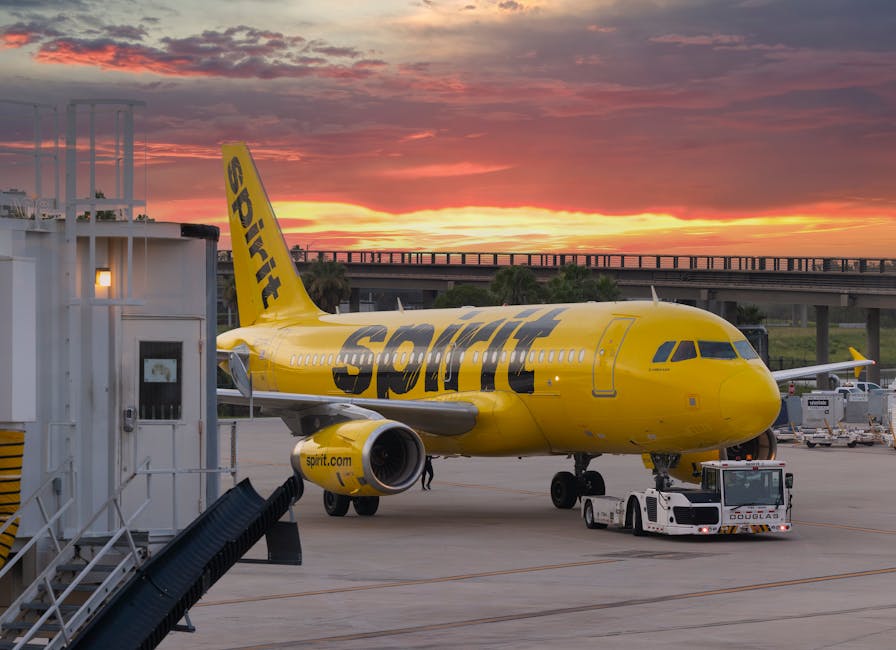
- Spirit Airlines ceased operations overnight after a failed government bailout, leaving 8,000 employees without jobs.
- The airline’s collapse is a significant blow to the industry, with far-reaching consequences including job losses and reduced passenger choice.
- Rising fuel costs, increased competition, and declining passenger demand contributed to Spirit Airlines’ demise.
- The airline industry is facing significant challenges, including a decline in demand and increased competition.
- Spirit Airlines’ collapse raises questions about the role of government support in times of crisis.
Spirit Airlines, once a thriving low-cost carrier, has ceased operations overnight after a failed government bailout, leaving 8,000 employees without jobs and thousands of passengers stranded. The news sent shockwaves through the airline industry, with many expressing sadness and disappointment at the loss of a major player in the market. As one pilot remarked, “Godspeed my friend, it’s the end of an era.” The sudden collapse of the airline has raised questions about the state of the industry and the role of government support in times of crisis.
The Rise and Fall of Spirit Airlines

The demise of Spirit Airlines is a stark reminder of the challenges facing the airline industry in recent years. Rising fuel costs, increased competition, and a decline in passenger demand have all taken their toll on the sector. Despite efforts to cut costs and increase efficiency, Spirit Airlines was unable to overcome these challenges and was forced to seek government support. The airline’s collapse is a significant blow to the industry, which had been hoping for a recovery in the coming months. The loss of a major player like Spirit Airlines will likely have far-reaching consequences, including job losses and a reduction in passenger choice.
Failed Bailout Talks

The failure of bailout talks between Spirit Airlines and the government has been blamed on a number of factors, including disagreements over the terms of the rescue package and concerns about the airline’s long-term viability. Despite intense negotiations, the two parties were unable to reach an agreement, and the airline was forced to cease operations. The government had been willing to provide support, but only if certain conditions were met, including significant restructuring and cost-cutting measures. Spirit Airlines was unable to meet these conditions, and the bailout talks ultimately collapsed. The failure of the talks has raised questions about the government’s role in supporting struggling industries and the criteria used to determine which companies are eligible for support.
Causes and Effects
The collapse of Spirit Airlines has been attributed to a combination of factors, including rising fuel costs, increased competition, and a decline in passenger demand. The airline’s business model, which relied on low fares and high volumes, was particularly vulnerable to these challenges. As fuel costs increased and passenger demand declined, the airline was unable to maintain its profitability and was forced to seek government support. The effects of the collapse will be far-reaching, with thousands of employees losing their jobs and passengers facing reduced choice and higher fares. The industry as a whole will also be impacted, with other airlines likely to face increased competition for Spirit’s former routes and passengers.
Implications for Passengers and Employees
The collapse of Spirit Airlines will have significant implications for passengers and employees alike. Thousands of passengers have been left stranded, with many facing uncertainty about their travel plans. The airline’s employees, who had been hoping for a rescue package, have been left without jobs and facing an uncertain future. The collapse of the airline will also have a significant impact on the local economy, with many businesses that rely on the airline’s operations likely to be affected. As the industry adjusts to the loss of a major player, passengers and employees will be watching with interest to see how the situation develops and what support will be available to those affected.
Expert Perspectives
Experts in the industry have been quick to comment on the collapse of Spirit Airlines, with many expressing surprise and disappointment at the failure of bailout talks. Some have blamed the government for not doing enough to support the airline, while others have criticized the airline’s business model and management. As one expert noted, “The collapse of Spirit Airlines is a wake-up call for the industry, highlighting the need for airlines to be more resilient and adaptable in the face of changing market conditions.” Others have pointed to the need for greater government support, arguing that the industry is critical to the economy and that more needs to be done to protect it.
As the dust settles on the collapse of Spirit Airlines, attention will turn to the future of the industry and what the implications will be for passengers, employees, and the economy as a whole. One thing is certain: the loss of a major player like Spirit Airlines will have far-reaching consequences, and the industry will be watching with interest to see how the situation develops. As the industry adjusts to this new reality, one question remains: what’s next for the airline industry, and how will it recover from the loss of a major player like Spirit Airlines?