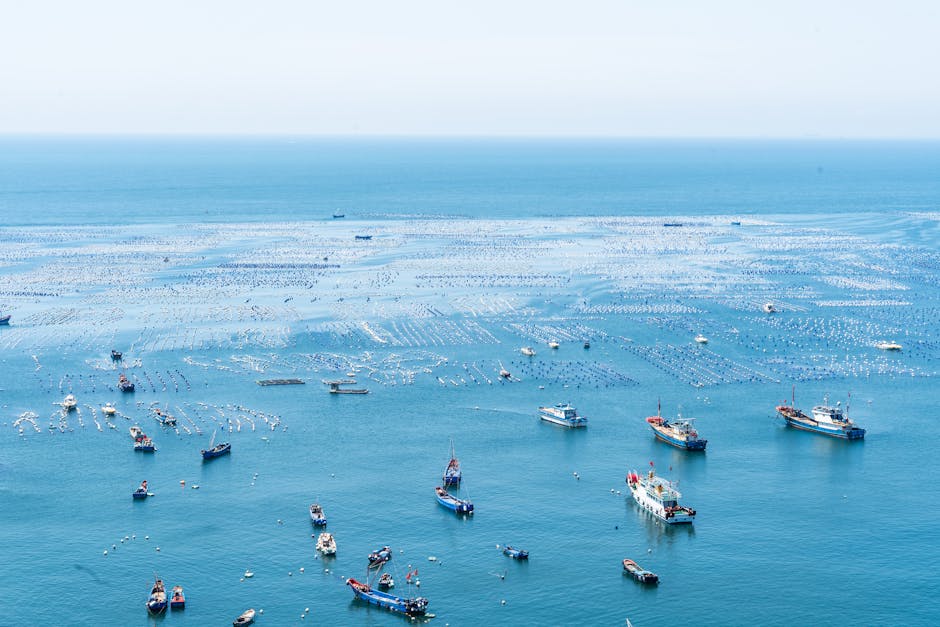
- The world’s oceans are being recognized as a valuable asset for sustainable growth and development, instead of a limitless resource.
- Investments in the blue economy have surged in recent years, with over $1 billion allocated to ocean-related projects in 2020.
- The blue economy aims to balance economic growth with ocean protection, recognizing the critical ecosystem services it provides.
- Climate change, overfishing, and pollution are major challenges that the blue economy can help mitigate through sustainable ocean use.
- The blue economy offers a promising solution for driving economic development while preserving the health of the ocean.
The world’s oceans cover over 70% of the planet, produce half of the oxygen we breathe, and are home to an estimated 700,000 to 1 million species. Yet, despite their importance, oceans have long been viewed as a limitless resource to be exploited, rather than a valuable asset to be protected. However, this mindset is starting to shift, with investors, scientists, and leaders increasingly recognizing the potential of the ‘blue economy’ to drive sustainable growth and development. In fact, according to a recent report, investments in the blue economy have surged in recent years, with over $1 billion in funding allocated to ocean-related projects in 2020 alone.
The Rise of the Blue Economy

The concept of the blue economy has been around for over a decade, but it’s only in recent years that it has started to gain mainstream traction. The term refers to the sustainable use of ocean resources for economic growth, improved livelihoods, and job creation, while also protecting the health of the ocean. This approach recognizes that the ocean is not just a source of food, energy, and other resources, but also provides critical ecosystem services, such as carbon sequestration, coastal protection, and nutrient cycling. As the world grapples with the challenges of climate change, overfishing, and pollution, the blue economy offers a promising solution, one that can help to mitigate these impacts while also driving economic development.
Key Players and Initiatives

So, who are the key players driving the growth of the blue economy? Investors, scientists, and policymakers are all playing important roles. On the investment side, firms such as Ocean Conservancy and The Nature Conservancy are providing critical funding for ocean-related projects, from marine conservation to sustainable aquaculture. Scientists, meanwhile, are working to better understand the ocean’s ecosystem services and the impacts of human activities on the marine environment. Governments, too, are getting in on the action, with countries such as Norway, Indonesia, and the Seychelles launching their own blue economy initiatives. These efforts are not only helping to raise awareness about the importance of ocean conservation but also providing a framework for sustainable development.
Analysis and Insights
So, what’s driving the growth of the blue economy, and what are the key challenges and opportunities that lie ahead? According to experts, one of the main drivers is the recognition that the ocean is a critical component of the global economy, providing livelihoods for millions of people and generating significant revenue through industries such as fishing, tourism, and shipping. At the same time, the ocean is facing unprecedented threats, from climate change to pollution, which are not only harming the environment but also undermining the long-term sustainability of these industries. By adopting a blue economy approach, investors, policymakers, and other stakeholders can help to mitigate these impacts while also driving growth and development. However, this will require a fundamental shift in how we think about the ocean and its resources, one that prioritizes sustainability and ecosystem health over short-term gains.
Implications and Opportunities
So, what are the implications of the blue economy for different stakeholders, from investors and policymakers to local communities and the environment? For investors, the blue economy offers a range of opportunities, from sustainable aquaculture and renewable energy to eco-tourism and marine conservation. For policymakers, it provides a framework for sustainable development, one that can help to drive economic growth while also protecting the environment. For local communities, the blue economy can provide new livelihood opportunities and help to improve food security. And for the environment, it offers a chance to protect and restore critical ecosystem services, from coral reefs to mangroves. However, realizing these benefits will require careful planning, coordination, and investment, as well as a commitment to sustainability and ecosystem health.
Expert Perspectives
Experts in the field offer contrasting viewpoints on the potential of the blue economy to drive sustainable growth and development. Some, such as Dr. Jane Lubchenco, a renowned marine biologist, argue that the blue economy has the potential to be a game-changer, providing a new paradigm for sustainable development that prioritizes ecosystem health and human well-being. Others, such as Dr. Daniel Pauly, a fisheries expert, are more cautious, highlighting the need for careful planning and regulation to ensure that the blue economy does not simply perpetuate existing problems, such as overfishing and pollution. Despite these differences, however, there is a growing consensus that the blue economy has the potential to make a significant positive impact, one that can help to protect the ocean and drive sustainable growth and development.
Looking to the future, there are many open questions about the blue economy, from how to scale up investments and impact to how to ensure that the benefits are shared equitably among different stakeholders. One thing is certain, however: the blue economy is an idea whose time has come, and it has the potential to make a significant positive impact on the health of the ocean and the planet as a whole. As investors, policymakers, and other stakeholders continue to explore the possibilities of the blue economy, it will be critical to prioritize sustainability, ecosystem health, and human well-being, ensuring that this emerging trend delivers on its promise to create a better future for all.