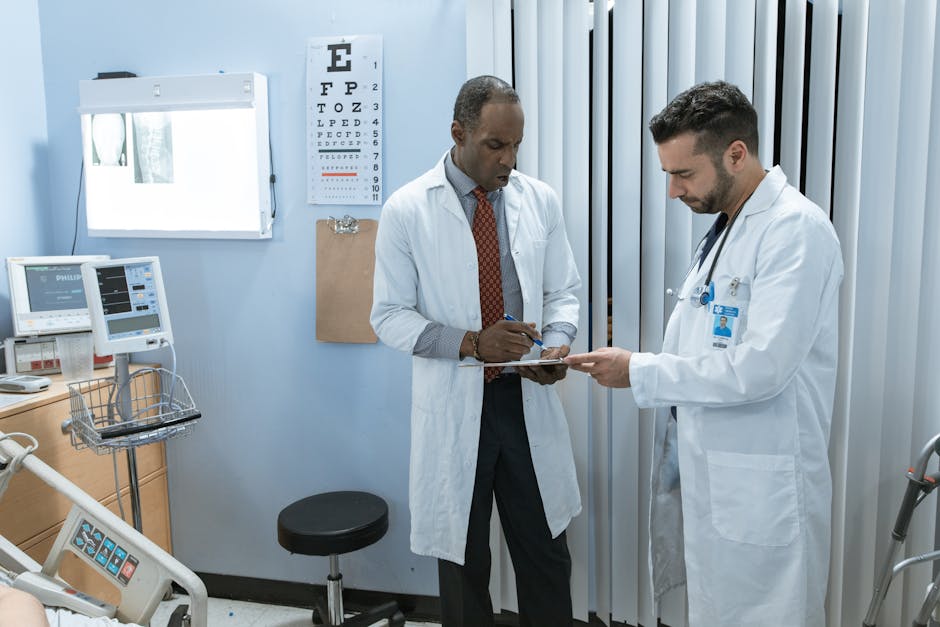
- AI-powered diagnostic tools have surpassed human doctors in accuracy, according to recent studies.
- The rise of AI in medical diagnosis has significant implications for the future of healthcare and patient outcomes.
- Advancements in algorithms and machine learning techniques have enabled AI systems to analyze large amounts of data more effectively.
- High-quality medical imaging data has contributed to the improved performance of AI-powered diagnostic tools.
- The use of AI in medical diagnosis is becoming increasingly popular in research and practice.
A striking fact has emerged in the field of medical diagnosis: artificial intelligence is starting to outperform human doctors in terms of accuracy. According to recent studies, AI-powered diagnostic tools are capable of correctly identifying diseases and conditions at a rate that surpasses that of their human counterparts. This development has significant implications for the future of healthcare, and raises important questions about the role of AI in medical diagnosis. With the potential to improve patient outcomes and reduce healthcare costs, AI-powered diagnosis is an area of research that is gaining increasing attention. As the technology continues to evolve, it is likely that we will see even more impressive advancements in the field.
The Rise of AI in Medical Diagnosis

The use of AI in medical diagnosis is not a new phenomenon, but recent advancements in the field have brought about a significant increase in accuracy and effectiveness. This is due in part to the development of more sophisticated algorithms and machine learning techniques, which enable AI systems to analyze large amounts of data and identify patterns that may not be apparent to human doctors. Additionally, the increasing availability of high-quality medical imaging data has provided AI systems with the raw material they need to learn and improve. As a result, AI-powered diagnostic tools are becoming increasingly popular in medical research and practice, and are being used to diagnose a wide range of conditions, from cancer and cardiovascular disease to neurological disorders and infectious diseases.
Key Developments in AI-Powered Diagnosis

One of the key developments in AI-powered diagnosis is the use of deep learning techniques, which enable AI systems to analyze complex medical images and identify patterns that are indicative of disease. This approach has been shown to be highly effective in diagnosing conditions such as breast cancer and lung cancer, where early detection is critical. Another important development is the use of natural language processing techniques, which enable AI systems to analyze large amounts of clinical text data and identify relevant information. This approach has been shown to be highly effective in diagnosing conditions such as cardiovascular disease and diabetes, where clinical text data plays a critical role. As these technologies continue to evolve, it is likely that we will see even more impressive advancements in the field of AI-powered diagnosis.
Analyzing the Causes and Effects of AI-Powered Diagnosis
The causes of AI-powered diagnosis are complex and multifaceted, and involve a range of technical, social, and economic factors. One of the key drivers of AI-powered diagnosis is the increasing availability of high-quality medical imaging data, which provides AI systems with the raw material they need to learn and improve. Another important factor is the development of more sophisticated algorithms and machine learning techniques, which enable AI systems to analyze complex medical data and identify patterns that may not be apparent to human doctors. In terms of effects, AI-powered diagnosis has the potential to revolutionize the field of medicine, improving patient outcomes and reducing healthcare costs. However, it also raises important questions about the role of AI in medical diagnosis, and the potential risks and benefits associated with this technology.
Implications of AI-Powered Diagnosis
The implications of AI-powered diagnosis are far-reaching and profound, and have significant implications for patients, doctors, and the broader healthcare system. One of the most significant implications is the potential for improved patient outcomes, as AI-powered diagnostic tools are able to identify diseases and conditions more accurately and effectively than human doctors. Another important implication is the potential for reduced healthcare costs, as AI-powered diagnosis enables doctors to diagnose conditions more quickly and effectively, reducing the need for unnecessary tests and procedures. However, there are also potential risks and challenges associated with AI-powered diagnosis, including the potential for errors and biases in AI decision-making, and the need for careful regulation and oversight of this technology.
Expert Perspectives
Experts in the field of AI-powered diagnosis have a range of perspectives on the potential benefits and risks of this technology. Some experts believe that AI-powered diagnosis has the potential to revolutionize the field of medicine, improving patient outcomes and reducing healthcare costs. Others are more cautious, highlighting the potential risks and challenges associated with this technology, including the potential for errors and biases in AI decision-making. As the technology continues to evolve, it is likely that we will see a range of different perspectives on the potential benefits and risks of AI-powered diagnosis, and a growing need for careful regulation and oversight of this technology.
As we look to the future, one of the key questions is what will happen next in the field of AI-powered diagnosis. Will we see even more impressive advancements in the accuracy and effectiveness of AI-powered diagnostic tools, or will the technology plateau and fail to deliver on its promise? One thing is certain: the field of AI-powered diagnosis is an area of research that is gaining increasing attention, and is likely to have significant implications for the future of healthcare. As we continue to explore the potential benefits and risks of this technology, it is essential that we approach this topic with a critical and nuanced perspective, recognizing both the potential benefits and the potential challenges associated with AI-powered diagnosis.