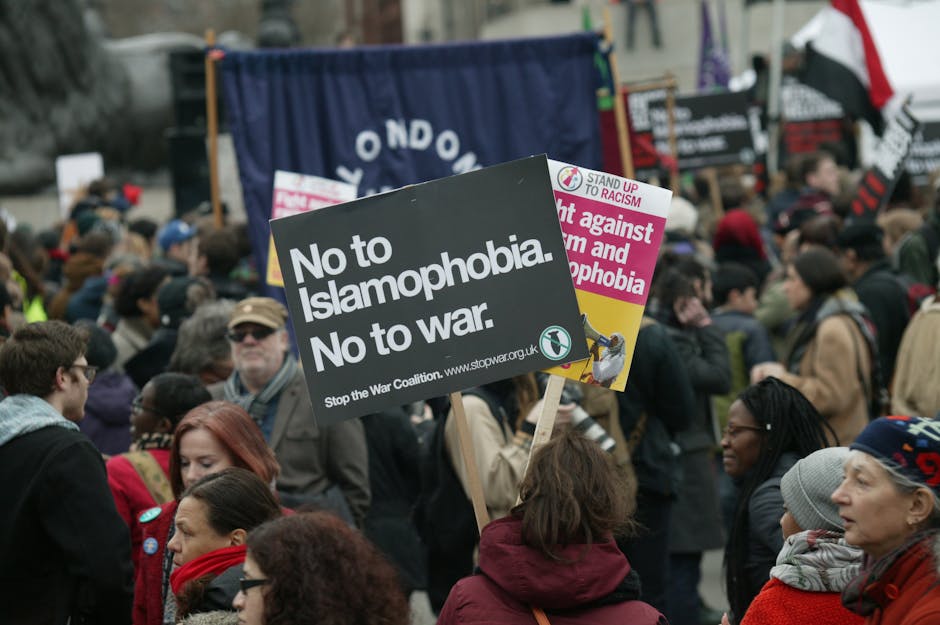
- UK Labour leader Keir Starmer suggests banning pro-Palestine demonstrations using inflammatory language like ‘globalise the Intifada’.
- The proposal aims to prevent hate speech and anti-Semitism in UK politics, but could also restrict free speech.
- This move reflects growing concerns over the tone and language used at some pro-Palestine protests in the UK.
- The proposal is expected to set a precedent for other European countries dealing with similar issues.
- Starmer’s decision is part of a broader effort by the Labour Party to address concerns over anti-Semitism.
The UK is witnessing a significant shift in its approach to pro-Palestine protests, with Labour leader Keir Starmer suggesting that certain demonstrations should be banned. Starmer’s comments come amid growing concerns over the use of inflammatory language at rallies, with the phrase “globalise the Intifada” being singled out as particularly problematic. This phrase, which refers to the Palestinian uprising against Israeli occupation, has been deemed “completely off limits” by Starmer, who argues that it has no place in British politics. The proposal has sparked a heated debate, with some hailing it as a necessary measure to prevent hate speech and others condemning it as an attack on free speech.
Background to the Proposal

The UK has long been a hub for pro-Palestine activism, with many Britons showing solidarity with the Palestinian cause. However, in recent years, there has been a growing concern over the tone and language used at some protests. The use of anti-Semitic rhetoric and violent imagery has led to calls for greater regulation of demonstrations. Starmer’s proposal is seen as an attempt to address these concerns, while also placating critics who argue that the Labour Party has been too soft on anti-Semitism. The move is likely to be closely watched by other European countries, which are also grappling with the issue of balancing free speech with national security and community cohesion.
The Key Details

Starmer’s proposal to ban certain pro-Palestine protests has been met with a mixed response. While some have welcomed the move as a necessary step to prevent hate speech, others have expressed concerns over the potential impact on free speech. The Labour leader has argued that the phrase “globalise the Intifada” is a call to arms that has no place in British politics. He has also emphasized that the ban would not be a blanket restriction on pro-Palestine protests, but rather a targeted measure to prevent the use of inflammatory language. The proposal has sparked a heated debate, with some accusing Starmer of attempting to stifle legitimate criticism of Israeli policy. Others have praised the move, arguing that it is a necessary step to prevent the spread of anti-Semitic ideology.
Analysis of the Proposal
Experts say that Starmer’s proposal raises important questions about the balance between free speech and national security. While the right to protest is a fundamental aspect of democracy, there is also a need to prevent the use of language that incites violence or hatred. The proposal has been seen as a attempt to navigate this complex issue, with Starmer arguing that the ban would be a proportionate response to a specific problem. However, others have expressed concerns over the potential for mission creep, with some arguing that the ban could be used to stifle legitimate criticism of Israeli policy. Data suggests that the use of anti-Semitic rhetoric at pro-Palestine protests is a significant problem, with many Britons expressing concern over the tone and language used at demonstrations.
Implications of the Proposal
The implications of Starmer’s proposal are far-reaching, with potential consequences for pro-Palestine activists, the Labour Party, and the wider British public. If implemented, the ban could lead to a significant shift in the way pro-Palestine protests are policed, with a greater emphasis on preventing the use of inflammatory language. This could lead to a reduction in tensions between pro-Palestine activists and the Jewish community, who have long been concerned over the use of anti-Semitic rhetoric at demonstrations. However, others have expressed concerns over the potential impact on free speech, with some arguing that the ban could be used to stifle legitimate criticism of Israeli policy.
Expert Perspectives
Experts are divided over the merits of Starmer’s proposal, with some hailing it as a necessary measure to prevent hate speech and others condemning it as an attack on free speech. Some have argued that the ban is a proportionate response to a specific problem, while others have expressed concerns over the potential for mission creep. “The proposal raises important questions about the balance between free speech and national security,” said one expert. “While the right to protest is a fundamental aspect of democracy, there is also a need to prevent the use of language that incites violence or hatred.”
As the debate over Starmer’s proposal continues, one thing is clear: the issue of pro-Palestine protests is unlikely to go away anytime soon. With tensions between pro-Palestine activists and the Jewish community showing no signs of abating, the UK is likely to remain a hub for controversy and debate. The key question is what the future holds for pro-Palestine protests in the UK, and whether Starmer’s proposal will be enough to address the concerns of all parties involved. As one expert noted, “The situation is complex, and there are no easy answers. However, one thing is clear: the UK needs to find a way to balance free speech with national security and community cohesion.”