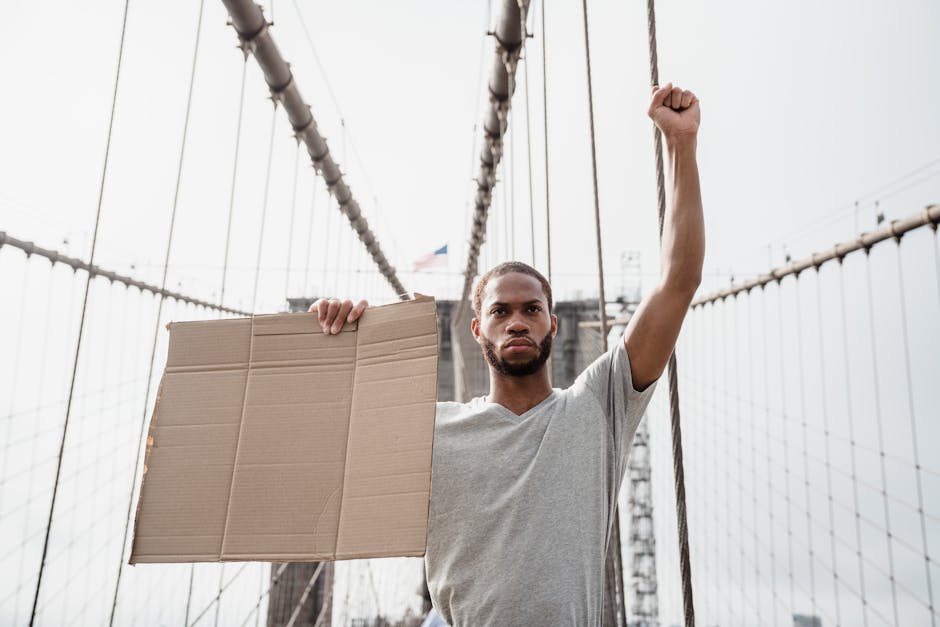
- A 45-year-old man is protesting the Iran war from the top of the Frederick Douglass Memorial Bridge in Washington.
- The protest has sparked a mix of awe and concern among onlookers, highlighting the deep divisions surrounding the issue.
- The bridge, named after the famous abolitionist Frederick Douglass, symbolizes freedom and the fight against oppression.
- The protester’s message is clear: the war with Iran must end, and it is a call to action for peace and human rights.
- The protest serves as a poignant reminder of the human cost of conflict in the ongoing conflict with Iran.
A striking scene is unfolding in Washington as a 45-year-old man has taken to the top of the Frederick Douglass Memorial Bridge to protest the ongoing conflict with Iran. This daring act of defiance has sparked a mixture of awe and concern among onlookers, with many questioning the motivations behind such a drastic measure. As the world watches, the protester’s message is clear: the war with Iran must end. With the international community already on edge, this protest adds another layer of complexity to the situation, highlighting the deep divisions and strong emotions that surround this issue.
The Bridge as a Symbol

The choice of the Frederick Douglass Memorial Bridge as the site for this protest is significant. Named after the famous abolitionist and orator, the bridge stands as a symbol of freedom and the fight against oppression. By occupying this space, the protester is drawing a direct line between the historical struggles for justice and the current conflict with Iran. This is not just a protest against war; it is a call to action, a reminder that the pursuit of peace and human rights is an ongoing struggle that requires constant vigilance and effort. As the world grapples with the moral and ethical implications of military action, this protest serves as a poignant reminder of the human cost of conflict.
A lone voice against the war

Details are emerging about the protester, who has been identified as a 45-year-old man with a history of activism. According to eyewitnesses, he climbed to the top of the bridge early in the morning, carrying a sign that reads “End the War with Iran.” Since then, he has been speaking to media outlets, including Al Jazeera, to express his opposition to the conflict. The protester’s actions have sparked a flurry of reactions, ranging from support and admiration to criticism and concern for his safety. As the situation unfolds, authorities are working to ensure the protester’s safety while also navigating the complex legal and ethical implications of his actions.
Understanding the Protester’s Message
Analysis of the protester’s message reveals a deep concern about the humanitarian and geopolitical consequences of the war with Iran. Experts point to the potential for widespread civilian casualties, the destabilization of the region, and the long-term effects on global security and economy. The protester’s act, while dramatic, is part of a broader movement against the war, with many around the world questioning the justification and strategy behind military intervention. Data on public opinion shows a significant divide, with a growing number of people calling for diplomatic solutions over military action. As the international community weighs its options, the protester’s voice, though singular, represents a significant segment of global opinion.
Implications of the Protest
The implications of this protest are far-reaching, affecting not only the immediate community but also the global discussion on conflict resolution. The act of one individual can inspire others, sparking a wave of protests and calls to action. Moreover, it highlights the role of individual agency in shaping public discourse and policy. The protester’s decision to occupy the bridge, a critical infrastructure point, also raises questions about the balance between the right to protest and public safety. As authorities navigate this delicate situation, they must consider the potential for similar actions in the future and the need for policies that address both security concerns and the right to free speech.
Expert Perspectives
Experts offer contrasting viewpoints on the effectiveness and implications of the protester’s actions. Some see it as a powerful statement that brings necessary attention to the cause, while others criticize it as a dangerous stunt that could endanger lives. Dr. Maria Rodriguez, a conflict resolution specialist, notes, “The power of individual action should not be underestimated. This protest, while unconventional, underscores the urgency and passion behind the anti-war movement.” In contrast, security analyst John Lee warns, “Such actions can have unintended consequences, including the risk of injury to the protester and others, and the potential to disrupt critical infrastructure.” These perspectives highlight the complexity of the issue, with no easy answers but a clear need for ongoing dialogue and consideration of all viewpoints.
Looking forward, the situation remains fluid, with many questions unanswered. What will be the outcome for the protester? How will this action influence the broader anti-war movement? And what steps will authorities take to balance the right to protest with the need for public safety? As the world watches, one thing is clear: this protest has ignited a crucial conversation about the nature of conflict, the power of individual action, and the pursuit of peace in a complex and often divided world. The coming days will be critical in determining the legacy of this daring act of defiance and its impact on the global stage.