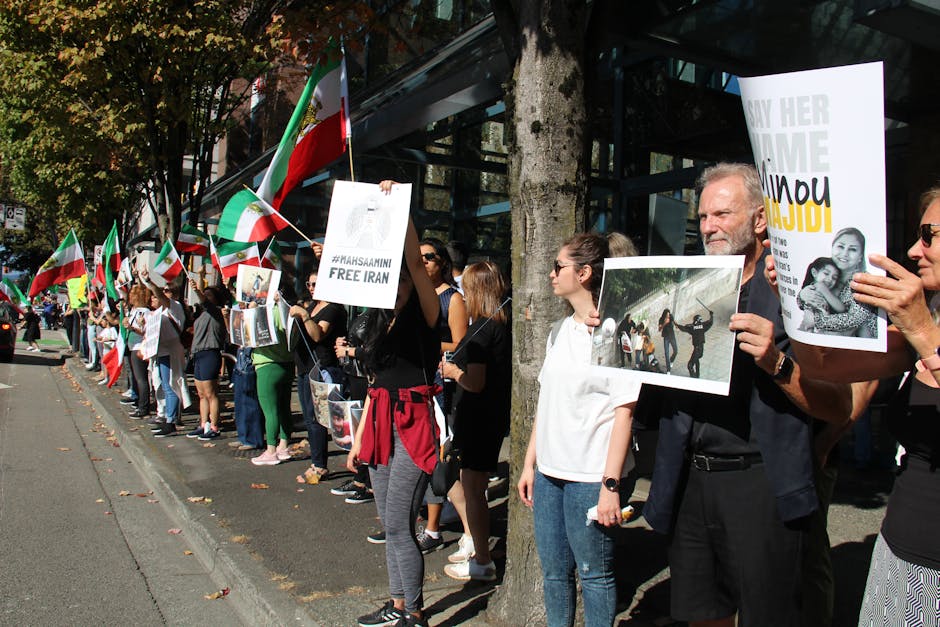
- Iranians are struggling with the human cost of conflict and economic strife, leading to a deep sense of pain and powerlessness.
- Decades of economic mismanagement, corruption, and authoritarian rule have led to a faltering economy and widespread poverty.
- Protests sparked by a fuel price hike have brought attention to the need for change and an end to corruption and cronyism.
- The government’s struggle to maintain control has left citizens to pick up the pieces and attempt to rebuild their lives.
- The future looks uncertain for many Iranians, with inflation soaring and unemployment on the rise.
As the world watches, Iranians are living with a deep sense of pain and powerlessness, their daily lives a testament to the human cost of conflict and economic strife. Despite the smooth veneer of normalcy that has settled over the country, many Iranians are quietly grappling with grief, economic stress, and a loss of hope. The past year has seen widespread protests, a faltering economy, and a government struggling to maintain control, leaving citizens to pick up the pieces and attempt to rebuild their lives. With inflation soaring and unemployment on the rise, the future looks increasingly uncertain for many Iranians, who are being forced to confront the harsh realities of their situation.
Background to the Crisis

The current crisis in Iran has its roots in decades of economic mismanagement, corruption, and authoritarian rule. The country’s economy has long been dominated by the state and a handful of powerful elites, leaving little room for private enterprise or innovation. The result has been a system that is both inefficient and unfair, with wealth concentrated in the hands of a few and poverty widespread. The recent protests, which were sparked by a hike in fuel prices, have brought these issues to the forefront, with many Iranians demanding change and an end to the corruption and cronyism that has plagued their country for so long. As the government struggles to respond to these demands, it is clear that the situation is unlikely to improve anytime soon.
Key Players and Events

The key players in the Iranian crisis are the government, led by Supreme Leader Ali Khamenei, and the protesters, who are a diverse group of citizens from all walks of life. The protests, which began in November, have been marked by violence and repression, with many protesters arrested, injured, or killed. The government has responded to the protests with a mix of concessions and crackdowns, offering limited reforms while also using force to quell the unrest. Despite the challenges they face, the protesters remain determined, with many seeing the current crisis as an opportunity to bring about real change in their country. As the situation continues to unfold, it is clear that the outcome will depend on the actions of these key players.
Causes and Consequences
The causes of the Iranian crisis are complex and multifaceted, involving a combination of economic, political, and social factors. At the heart of the crisis is the country’s failing economy, which has been ravaged by corruption, mismanagement, and international sanctions. The result has been a sharp decline in living standards, with many Iranians struggling to make ends meet. The consequences of the crisis are far-reaching, with the potential to destabilize not just Iran, but the entire region. As the situation continues to deteriorate, there is a growing risk of conflict, both within Iran and between Iran and its neighbors. The international community is watching with concern, knowing that the outcome of the crisis will have significant implications for global security and stability.
Implications and Outcomes
The implications of the Iranian crisis are profound, with the potential to affect not just the country’s citizens, but people all around the world. The crisis has already had a significant impact on the global economy, with the price of oil rising in response to the unrest. As the situation continues to unfold, there is a growing risk of further economic disruption, as well as the potential for conflict and instability. For Iranians, the implications are even more personal, with many facing a daily struggle to survive. The outcome of the crisis will depend on the actions of the government and the protesters, as well as the response of the international community. As the situation continues to evolve, one thing is clear: the future of Iran hangs in the balance.
Expert Perspectives
Experts are divided on the likely outcome of the Iranian crisis, with some seeing the potential for real change and others predicting a continuation of the status quo. Some argue that the protests have the potential to bring about significant reforms, while others believe that the government will ultimately succeed in crushing the unrest. As the situation continues to unfold, it is clear that the outcome will depend on a complex interplay of factors, including the actions of the government, the protesters, and the international community. One thing is certain, however: the Iranian crisis has the potential to be a turning point in the country’s history, with the future hanging precariously in the balance.
As the world watches, Iranians are left to wonder what the future holds. Will the government succeed in maintaining its grip on power, or will the protesters ultimately prevail? The answer to this question will depend on a variety of factors, including the actions of the key players and the response of the international community. As the situation continues to evolve, one thing is clear: the outcome of the Iranian crisis will have significant implications for the country, the region, and the world. The coming months and years will be crucial, as Iranians and the international community wait with bated breath to see what the future holds for this troubled and volatile nation.