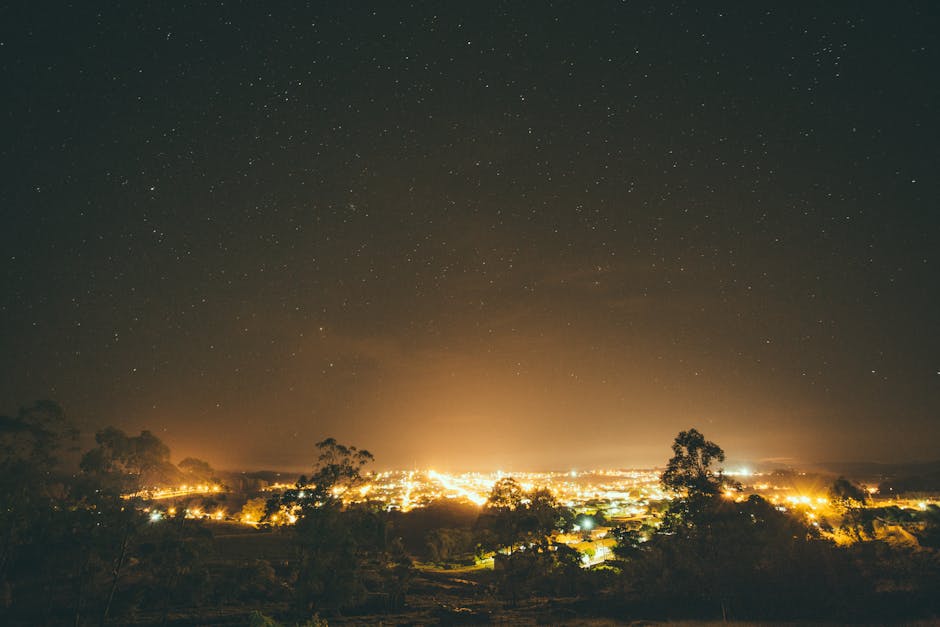
- 80% of the global population lives under light-polluted skies, with severe impacts on both the environment and human health.
- Light pollution is a significant concern, affecting 99% of the population in the United States and Europe, and disrupting nocturnal habitats.
- The increasing use of artificial lighting is the primary cause of light pollution, leading to a significant glow in the night sky.
- The effects of light pollution are far-reaching, including sleep disorders, obesity, and other health problems in humans.
- A new browser-based light pollution simulator utilizes real photometric data to demonstrate the extent of the problem and raise awareness.
The world is getting brighter, but not in a good way. A staggering 80% of the global population lives under light-polluted skies, with 99% of those living in the United States and Europe being affected. This stark reality is now being highlighted by a new browser-based light pollution simulator that utilizes real photometric data to demonstrate the extent of the problem. The tool, which can be accessed online, provides a striking visual representation of the issue and is set to raise awareness about the importance of mitigating light pollution.
Understanding Light Pollution

Light pollution, which is defined as the excessive or obtrusive light at night, has become a significant concern in recent years. The increasing use of artificial lighting has led to a significant glow in the night sky, making it difficult for people to see the stars and disrupting the natural habitats of nocturnal animals. The issue is not just limited to the environment; light pollution also has a significant impact on human health, with studies suggesting that it can lead to sleep disorders, obesity, and other health problems. With the new simulator, people can now see the extent of the problem and understand why it matters.
The Technology Behind the Simulator

The light pollution simulator uses advanced algorithms and real photometric data to create a highly accurate representation of the night sky. The tool takes into account various factors, including the location, time of year, and type of lighting being used, to provide a realistic view of the light pollution in a particular area. The simulator also allows users to adjust the level of light pollution and see how it affects the night sky, making it a valuable tool for researchers, policymakers, and individuals looking to make a positive impact. The technology behind the simulator is a significant breakthrough, and it has the potential to revolutionize the way we approach light pollution mitigation.
Key Findings and Implications
The simulator has already revealed some striking findings, with many areas showing high levels of light pollution. The tool has also highlighted the impact of different types of lighting, with some sources being more polluting than others. For example, the simulator shows that LED lights, which are often touted as being energy-efficient, can actually be more polluting than traditional lighting sources due to their high intensity and blue-rich spectrum. These findings have significant implications for policymakers and individuals looking to reduce light pollution, and they underscore the need for a more nuanced approach to lighting.
Expert Perspectives
Experts in the field have welcomed the new simulator, praising its accuracy and usefulness. “The simulator is a game-changer for our field,” said one researcher. “It allows us to visualize the problem in a way that was previously impossible, and it provides a powerful tool for communicating the importance of light pollution mitigation to policymakers and the general public.” However, not all experts agree on the best approach to reducing light pollution, with some advocating for a complete overhaul of our lighting systems and others pushing for more incremental changes.
As the world continues to urbanize and lighting becomes an increasingly important issue, the new simulator is set to play a critical role in raising awareness and driving change. With its advanced technology and real photometric data, the tool provides a unique perspective on the problem and highlights the need for a more sustainable approach to lighting. As we look to the future, one question remains: will we be able to reduce light pollution and restore the natural beauty of the night sky, or will the glow of artificial lighting continue to dominate our world?