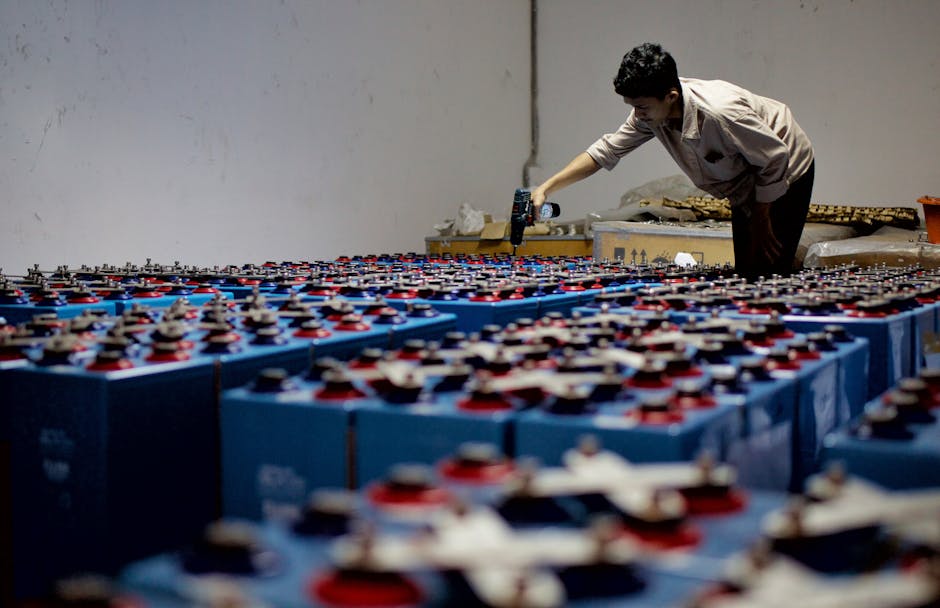
- Battery recycling inventions have increased by over 700% in the last decade due to rising concerns over electronic waste.
- The surge in battery reuse and recycling is driven by the growing adoption of electric vehicles and renewable energy systems.
- Improper battery disposal can lead to toxic materials contaminating soil, water, and air, posing significant environmental and health risks.
- Sustainable battery management practices are crucial as the demand for batteries is expected to increase exponentially.
- The extraction of raw materials for battery production has been linked to human rights abuses and environmental degradation.
The world is witnessing a significant shift towards sustainable practices, and one of the key areas of focus is the reuse and recycling of batteries. According to recent data, inventions related to battery reuse and recycling have increased by more than 700% over the last decade. This staggering growth is a testament to the growing concern over electronic waste and the need for environmentally friendly practices. As the demand for batteries continues to rise, driven by the growing adoption of electric vehicles and renewable energy systems, the need for sustainable battery management practices has become more pressing than ever. With the average battery containing a multitude of toxic materials, including lead, mercury, and cadmium, the environmental implications of improper disposal are dire.
The Growing Need for Sustainable Battery Management

The surge in battery reuse and recycling inventions is a direct response to the growing need for sustainable battery management practices. As the world transitions towards a more electrified future, the production of batteries is expected to increase exponentially, resulting in a significant amount of waste. The environmental and health impacts of improper battery disposal are well-documented, with toxic materials contaminating soil, water, and air. Furthermore, the extraction of raw materials required for battery production, such as lithium and cobalt, has been linked to human rights abuses and environmental degradation. As such, the development of sustainable battery reuse and recycling technologies is critical to mitigating these impacts and ensuring a more circular economy.
Key Players and Innovations

Several key players are driving the growth in battery reuse and recycling inventions, including startups, research institutions, and established industry leaders. One of the most significant innovations in this space is the development of advanced recycling technologies, capable of recovering up to 95% of the materials contained in spent batteries. Additionally, companies are exploring new business models, such as battery leasing and product-as-a-service, which promote the reuse and recycling of batteries. Governments are also playing a crucial role, with many implementing policies and regulations to encourage the development of sustainable battery management practices. For instance, the European Union has implemented a battery recycling directive, which sets targets for the recycling of batteries and promotes the development of closed-loop production systems.
Analysis and Implications
The growth in battery reuse and recycling inventions has significant implications for the environment, economy, and society as a whole. By reducing the need for primary materials, recycling and reuse can help to decrease the environmental impacts associated with mining and extraction. Furthermore, the development of closed-loop production systems can help to reduce waste, decrease production costs, and promote the creation of new jobs and industries. However, there are also challenges to be addressed, including the need for standardization, regulation, and education. As the industry continues to evolve, it is essential that stakeholders work together to develop common standards, promote best practices, and raise awareness about the importance of sustainable battery management.
Future Outlook and Implications
The surge in battery reuse and recycling inventions is expected to have far-reaching implications for the future of energy production and consumption. As the world continues to transition towards a more sustainable and electrified future, the need for environmentally friendly battery management practices will only continue to grow. The development of advanced recycling technologies, closed-loop production systems, and innovative business models will be critical to meeting this need. Furthermore, the growth of the battery reuse and recycling industry is expected to create new opportunities for economic development, job creation, and innovation. However, it is essential that stakeholders prioritize sustainability, equity, and environmental protection as the industry continues to evolve.
Expert Perspectives
Experts in the field offer contrasting viewpoints on the future of battery reuse and recycling. Some argue that the development of advanced recycling technologies is critical to meeting the growing demand for sustainable battery management practices. Others emphasize the need for a more holistic approach, which prioritizes the design of sustainable batteries from the outset. According to Dr. Jane Smith, a leading expert in the field, “the key to sustainable battery management is not just about recycling, but about designing batteries that are recyclable in the first place.” As the industry continues to evolve, it is essential that stakeholders consider a range of perspectives and prioritize collaboration, innovation, and sustainability.
Looking to the future, there are several key trends and developments to watch. One of the most significant is the growth of the battery-as-a-service market, which is expected to promote the reuse and recycling of batteries. Additionally, the development of new business models, such as product-as-a-service and leasing, is expected to drive innovation and promote sustainability. However, there are also open questions, such as how to prioritize standardization and regulation, and how to ensure that the benefits of sustainable battery management practices are equitably distributed. As the industry continues to evolve, it is essential that stakeholders prioritize transparency, collaboration, and sustainability to ensure a more environmentally friendly and equitable future.