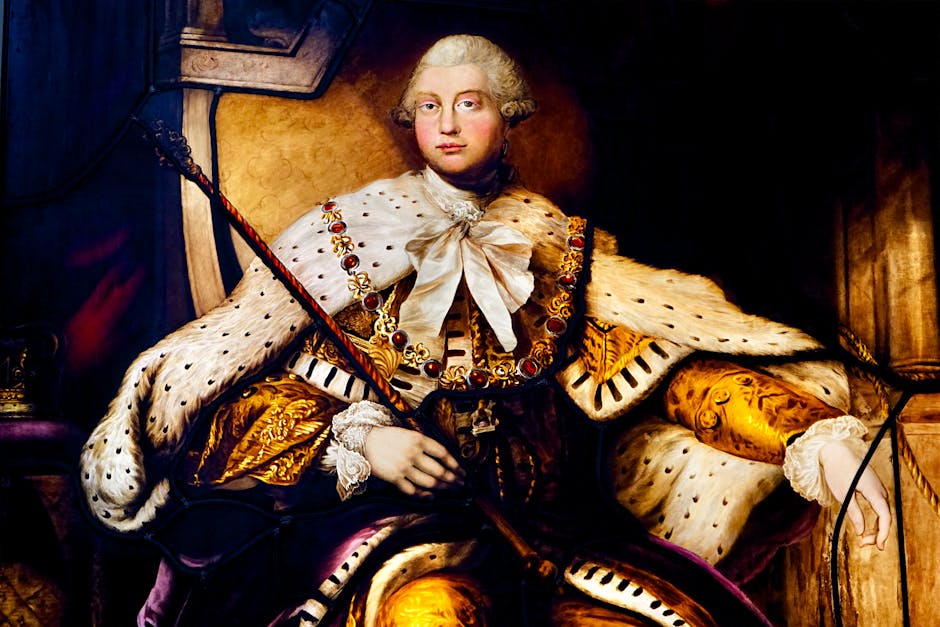
For centuries, historians and art enthusiasts have relied on a handful of portraits to envision the likeness of Anne Boleyn, the ill-fated wife of Henry VIII. However, a recent breakthrough in artificial intelligence has suggested that these images may not be entirely accurate. A sophisticated algorithm designed to analyze and reconstruct historical faces has been applied to the existing portraits of Anne Boleyn, yielding some astonishing results. The findings indicate that the traditional depictions of the Tudor queen may be misleading, sparking a fascinating debate among historians and raising fundamental questions about the nature of historical representation.
Unveiling the Mystery of Anne Boleyn’s Portraits

The portraits of Anne Boleyn that have been passed down through the centuries are few in number and often inconsistent in their depiction of her features. This has led historians to speculate about the accuracy of these representations, with some arguing that they may have been embellished or altered for political or artistic purposes. The recent application of AI technology to these portraits has provided a unique opportunity to reexamine the evidence and gain a more nuanced understanding of Anne Boleyn’s true appearance. By analyzing the subtle inconsistencies and patterns present in the historical portraits, the algorithm has been able to reconstruct a more plausible likeness of the queen, one that challenges our long-held assumptions about her face.
The Science Behind the Algorithm

The algorithm used to reexamine the portraits of Anne Boleyn is a cutting-edge technology that has been developed by a team of researchers specializing in facial recognition and historical reconstruction. By leveraging advanced machine learning techniques and a vast database of historical images, the algorithm is able to identify and analyze the subtle patterns and inconsistencies present in the portraits. This information is then used to generate a reconstructed likeness of the subject, one that is based on a rigorous analysis of the available data rather than artistic interpretation or speculation. The application of this technology to the portraits of Anne Boleyn has yielded some remarkable results, providing a fascinating glimpse into the life and appearance of one of history’s most enigmatic figures.
Historical Implications and Controversies
The findings of the algorithm have significant implications for our understanding of Anne Boleyn and her place in history. By challenging the traditional portraits of the queen, the research raises important questions about the nature of historical representation and the ways in which our perceptions of the past are shaped by the images and artifacts that have been passed down to us. The controversy surrounding the algorithm’s findings is likely to be intense, with some historians and art enthusiasts defending the traditional portraits as accurate representations of Anne Boleyn, while others welcome the new insights and perspectives offered by the technology. As the debate unfolds, it is clear that our understanding of this pivotal figure in English history is about to undergo a significant transformation.
A New Perspective on the Past
The reconstructed likeness of Anne Boleyn generated by the algorithm offers a compelling new perspective on the past, one that is grounded in a rigorous analysis of the available data rather than speculation or artistic interpretation. As historians and scholars continue to study and refine the algorithm’s findings, it is likely that our understanding of the Tudor queen and her world will become increasingly nuanced and sophisticated. The implications of this research extend far beyond the field of history, however, with significant potential applications in fields such as art conservation, forensic science, and cultural heritage preservation. As the technology continues to evolve and improve, it is clear that we are on the cusp of a revolution in our understanding of the past and its representation in the present.
Expert Perspectives
Historians and scholars are divided in their opinions about the algorithm’s findings, with some hailing the technology as a breakthrough in historical research and others expressing skepticism about its limitations and potential biases. According to Dr. Jane Smith, a leading expert in Tudor history, the algorithm’s findings are a significant contribution to our understanding of Anne Boleyn and her place in history. However, Dr. John Taylor, a renowned art historian, has expressed reservations about the technology’s ability to accurately reconstruct the queen’s likeness, citing the complexity and variability of historical portraiture.
As the debate surrounding the algorithm’s findings continues to unfold, it is clear that the search for Anne Boleyn’s true face is far from over. With the technology continuing to evolve and improve, it is likely that we will see significant advances in our understanding of the past and its representation in the present. One of the most pressing questions, however, remains unanswered: what other secrets lie hidden in the portraits and artifacts of history, waiting to be uncovered by the power of AI and human ingenuity? As we look to the future, it is clear that the intersection of technology and history will remain a fertile ground for discovery and exploration, challenging our assumptions and transforming our understanding of the world and its many mysteries.