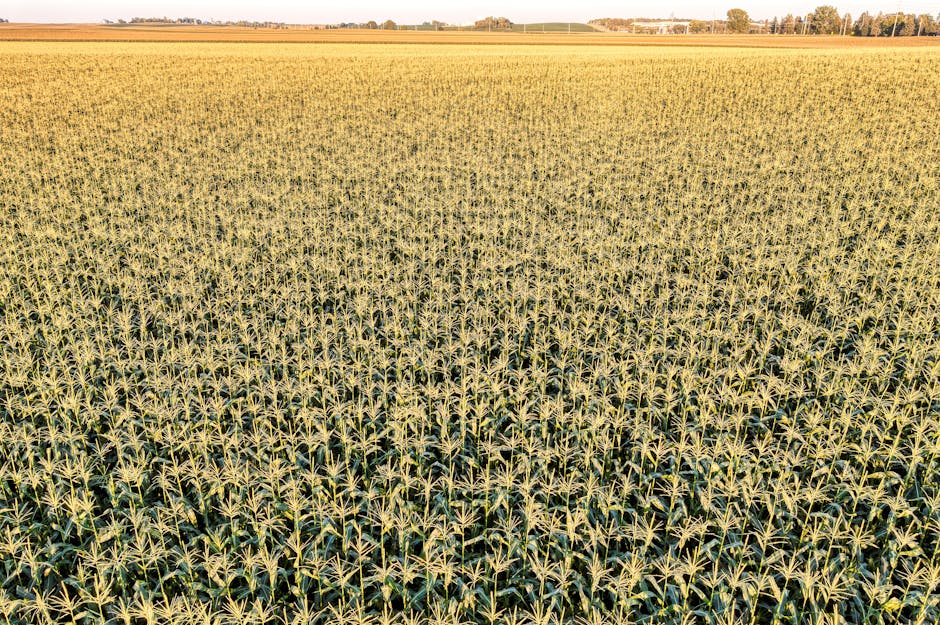
- USDA corn estimates were off by 4.5 million acres, sparking concerns about the reliability of its data.
- The undercount has significant implications for the agricultural industry, affecting market trends, prices, and production levels.
- The error is attributed to a lack of survey responses, rather than job cuts or budget reductions.
- The USDA is reevaluating its data collection strategies due to the undercount.
- The discrepancy highlights the challenges faced by the USDA in obtaining accurate and comprehensive data.
The United States Department of Agriculture (USDA) has faced intense scrutiny in recent months after revealing a significant undercount of corn crops in its latest estimates. According to the agency, corn estimates were off by a staggering 4.5 million acres last year, sparking concerns about the reliability of its data. This discrepancy has significant implications for the agricultural industry, as accurate crop estimates play a crucial role in determining market trends, prices, and production levels. The USDA’s admission of error has raised questions about the effectiveness of its data collection methods and the potential consequences for farmers, traders, and policymakers who rely on this information.
Background and Context

The USDA’s National Agricultural Statistics Service (NASS) is responsible for collecting and analyzing data on crop production, yields, and acreage. The agency uses a combination of surveys, satellite imagery, and other methods to gather information from farmers and ranchers across the country. However, the latest undercount has highlighted the challenges faced by the USDA in obtaining accurate and comprehensive data. The agency has attributed the error to a lack of survey responses, rather than job cuts or budget reductions, which has led to a reevaluation of its data collection strategies and the potential need for alternative approaches.
Key Details of the Undercount

The USDA’s undercount of corn crops has been attributed to a lower-than-expected response rate to its surveys, which are a critical component of the agency’s data collection efforts. The agency had anticipated a higher level of participation from farmers and ranchers, but ultimately received fewer responses than expected. This shortfall in survey data, combined with other methodological limitations, contributed to the significant undercount of corn crops. The USDA has emphasized that the error was not the result of job cuts or budget reductions, but rather a reflection of the challenges inherent in collecting accurate and comprehensive data from a diverse and widespread agricultural community.
Analysis and Implications
The USDA’s undercount of corn crops has significant implications for the agricultural industry and the broader economy. Accurate crop estimates play a critical role in determining market trends, prices, and production levels, and any errors or discrepancies can have far-reaching consequences. The agency’s admission of error has raised concerns about the reliability of its data and the potential impact on farmers, traders, and policymakers who rely on this information. Furthermore, the undercount has highlighted the need for the USDA to reevaluate its data collection strategies and consider alternative approaches, such as the use of satellite imagery or other technologies, to improve the accuracy and comprehensiveness of its estimates.
Broader Consequences and Implications
The USDA’s undercount of corn crops has significant implications for a range of stakeholders, including farmers, traders, and policymakers. The error has raised concerns about the reliability of the agency’s data and the potential impact on market trends, prices, and production levels. Farmers and ranchers rely on accurate crop estimates to make informed decisions about planting, harvesting, and marketing their crops, and any errors or discrepancies can have significant financial and operational consequences. Similarly, traders and policymakers use the USDA’s data to inform their decisions about trade policy, market regulation, and other issues, and any inaccuracies can have far-reaching consequences for the broader economy.
Expert Perspectives
Experts in the agricultural industry have offered contrasting viewpoints on the USDA’s undercount of corn crops and its implications for the industry. Some have emphasized the need for the agency to improve its data collection strategies and consider alternative approaches, such as the use of satellite imagery or other technologies. Others have highlighted the challenges inherent in collecting accurate and comprehensive data from a diverse and widespread agricultural community, and have cautioned against overreacting to a single error or discrepancy. Regardless of their perspective, however, experts agree that accurate crop estimates are essential for the health and stability of the agricultural industry, and that the USDA must take steps to ensure the reliability and comprehensiveness of its data.
Looking forward, the USDA’s undercount of corn crops raises important questions about the future of agricultural data collection and the role of technology in improving the accuracy and comprehensiveness of crop estimates. As the agency continues to grapple with the challenges of collecting data from a diverse and widespread agricultural community, it will be important to consider alternative approaches and innovative solutions that can help to improve the reliability and effectiveness of its estimates. One key question is whether the USDA will be able to leverage new technologies, such as satellite imagery or artificial intelligence, to improve the accuracy and comprehensiveness of its data, and what implications this may have for the broader agricultural industry.