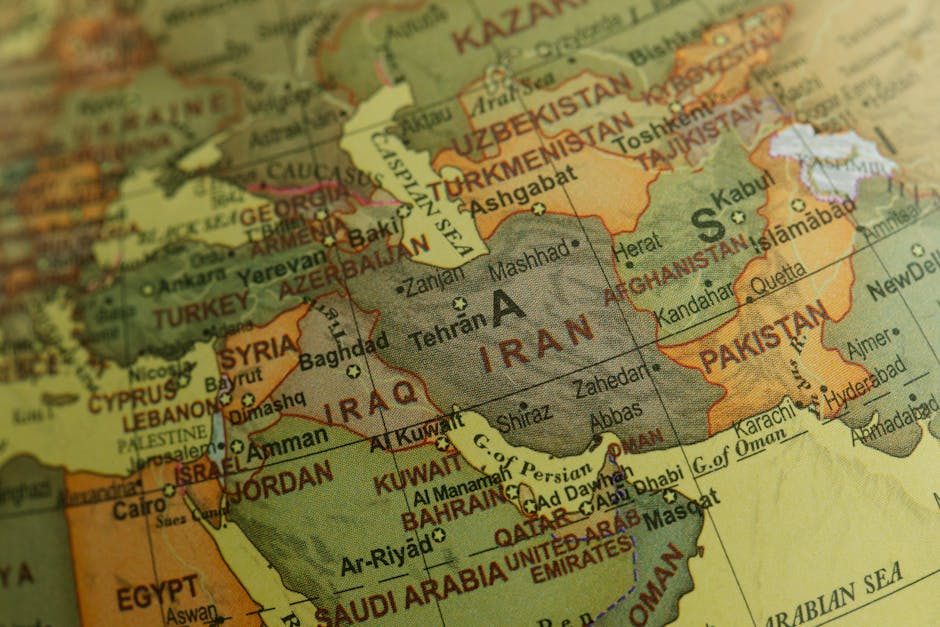
The United States’ involvement in the Iran war has sparked a significant rift within the Republican Party, with a growing number of lawmakers breaking ranks to challenge the Trump administration’s stance on the conflict. In a striking turn of events, some of the president’s own party members have begun to demand greater accountability and transparency regarding the war efforts. This shift in sentiment is particularly notable, given the party’s traditional loyalty to the president and his policies. The fact that Republicans are now publicly questioning the administration’s handling of the war highlights the depth of concern and discontent within the party.
The Backdrop of Escalating Tensions

The current tensions between the US and Iran have been escalating for months, with both sides engaging in a war of words and sporadic military exchanges. The situation has been further complicated by the Trump administration’s decision to withdraw from the Joint Comprehensive Plan of Action (JCPOA), a move that has been widely criticized by Democrats and some Republicans. The JCPOA, also known as the Iran nuclear deal, was hailed as a major diplomatic achievement when it was signed in 2015, and its collapse has raised concerns about the potential for a wider conflict in the region. As the situation continues to deteriorate, an increasing number of Republicans are beginning to speak out against the administration’s handling of the crisis, citing concerns about the lack of a clear strategy and the potential consequences of further escalation.
A Growing Chorus of Dissent

Key details of the growing dissent within the Republican Party have begun to emerge, with several high-profile lawmakers publicly criticizing the administration’s stance on the Iran war. Senator Rand Paul, a longtime critic of US interventionism, has been vocal in his opposition to the war, arguing that it is unconstitutional and that the president has overstepped his authority. Other Republicans, including Senators Mike Lee and Jerry Moran, have also expressed concerns about the war, citing the need for greater congressional oversight and a more transparent decision-making process. As the debate within the party continues to intensify, it remains to be seen whether the growing chorus of dissent will be enough to force the administration to rethink its strategy and seek a more diplomatic solution to the crisis.
Analyzing the Causes and Consequences
An analysis of the causes and consequences of the Iran war reveals a complex and multifaceted situation, with a range of factors contributing to the current state of tensions. Experts point to the Trump administration’s decision to withdraw from the JCPOA as a key catalyst for the crisis, arguing that it has emboldened Iran and created an environment in which further escalation is more likely. The administration’s reliance on sanctions as a tool of diplomacy has also been criticized, with many arguing that it has had the unintended consequence of strengthening the Iranian regime and undermining the country’s economy. As the situation continues to unfold, it is clear that a more nuanced and sophisticated approach will be needed to resolve the crisis and prevent further bloodshed.
Implications for the Region and Beyond
The implications of the Iran war are far-reaching, with the potential to affect not only the region but also the global economy and international relations. The conflict has already led to a significant increase in oil prices, which could have a major impact on the global economy if the situation continues to deteriorate. The war also has the potential to draw in other countries, including Saudi Arabia and Israel, which could lead to a wider and more devastating conflict. As the situation continues to unfold, it is clear that a peaceful resolution to the crisis will be essential to preventing a broader regional conflict and protecting the interests of the US and its allies.
Expert Perspectives
Experts are divided on the best course of action for the US in the Iran war, with some arguing that a more diplomatic approach is needed and others advocating for a stronger military response. According to Dr. Trita Parsi, a leading expert on US-Iran relations, the key to resolving the crisis lies in finding a way to address the underlying issues that have led to the current state of tensions. This could involve a range of measures, including the reinstatement of the JCPOA and the establishment of a more direct and open channel of communication between the US and Iran. Others, including former US Ambassador to the UN John Bolton, have taken a harder line, arguing that the US needs to take a more assertive stance in the region and be prepared to use military force to protect its interests.
As the situation continues to unfold, it remains to be seen what the future holds for the US and Iran. One thing is certain, however: the current state of tensions is unsustainable, and a more peaceful and diplomatic solution will be needed to prevent further bloodshed and protect the interests of all parties involved. The question on everyone’s mind is what will happen next, and whether the US and Iran will be able to find a way to resolve their differences and avoid a wider conflict. As the world waits with bated breath, one thing is clear: the stakes are high, and the consequences of failure could be catastrophic.