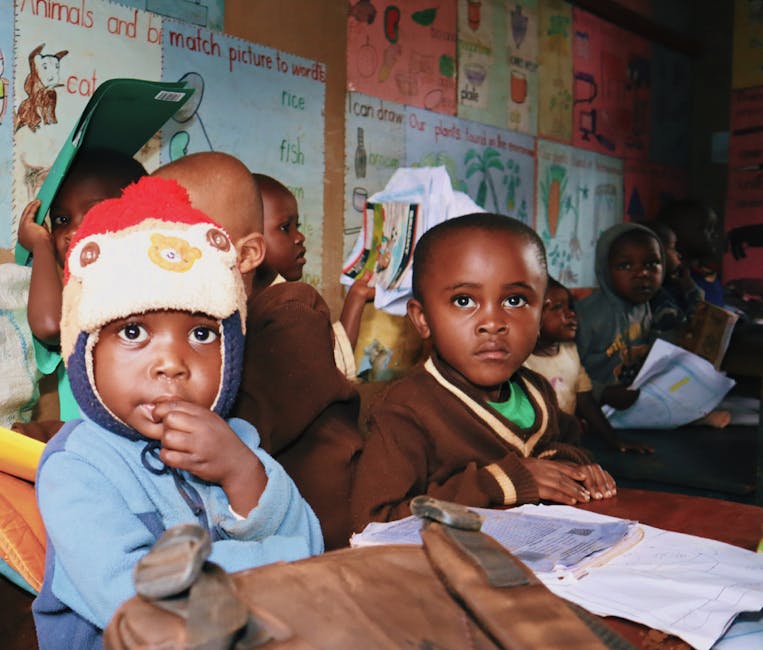
- Four children were brutally killed in a nursery attack in Uganda, sparking a national debate on child safety and security.
- The perpetrator, Christopher Okello Onyum, was sentenced to death for the heinous crime, welcomed by many as a necessary measure to deter similar crimes.
- The incident raised concerns about the need for stricter laws and measures to protect vulnerable children in Uganda.
- The nursery where the incident occurred had been operating without proper licensing and supervision, highlighting the need for better regulation of early childhood education centers.
- The tragedy has also raised questions about the role of mental health in violent crimes, with many calling for greater investment in mental health services.
The brutal killing of four children at a nursery in Uganda has sent shockwaves across the country, with the perpetrator, Christopher Okello Onyum, being sentenced to death for the heinous crime. The fatal stabbing of the children, aged between one and three years old, has raised concerns about the safety and security of nursery schools in the country. The incident has also sparked a national debate about the need for stricter laws and measures to protect vulnerable children. According to reports, Onyum had been struggling with mental health issues and had been known to the authorities prior to the attack. The sentence handed down by the court has been welcomed by many as a necessary measure to deter similar crimes in the future.
Background to the Tragedy

The killing of the four children has brought to the forefront the issue of violence against children in Uganda. The country has seen a rise in cases of child abuse and neglect in recent years, with many incidents going unreported. The government has been criticized for not doing enough to protect children, with many calling for stricter laws and tougher punishments for those who commit crimes against minors. The nursery where the incident occurred had been operating without proper licensing and supervision, highlighting the need for better regulation of early childhood education centers. The tragedy has also raised questions about the role of mental health in violent crimes, with many calling for greater investment in mental health services to prevent similar incidents in the future.
The Attack and Its Aftermath

On the day of the attack, Onyum entered the nursery and began stabbing the children, leaving four dead and several others injured. The incident was met with widespread outrage and condemnation, with many Ugandans taking to social media to express their shock and horror. The police were quick to respond, arresting Onyum at the scene and launching an investigation into the incident. The trial was widely covered in the media, with many calling for the maximum penalty to be handed down. The sentence of death has been seen as a measure of justice for the families of the victims, who have been left to pick up the pieces and try to come to terms with their loss.
Analysis of the Incident
The incident has been analyzed by experts as a complex issue, with multiple factors contributing to the tragedy. The lack of proper regulation and supervision of nursery schools has been cited as a major factor, with many centers operating without proper licensing or training. The issue of mental health has also been raised, with Onyum’s history of mental health problems being seen as a contributing factor to the attack. The government has been criticized for not doing enough to address the root causes of the problem, with many calling for greater investment in early childhood education and mental health services. The incident has also highlighted the need for greater awareness and education about child safety and protection, with many organizations and individuals calling for a national conversation about the issue.
Implications of the Sentence
The sentence handed down to Onyum has significant implications for the country, with many seeing it as a deterrent to others who may be considering similar crimes. The incident has also raised questions about the use of the death penalty, with some arguing that it is not an effective deterrent and others seeing it as a necessary measure to protect society. The families of the victims have welcomed the sentence, seeing it as a measure of justice for their loved ones. However, others have raised concerns about the fairness of the trial and the potential for miscarriages of justice in the future. The incident has also highlighted the need for greater support and counseling for the families of victims of violent crime, with many organizations and individuals calling for greater investment in victim support services.
Expert Perspectives
Experts have weighed in on the incident, with many calling for a nuanced approach to addressing the root causes of the problem. “The incident highlights the need for a comprehensive approach to addressing violence against children,” said Dr. Jane Smith, a child protection expert. “We need to invest in early childhood education, mental health services, and community-based programs to prevent similar incidents in the future.” Others have argued that the sentence handed down to Onyum is not enough, with some calling for tougher punishments for those who commit crimes against children. “The sentence is a step in the right direction, but we need to do more to protect our children,” said James Johnson, a child rights activist.
As the country moves forward, many are left wondering what the future holds for nursery schools and child protection in Uganda. Will the government take the necessary steps to address the root causes of the problem, or will the incident be forgotten in time? The answer remains to be seen, but one thing is certain – the killing of the four children at the nursery has left an indelible mark on the country, and it will take time, effort, and commitment to heal and move forward. The incident has raised many questions, and it is up to the government, civil society, and individuals to work together to find the answers and create a safer, more secure environment for all children in Uganda.