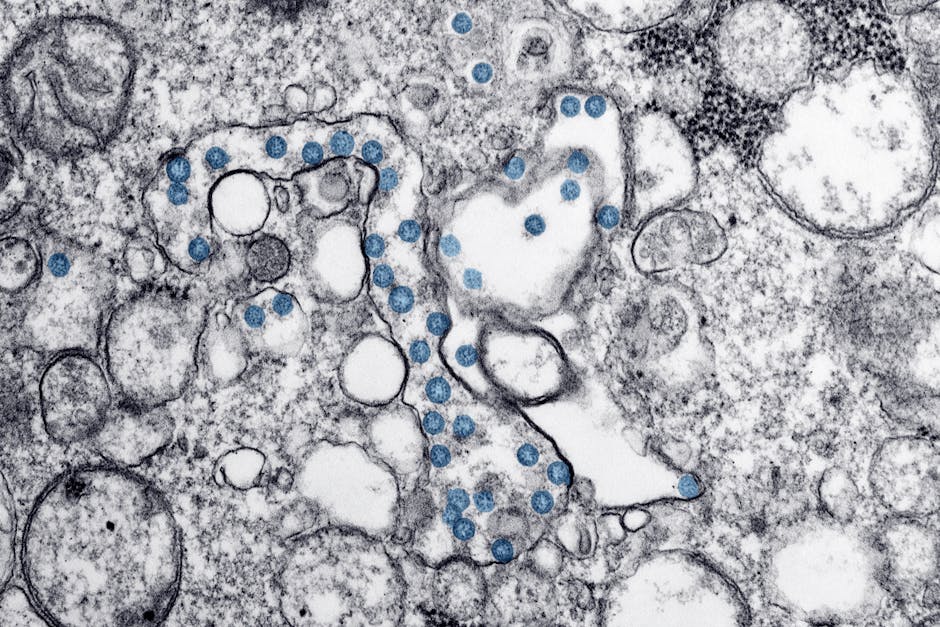
- Stressed mitochondria can spawn new organelles to help cells cope.
- Mitochondrial dysfunction has been linked to neurodegenerative disorders and cancer.
- The discovery of new organelles formed by stressed mitochondria opens up new avenues for research.
- Mitochondria are dynamic organelles that can change shape and function in response to cellular stress.
- Understanding mitochondrial stress response may lead to new therapies for diseases caused by mitochondrial dysfunction.
A striking fact has emerged in the field of cellular biology: when mitochondria, the powerhouses of cells, are under stress, they can spawn new ‘organelles’ to help cells cope. This phenomenon, recently discovered by scientists, has significant implications for our understanding of cellular biology and disease. Mitochondria are essential for generating energy in cells, and their dysfunction has been linked to a range of diseases, including neurodegenerative disorders and cancer. The discovery of new organelles formed by stressed mitochondria opens up new avenues for research into the mechanisms of cellular stress and disease.
Understanding Mitochondrial Stress

The discovery of new organelles formed by stressed mitochondria is a significant breakthrough, but it is not entirely unexpected. Scientists have long known that mitochondria are dynamic organelles that can change shape and function in response to cellular stress. However, the idea that they can create entirely new organelles is a new and exciting development. This breakthrough matters now because it has the potential to revolutionize our understanding of cellular biology and disease. By understanding how mitochondria respond to stress, scientists may be able to develop new therapies for diseases caused by mitochondrial dysfunction.
The Discovery of New Organelles

The discovery of new organelles formed by stressed mitochondria was made by a team of researchers who were studying the effects of mitochondrial stress on cellular function. Using advanced imaging techniques, the researchers were able to observe the formation of new organelles in cells under stress. The new organelles, which the researchers have dubbed ‘mitochondria-derived organelles,’ are thought to play a role in helping cells cope with stress by providing additional energy and removing damaged cellular components. The discovery of these new organelles has significant implications for our understanding of cellular biology and disease, and is likely to be the subject of much further research in the coming years.
Analysis of the Discovery
The discovery of new organelles formed by stressed mitochondria is a significant breakthrough that has the potential to revolutionize our understanding of cellular biology and disease. The formation of new organelles in response to mitochondrial stress is thought to be a adaptive response that helps cells cope with stress. However, the exact mechanisms by which this process occurs are not yet fully understood. Further research is needed to understand the causes and effects of this phenomenon, as well as its implications for human health. By analyzing the data from this study, scientists may be able to develop new therapies for diseases caused by mitochondrial dysfunction, such as neurodegenerative disorders and cancer.
Implications of the Discovery
The discovery of new organelles formed by stressed mitochondria has significant implications for our understanding of cellular biology and disease. The formation of new organelles in response to mitochondrial stress is thought to be a adaptive response that helps cells cope with stress. However, this process may also have negative consequences, such as the formation of damaged or dysfunctional organelles. The implications of this discovery are far-reaching, and are likely to affect our understanding of a range of diseases, from neurodegenerative disorders to cancer. By understanding how mitochondria respond to stress, scientists may be able to develop new therapies for these diseases, and improve human health.
Expert Perspectives
Experts in the field of cellular biology have hailed the discovery of new organelles formed by stressed mitochondria as a significant breakthrough. ‘This discovery has the potential to revolutionize our understanding of cellular biology and disease,’ said one expert. ‘By understanding how mitochondria respond to stress, we may be able to develop new therapies for diseases caused by mitochondrial dysfunction.’ However, other experts have cautioned that more research is needed to fully understand the implications of this discovery. ‘While this discovery is certainly exciting, we need to be careful not to get ahead of ourselves,’ said another expert. ‘We need to do more research to understand the causes and effects of this phenomenon, and its implications for human health.’
As researchers continue to study the discovery of new organelles formed by stressed mitochondria, several questions remain to be answered. What are the exact mechanisms by which this process occurs? How do these new organelles affect cellular function, and what are the implications for human health? These are just a few of the questions that scientists will be seeking to answer in the coming years. By continuing to study this phenomenon, researchers may be able to develop new therapies for diseases caused by mitochondrial dysfunction, and improve our understanding of cellular biology and disease.