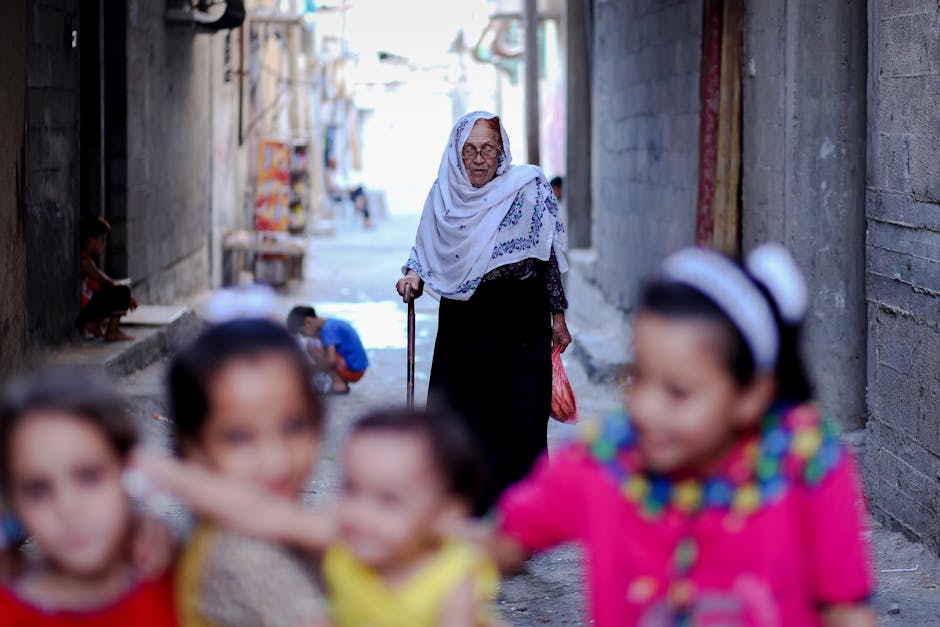
- Gaza’s economy has collapsed, affecting over 8 out of 10 workers due to high unemployment and blockade restrictions.
- Years of conflict, neglect, and blockade have crippled Gaza’s economy, leaving its people struggling to survive.
- The Palestinian Authority’s inability to pay employees has exacerbated the economic crisis in Gaza.
- Workers in Gaza are forced to take on precarious jobs or work in hazardous conditions to make ends meet.
- The economic collapse has pushed the construction sector, once a mainstay of Gaza’s economy, to the brink of collapse.
The first day of May, traditionally a day to celebrate workers’ rights, is a stark reminder of the struggles faced by Gaza’s workforce. With an unemployment rate of over 50%, many are forced to take on precarious jobs just to make ends meet. The economic collapse has left workers in a desperate situation, with some resorting to selling goods on the street or working in hazardous conditions. The situation is a result of years of blockade, conflict, and neglect, which have crippled the economy and left its people struggling to survive.
Gaza’s Economic Downward Spiral

The economic crisis in Gaza is not a new phenomenon, but it has worsened significantly in recent years. The blockade, imposed by Israel and Egypt, has restricted the movement of goods and people, making it nearly impossible for businesses to operate. The lack of investment, coupled with the destruction caused by repeated conflicts, has left the economy in tatters. The situation is further exacerbated by the Palestinian Authority’s inability to pay its employees, leaving many without a steady income. As a result, workers are forced to seek alternative sources of income, often in the informal sector, where conditions are precarious and pay is minimal.
Workers’ Plight

The workers of Gaza are bearing the brunt of the economic collapse. Many have been forced to take on multiple jobs just to make ends meet, often working long hours in hazardous conditions. The construction sector, once a significant employer, has been decimated, leaving many without work. The few jobs that are available are often in the informal sector, where workers are not protected by labor laws and are vulnerable to exploitation. The situation is particularly dire for young people, who are facing an unemployment rate of over 60%. Without access to education or job opportunities, many are forced to rely on their families or seek work in the informal sector.
Causes and Consequences
The economic collapse in Gaza is a complex issue, with multiple causes and consequences. The blockade, imposed by Israel and Egypt, is a significant factor, as it restricts the movement of goods and people. The lack of investment, coupled with the destruction caused by repeated conflicts, has also contributed to the crisis. The Palestinian Authority’s inability to pay its employees has further exacerbated the situation, leaving many without a steady income. The consequences are far-reaching, with poverty and unemployment soaring. The situation has also had a significant impact on the mental health of workers, with many reporting feelings of desperation and hopelessness.
Humanitarian Implications
The economic collapse in Gaza has significant humanitarian implications. The lack of access to basic necessities, such as food, water, and healthcare, is a major concern. The situation is particularly dire for vulnerable groups, such as children, women, and the elderly. The UN has warned of a humanitarian catastrophe, with many relying on aid to survive. The situation is a stark reminder of the need for a comprehensive solution to the conflict, one that addresses the economic and humanitarian needs of the people of Gaza.
Expert Perspectives
Experts warn that the situation in Gaza is unsustainable, with the economy on the brink of collapse. “The blockade has crippled the economy, and the lack of investment has made it impossible for businesses to operate,” said one economist. “The situation is dire, and without a comprehensive solution, the humanitarian consequences will be catastrophic.” Others argue that the Palestinian Authority must take responsibility for the situation, citing its inability to pay its employees as a significant factor. “The Authority must find a way to pay its employees and invest in the economy,” said one analyst. “Without a functioning economy, the situation will only worsen.”
As the situation in Gaza continues to deteriorate, the international community is watching with bated breath. The question on everyone’s mind is: what next? Will the economy collapse completely, or will a solution be found? The answer remains unclear, but one thing is certain: the people of Gaza cannot continue to live in such dire conditions. The international community must come together to find a comprehensive solution to the conflict, one that addresses the economic and humanitarian needs of the people of Gaza. Only then can the workers of Gaza find a sense of security and stability, and the economy begin to recover.