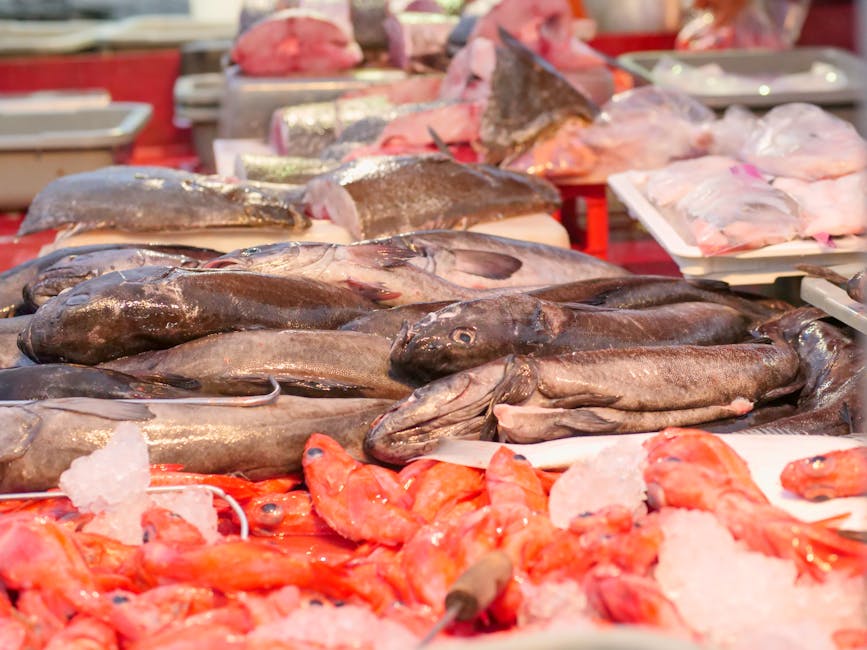
- 1 in 5 UK chip shops sell mislabelled fish, with some passing off catfish as cod or haddock.
- The average Brit consumes around 30 kg of fish and chips per year, making the potential scale of the problem enormous.
- The practice of mislabelled fish is driven by economic factors, including increasing costs of traditional fish due to overfishing and quotas.
- Mislabelling fish not only deceives customers but also undermines the fishing industry, already struggling to survive.
- Greater transparency and regulation are needed to protect consumers and genuine fishermen in the industry.
A staggering 1 in 5 chip shops in the UK have been found to be selling mislabelled fish, with some passing off catfish as traditional cod or haddock, a BBC investigation has revealed. The shocking discovery has sparked outrage among consumers and raised concerns about the integrity of the fishing industry. With the average Brit consuming around 30 kg of fish and chips per year, the potential scale of the problem is enormous. The investigation has highlighted the need for greater transparency and regulation in the industry to protect both consumers and genuine fishermen.
The Great Fish Swindle

The BBC’s investigation has shed light on a practice that has been going on for years, with some chip shop owners taking advantage of unsuspecting customers by selling them cheaper, lower-quality fish. The reasons behind this practice are complex, but it is largely driven by economic factors. With the cost of traditional fish such as cod and haddock increasing due to overfishing and quotas, some chip shop owners have turned to cheaper alternatives to maintain their profit margins. However, this practice is not only deceiving customers but also undermining the fishing industry, which is already struggling to survive.
Uncovering the Truth

The BBC’s investigation involved collecting samples of fish from chip shops across the UK and subjecting them to DNA testing. The results were startling, with many samples revealing that the fish being sold was not what the customer had been led to believe. In some cases, catfish was being passed off as cod or haddock, while in others, pollock or other cheaper species were being used. The investigation also found that some chip shop owners were aware of the practice, but others claimed to have been misled by their suppliers. The lack of transparency and regulation in the industry has made it difficult to track the origin of the fish and ensure that customers are getting what they pay for.
Analysis and Implications
The implications of the BBC’s investigation are far-reaching. Not only are consumers being deceived, but the practice is also having a significant impact on the fishing industry. Genuine fishermen who are struggling to make a living are being undercut by those who are willing to sell mislabelled fish. The practice is also undermining the sustainability of the industry, as cheaper, lower-quality fish are often caught using unsustainable methods. Furthermore, the lack of transparency and regulation in the industry is making it difficult to track the origin of the fish and ensure that customers are getting what they pay for. The government and industry regulators must take action to address this issue and ensure that consumers are protected.
Economic Consequences
The economic consequences of the practice are significant. The fishing industry is a major contributor to the UK economy, with thousands of people employed in the sector. However, the practice of selling mislabelled fish is undermining the industry and threatening the livelihoods of genuine fishermen. The government must take action to address this issue and ensure that the industry is sustainable and transparent. This could involve introducing stricter regulations and penalties for those found to be selling mislabelled fish, as well as providing support for genuine fishermen who are struggling to make a living.
Expert Perspectives
Experts in the industry have expressed concern about the practice of selling mislabelled fish. Some have called for stricter regulations and penalties for those found to be selling mislabelled fish, while others have argued that the industry must do more to promote sustainability and transparency. According to one expert, “the practice of selling mislabelled fish is a symptom of a wider problem in the industry. We need to address the root causes of the problem, such as overfishing and quotas, if we are to ensure that the industry is sustainable and transparent.”
As the industry moves forward, it is clear that there are many questions that still need to be answered. What can be done to prevent the practice of selling mislabelled fish? How can consumers be assured that they are getting what they pay for? And what support can be provided to genuine fishermen who are struggling to make a living? These are just a few of the questions that will need to be addressed if the industry is to regain the trust of consumers and ensure a sustainable future.