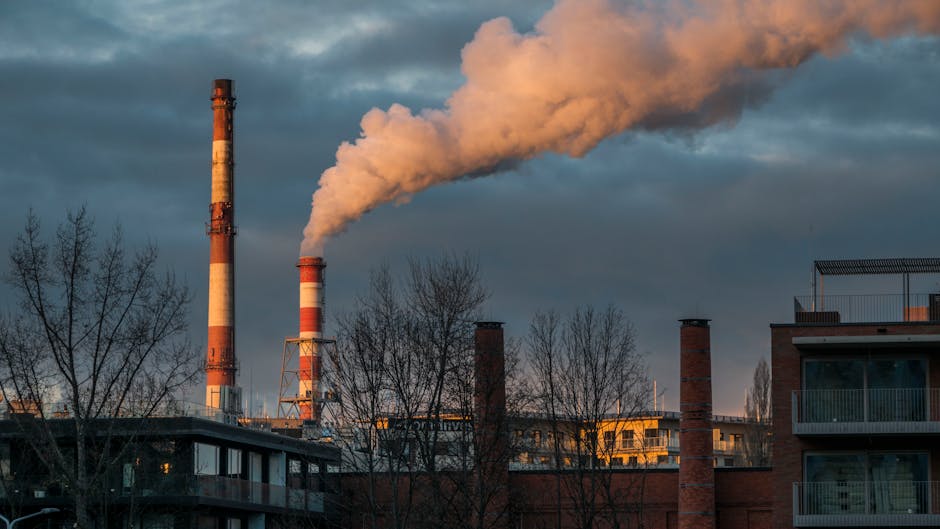
- A new electrochemical carbon capture method reduces costs by up to 70% compared to existing systems.
- The innovation slashes carbon capture costs to as low as $36 per ton, making it more viable for industries.
- The system operates at near-ambient temperatures and pressures, drastically cutting energy demands.
- The breakthrough offers a scalable and affordable pathway to meet mid-century net-zero targets.
- The development has the potential to transform the economics of industrial emissions reduction.
In a landmark development for climate technology, researchers have unveiled a carbon capture method that reduces costs by up to 70% compared to existing systems, potentially transforming the economics of industrial emissions reduction. Current carbon capture techniques can cost between $50 and $150 per ton of CO₂ removed, making widespread adoption prohibitive for most industries. The new electrochemical process, developed by a team at UC Berkeley and validated in pilot trials, slashes that figure to as low as $36 per ton—well within the threshold many governments and corporations are willing to pay. Crucially, the system operates at near-ambient temperatures and pressures, drastically cutting energy demands. With global CO₂ emissions surpassing 37 billion tons annually, this innovation arrives at a pivotal moment, offering a scalable and affordable pathway to meet mid-century net-zero targets.
\n
The Urgent Need for Affordable Carbon Removal

\n
Despite aggressive renewable energy adoption, heavy industries like cement, steel, and chemicals remain stubbornly reliant on fossil fuels, accounting for nearly 30% of global emissions. Unlike power plants, these facilities emit CO₂ as a byproduct of chemical reactions, not just combustion, making decarbonization far more complex. Direct air capture and point-source carbon capture have long been seen as essential tools, but their high cost and energy intensity have stalled deployment. The International Energy Agency estimates that over 1,000 carbon capture facilities must be operational by 2050 to align with climate goals—yet fewer than 50 exist today. The new electrochemical method addresses both cost and scalability barriers, reigniting optimism that carbon capture can transition from niche experiment to mainstream climate solution.
\n
A Simpler, Smarter Electrochemical Process

\n
The breakthrough hinges on an innovative use of quinones—organic molecules that naturally exchange electrons and protons in response to small voltage changes. When exposed to flue gas or ambient air, the quinone-based system selectively binds with CO₂ molecules. Applying a mild electrical current then triggers the release of pure CO₂ for storage or reuse, regenerating the quinone for continuous operation. Unlike traditional amine-based scrubbing, which requires intense heat to release captured carbon, this method uses minimal electricity, largely from renewable sources. Researchers tested the system at a pilot facility attached to a natural gas power plant in California, achieving over 90% capture efficiency across multiple cycles. The components are non-toxic, low-cost, and compatible with existing industrial infrastructure, accelerating potential adoption.
\n
Why This Changes the Carbon Economy

\n
The cost reduction stems not just from lower energy use but also from the simplicity of materials and maintenance. A study published in Nature details how the system avoids expensive catalysts like platinum or rare earth metals, relying instead on abundant carbon electrodes and water-based electrolytes. Lifecycle analysis shows a 70% reduction in operational expenses and a 60% smaller carbon footprint compared to amine-based systems. For industries under regulatory pressure to reduce emissions—such as those facing carbon pricing in the EU or California—this technology could mean the difference between compliance and penalty. Moreover, because the system can be modular, it can scale from small factories to massive refineries, offering flexibility unmatched by current solutions.
\n
Global Implications for Industry and Climate Policy

\n
The implications of affordable carbon capture are far-reaching. In industrial hubs across China, India, and the U.S. Gulf Coast, this technology could extend the life of existing infrastructure while meeting emissions targets. For developing nations seeking to grow their manufacturing base without worsening emissions, it offers a cleaner path forward. Carbon capture is also central to emerging markets for synthetic fuels and carbon utilization, where captured CO₂ is turned into plastics, concrete, or aviation fuel. With costs now approaching viability, private investment is expected to surge. Already, companies like Carbon Engineering and Occidental Petroleum are exploring integration, while the U.S. Department of Energy has fast-tracked funding for electrochemical capture research.
\n
Expert Perspectives
\n
“This is one of the most promising advances in carbon engineering in a decade,” says Dr. Naomi Klein, a climate scientist at the Massachusetts Institute of Technology not involved in the study. “The energy efficiency and low material cost could finally make carbon capture a no-brainer for industry.” However, some experts urge caution. Dr. Raj Patel of the International Institute for Sustainable Development warns, “We must avoid letting this become a crutch for fossil fuel expansion. Carbon capture should complement, not replace, deep emissions cuts.” Others highlight the need for robust monitoring to ensure captured CO₂ remains sequestered and does not leak back into the atmosphere.
\n
As deployment expands, the focus will shift to long-term storage capacity, regulatory frameworks, and public acceptance of underground sequestration. The next five years will be critical: if the technology performs reliably at full scale, it could reshape the global carbon economy. Key milestones include integration with direct air capture arrays and pairing with green hydrogen systems to create net-negative industrial processes. For now, the scientific community is watching closely—this may be the moment carbon capture finally turns the corner from promise to practice.
Source: Scitechdaily