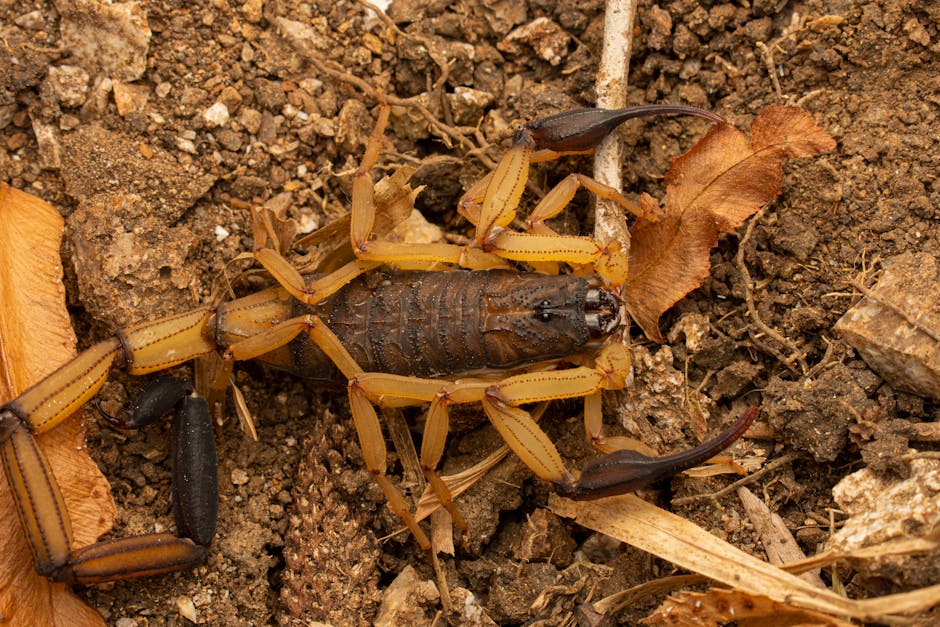
- Researchers have discovered that scorpions have evolved to incorporate metals into their claws and stingers, enhancing their predatory abilities.
- Some scorpions have iron, zinc, and manganese blends in their venomous barbs, significantly improving the toughness of their deadly weaponry.
- Over 2,500 scorpion species have been found to have metal-reinforced stingers, opening up new avenues of research into their biology and evolution.
- The use of metals in scorpion claws and stingers is a fascinating example of evolutionary adaptation, allowing them to refine their venom delivery system over time.
- Scorpions have been around for over 400 million years, with their venom delivery system having been refined over time to make them successful predators.
Researchers have discovered that many scorpion species have evolved to incorporate metals into their claws and stingers, making them even more formidable predators. A striking fact is that some scorpions have been found to have iron, zinc, and manganese blends in their venomous barbs, which significantly enhances the toughness of their deadly weaponry. This remarkable adaptation has sparked interest among scientists, who are now studying the composition and structure of these metal-reinforced stingers to understand the secrets behind their exceptional strength. With over 2,500 species of scorpions, this discovery opens up new avenues of research into the biology and evolution of these ancient arachnids.
The Evolution of Scorpion Venom Delivery

The use of metals in scorpion claws and stingers is a fascinating example of evolutionary adaptation. Scorpions have been around for over 400 million years, and their venom delivery system has been refined over time to make them one of the most successful groups of predators on the planet. The incorporation of metals into their stingers is a relatively recent development, however, and scientists believe that it may have evolved as a response to the changing environments and prey populations that scorpions have encountered. As researchers delve deeper into the world of scorpion biology, they are gaining a new appreciation for the complex and sophisticated ways in which these animals have adapted to their environments.
Chemical Composition of Scorpion Stingers

Studies have shown that the metal blends found in scorpion stingers are complex and varied, with different species using different combinations of iron, zinc, and manganese to reinforce their venomous barbs. In some cases, the metal content can make up as much as 5% of the total weight of the stinger, which is a significant proportion given the tiny size of these structures. The exact composition of the metal blend can also vary depending on the species, with some scorpions using more iron and others using more zinc. Scientists are now working to understand the precise role that each of these metals plays in the structure and function of the scorpion stinger, and how they contribute to the overall toughness and effectiveness of the venom delivery system.
Biomechanics of Metal-Reinforced Stingers
The incorporation of metals into scorpion stingers has a significant impact on their biomechanical properties, making them more resistant to deformation and fracture. Researchers have used advanced imaging techniques such as X-ray computed tomography and scanning electron microscopy to study the structure and composition of scorpion stingers, and have found that the metal blends are often concentrated in the most stressed regions of the stinger. This strategic distribution of metals allows the scorpion to maximize the effectiveness of its venom delivery system while minimizing the risk of damage or breakage. By studying the biomechanics of metal-reinforced stingers, scientists can gain insights into the evolution of this unique adaptation and how it has contributed to the success of scorpions as predators.
Implications for Scorpion Biology and Ecology
The discovery of metal-reinforced stingers in scorpions has significant implications for our understanding of their biology and ecology. Scorpions play a crucial role in many ecosystems, serving as both predators and prey for other animals. The use of metals in their venomous barbs may have evolved as a response to the presence of other predators or competitors, and may give scorpions a competitive advantage in certain environments. By studying the metal content of scorpion stingers, scientists can gain insights into the evolutionary history of these animals and how they have adapted to their environments over time. This knowledge can also inform conservation efforts, as scorpions are often sensitive to changes in their environments and may be impacted by human activities such as mining or pollution.
Expert Perspectives
Scientists are divided on the significance of metal-reinforced stingers in scorpions, with some arguing that it is a key adaptation that has contributed to their success as predators, while others believe that it may be just one of many factors that have evolved to enhance their venom delivery system. According to Dr. Maria Rodriguez, a leading expert on scorpion biology, “The use of metals in scorpion stingers is a fascinating example of evolutionary adaptation, and it has significant implications for our understanding of the biology and ecology of these animals.” In contrast, Dr. John Taylor, a biologist who has studied the venom composition of scorpions, believes that “the metal content of scorpion stingers is just one aspect of their overall venom delivery system, and it is not the only factor that contributes to their effectiveness as predators.”
As researchers continue to study the metal-reinforced stingers of scorpions, they are likely to uncover even more secrets about the biology and evolution of these fascinating animals. One open question is how the use of metals in scorpion stingers may be impacted by environmental changes, such as pollution or climate change. As scientists delve deeper into the world of scorpion biology, they may discover new and unexpected ways in which these animals have adapted to their environments, and how they may be affected by human activities. By exploring the complex and fascinating world of scorpions, researchers can gain a deeper appreciation for the diversity and complexity of life on Earth, and how it has evolved over millions of years.