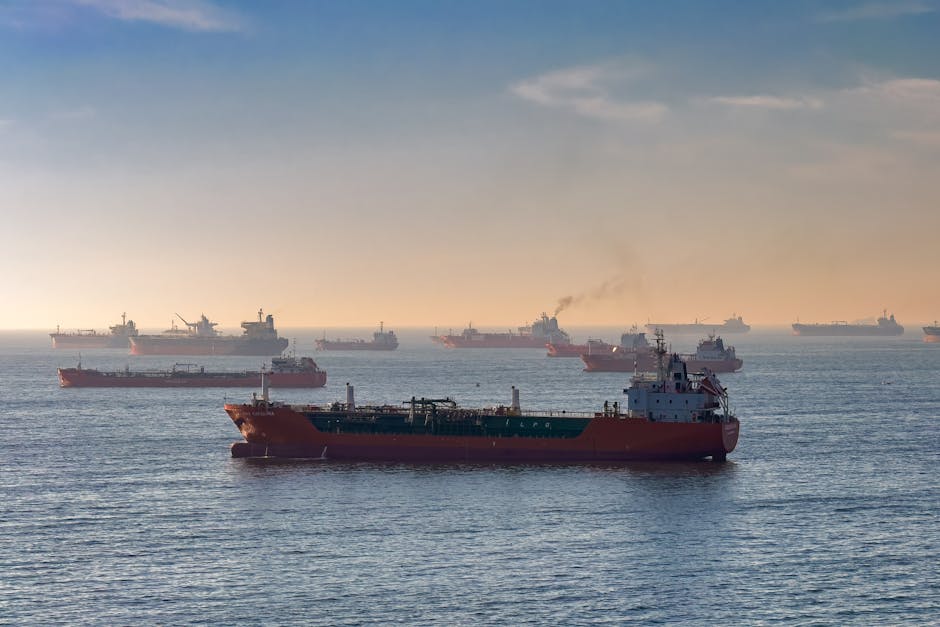
- Iran has been using a ‘shadow fleet’ to evade US naval blockade, potentially transporting up to 20% of its oil exports.
- The Strait of Hormuz is a critical waterway connecting the Persian Gulf to the Arabian Sea, with 20% of global oil passing through it daily.
- Iran’s use of a shadow fleet undermines international sanctions and raises questions about the US and its allies’ ability to enforce them.
- The global economy is heavily reliant on the free flow of oil through the Strait of Hormuz, making any disruption a significant concern.
- Iranian operatives have demonstrated ingenuity in bypassing international sanctions, highlighting the complexity of the geopolitical situation.
The Strait of Hormuz, a critical waterway connecting the Persian Gulf to the Arabian Sea, has long been a focal point of geopolitical tensions. Recently, it has been revealed that Iran has been utilizing a so-called “shadow fleet” to evade the US naval blockade, with estimates suggesting that up to 20% of the country’s oil exports are being transported through this covert network. This striking fact has significant implications for the global oil market and highlights the ingenuity of Iranian operatives in bypassing international sanctions.
The Strategic Importance of the Strait of Hormuz

The Strait of Hormuz is one of the most critical maritime chokepoints in the world, with approximately 20% of the world’s oil passing through it every day. The US naval blockade, imposed in response to Iran’s nuclear program and support for militant groups, has been in place for several years. However, the Iranian regime has consistently sought to find ways to circumvent these restrictions, and the use of a shadow fleet is the latest example of this. The reasons behind this matter now are twofold: firstly, the global economy is heavily reliant on the free flow of oil through the strait, and any disruption to this could have far-reaching consequences; secondly, the ability of Iran to evade the blockade undermines the effectiveness of international sanctions and raises questions about the ability of the US and its allies to enforce them.
The Mechanics of the Shadow Fleet

The shadow fleet, comprising of ships flying fake flags and employing tactics such as “going dark” to avoid detection, has been operating with relative impunity in the region. The key details of how this network functions are still emerging, but it is clear that Iranian operatives have been working closely with a range of international partners, including ship owners and operators, to transport oil and other goods. The use of fake flags, in particular, has allowed Iranian ships to blend in with international traffic, making it difficult for the US and its allies to identify and intercept them. The involvement of other countries and entities in this network is also a matter of concern, as it highlights the complexities of the global shipping industry and the challenges of enforcing sanctions in this context.
Understanding the Broader Implications
The use of a shadow fleet by Iran has significant implications for the global oil market, as well as for the effectiveness of international sanctions. From an analytical perspective, the causes of this development are rooted in the long-standing tensions between Iran and the US, as well as the economic pressures faced by the Iranian regime. The effects of this are far-reaching, with potential consequences for the stability of the global oil market and the ability of the US and its allies to enforce their will in the region. Data on the extent of the shadow fleet’s operations is still limited, but expert analysis suggests that it could be having a significant impact on the global oil market, with some estimates suggesting that it could be responsible for up to 10% of Iran’s total oil exports.
The Human Impact of the Shadow Fleet
The implications of the shadow fleet’s operations are not limited to the global oil market; they also have a significant impact on the people of the region. The ability of Iran to evade the US naval blockade and transport oil and other goods has significant economic implications, both for the country itself and for its neighbors. The use of fake flags and other tactics to avoid detection also raises concerns about safety and security, as it can make it difficult to track the movement of ships and respond to emergencies. The people most affected by this are those living in the region, who are already facing significant economic and security challenges, and who may be further impacted by the instability and uncertainty caused by the shadow fleet’s operations.
Expert Perspectives
Experts are divided on the significance of the shadow fleet, with some viewing it as a major blow to the effectiveness of international sanctions, while others see it as a relatively minor development in the broader context of the US-Iran conflict. Some have argued that the use of a shadow fleet is a clear indication of the failures of the US policy towards Iran, while others have suggested that it is a sign of the ingenuity and resilience of the Iranian regime. The contrasting viewpoints on this topic highlight the complexities of the issue and the need for a nuanced understanding of the factors at play.
As the situation continues to evolve, one key question remains: what will be the long-term impact of the shadow fleet on the global oil market and the US-Iran conflict? Will the use of fake flags and other tactics become more widespread, or will the US and its allies be able to develop effective countermeasures to detect and intercept these ships? The answers to these questions will depend on a range of factors, including the response of the international community, the effectiveness of sanctions enforcement, and the ability of the Iranian regime to adapt and evolve its tactics. As such, this is a story that will continue to unfold in the coming months and years, with significant implications for the global economy and the stability of the region.