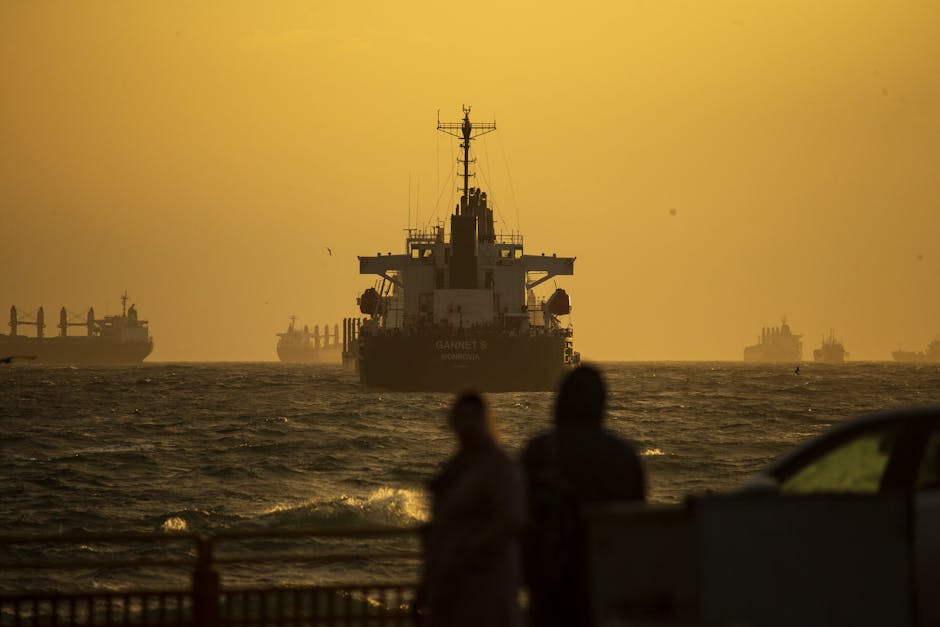
- Iran’s control of the Strait of Hormuz is crucial for global oil exports, with over 20% passing through it.
- Disrupting oil supplies through the strait could have far-reaching consequences for the global economy.
- Iran’s economy is heavily dependent on oil exports, making control over the strait vital for national security.
- Tensions between Iran and global powers have long plagued the Strait of Hormuz, with Iran seeking to assert its control.
- The Supreme Leader’s announcement has significant implications for the global economy, particularly with international sanctions in place.
The Strait of Hormuz, a narrow waterway connecting the Persian Gulf to the Gulf of Oman, is one of the most critical shipping lanes in the world, with over 20% of global oil exports passing through it. In a striking move, Iran’s Supreme Leader, Ayatollah Mojtaba Khamenei, has signaled his country’s intention to maintain control over this vital trade route, sparking concerns among global powers. The announcement has significant implications for the global economy, as any disruption to oil supplies could have far-reaching consequences. With the global economy still recovering from the pandemic, the prospect of a major disruption to oil supplies is a daunting one.
Background to the Crisis

The Strait of Hormuz has long been a source of tension between Iran and its neighbors, as well as global powers. The waterway is just 21 miles wide at its narrowest point, making it a chokepoint for oil exports from the region. Iran has consistently sought to assert its control over the strait, which it sees as a vital component of its national security. The country’s economy is heavily dependent on oil exports, and any disruption to these exports could have severe consequences for the Iranian people. With the Iranian economy already under significant pressure due to international sanctions, the need to maintain control over the Strait of Hormuz is more pressing than ever.
The Supreme Leader’s Plan

Ayatollah Khamenei’s announcement that Iran would establish “new legal frameworks” for the Strait of Hormuz has sent shockwaves through the international community. The details of these frameworks are still unclear, but it is likely that they will involve increased Iranian control over shipping through the strait. This could include measures such as mandatory escorting of tankers by Iranian naval vessels, or the imposition of tariffs on oil exports. The move is seen as a direct challenge to the international community, which has long sought to ensure the free flow of oil through the strait. The involvement of major global powers, including the United States, China, and the European Union, makes this a highly complex and sensitive issue.
Analysis of the Situation
The implications of Ayatollah Khamenei’s announcement are far-reaching and complex. On the one hand, Iran’s assertion of control over the Strait of Hormuz is a clear attempt to exert its influence over the region and protect its economic interests. On the other hand, the move is likely to be seen as a provocation by the international community, which could lead to increased tensions and even conflict. The situation is further complicated by the fact that Iran is also seeking to retain its nuclear capabilities, which has sparked concerns among its neighbors and global powers. According to experts, the situation is highly volatile, and any miscalculation could have severe consequences. The data suggests that the global economy is still highly dependent on oil exports from the region, making the prospect of a disruption to supplies a daunting one.
Implications for the Region
The people most directly affected by Ayatollah Khamenei’s announcement are those living in the region, who are likely to see increased tensions and instability. The move is also likely to have significant implications for global trade, as any disruption to oil supplies could have far-reaching consequences. The international community is watching the situation closely, with many calling for calm and restraint. However, the situation remains highly volatile, and any miscalculation could have severe consequences. The region is already highly unstable, with several ongoing conflicts and tensions between major powers. The last thing the region needs is another source of tension, making it imperative that a diplomatic solution is found as soon as possible.
Expert Perspectives
Experts are divided on the implications of Ayatollah Khamenei’s announcement, with some seeing it as a clear provocation and others as a necessary move to protect Iranian interests. According to Dr. Sanam Vakil, a leading expert on Iranian affairs, “the move is a clear attempt by Iran to exert its influence over the region and protect its economic interests.” However, other experts, such as Dr. Trita Parsi, see the move as a miscalculation that could lead to increased tensions and conflict. The situation is highly complex, and it remains to be seen how the international community will respond to Ayatollah Khamenei’s announcement.
As the situation continues to unfold, one thing is clear: the world will be watching the Strait of Hormuz closely in the coming weeks and months. The question on everyone’s mind is what will happen next, and how the international community will respond to Iran’s assertion of control over the strait. Will the situation escalate into conflict, or can a diplomatic solution be found? Only time will tell, but one thing is certain: the fate of the global economy and the stability of the region hang in the balance.