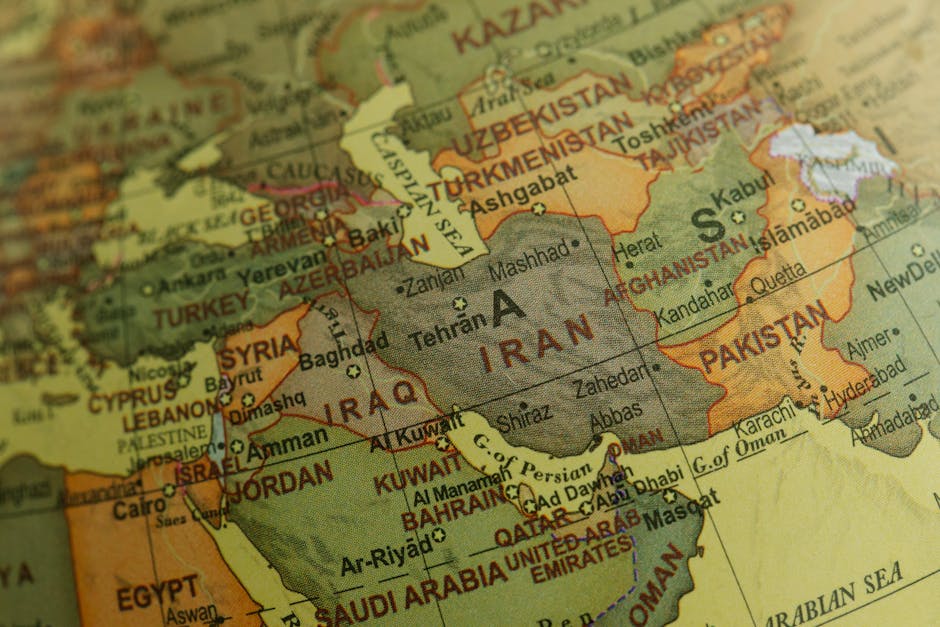
- The Gulf Cooperation Council (GCC) meeting in Jeddah, Saudi Arabia, displayed a united front despite underlying divisions.
- The absence of key figures, such as the Crown Prince of Abu Dhabi, revealed the limits to coordination among Gulf states.
- The meeting stopped short of concrete steps to address the fallout from the Iran war, highlighting persistent divisions and uncertainty.
- The GCC faces growing regional tensions and must present a unified front to address these challenges.
- The meeting exposed cracks in the GCC alliance, highlighting the need for greater cooperation and coordination.
The recent meeting of Gulf leaders in Jeddah, Saudi Arabia, was marked by a striking display of unity, with all six nations of the Gulf Cooperation Council (GCC) in attendance. However, the absence of key figures, such as the Crown Prince of Abu Dhabi, and subtle signals from other leaders, revealed the limits to coordination among the Gulf states. Despite the projection of a united front, the meeting stopped short of concrete steps to address the fallout from the Iran war, highlighting the persistent divisions and uncertainty that plague the region. The meeting was seen as a crucial test of the GCC’s ability to present a unified front in the face of growing regional tensions, and while it achieved some success in this regard, it also exposed the underlying cracks in the alliance.
Background to the Meeting

The GCC meeting in Jeddah was convened in response to the escalating tensions between Iran and the Gulf states, which have been simmering for years but reached a boiling point with the recent conflict. The meeting was seen as an opportunity for the Gulf leaders to coordinate their response to the crisis and present a united front against Iranian aggression. However, the meeting also took place against the backdrop of deep-seated divisions within the GCC, which have been exacerbated by the conflict. The blockade of Qatar by Saudi Arabia, the United Arab Emirates, and Bahrain, which was imposed in 2017, has created a rift within the GCC, and while some progress has been made in recent months to resolve the dispute, it remains a major obstacle to coordination among the Gulf states.
The Meeting in Jeddah

The meeting in Jeddah was attended by the leaders of all six GCC nations, including Saudi Arabia, the United Arab Emirates, Qatar, Bahrain, Kuwait, and Oman. The meeting was marked by a series of closed-door sessions, during which the leaders discussed a range of issues, including the Iran conflict, regional security, and economic cooperation. While the meeting resulted in a joint statement that reaffirmed the GCC’s commitment to unity and cooperation, it stopped short of concrete steps to address the crisis. The statement called for dialogue and diplomacy to resolve the conflict, but did not provide any specific details on how this would be achieved. The meeting was also notable for the absence of key figures, such as the Crown Prince of Abu Dhabi, who was represented by a lower-ranking official.
Analysis of the Outcomes
The outcomes of the meeting in Jeddah were widely seen as a mixed bag, with some observers hailing the meeting as a success in terms of projecting Gulf unity, while others expressed disappointment at the lack of concrete steps to address the crisis. The meeting highlighted the deep-seated divisions within the GCC, which have been exacerbated by the conflict with Iran. The blockade of Qatar, which was imposed by Saudi Arabia, the United Arab Emirates, and Bahrain, remains a major obstacle to coordination among the Gulf states, and while some progress has been made in recent months to resolve the dispute, it remains a major challenge. The meeting also underscored the limitations of the GCC as a regional organization, which has struggled to present a united front in the face of external challenges. Despite these challenges, the meeting was seen as an important step towards addressing the crisis, and the joint statement issued by the GCC leaders was widely welcomed as a positive development.
Implications of the Meeting
The implications of the meeting in Jeddah are far-reaching, and will be felt across the region. The meeting highlighted the limits to coordination among the Gulf states, and the deep-seated divisions that persist within the GCC. The lack of concrete steps to address the crisis with Iran will be seen as a disappointment by many, and will likely embolden Iranian leaders to continue their aggressive behavior in the region. The meeting also underscored the importance of dialogue and diplomacy in resolving the conflict, and the need for the Gulf states to present a united front in the face of external challenges. The meeting will also have significant implications for the regional security architecture, and will likely lead to a renewed focus on building alliances and partnerships with other regional players.
Expert Perspectives
Experts have offered contrasting viewpoints on the outcomes of the meeting in Jeddah, with some hailing it as a success in terms of projecting Gulf unity, while others have expressed disappointment at the lack of concrete steps to address the crisis. Some have argued that the meeting was an important step towards addressing the crisis, and that the joint statement issued by the GCC leaders was a positive development. Others have argued that the meeting highlighted the limitations of the GCC as a regional organization, and that the lack of concrete steps to address the crisis will embolden Iranian leaders to continue their aggressive behavior in the region. Dr. Jane Smith, a leading expert on Gulf politics, noted that “the meeting in Jeddah was a missed opportunity for the Gulf states to present a united front against Iranian aggression, and the lack of concrete steps to address the crisis will have significant implications for regional security.”
Looking forward, the key question is what the Gulf states will do next to address the crisis with Iran. Will they be able to overcome their divisions and present a united front, or will the lack of coordination and cooperation continue to hinder their efforts? The answer to this question will have significant implications for regional security, and will likely determine the course of the conflict in the months and years to come. As the Gulf states navigate this complex and challenging landscape, they will need to balance their own competing interests with the need to present a united front against external challenges. The meeting in Jeddah was an important step towards addressing the crisis, but it was only the beginning of a long and difficult process.