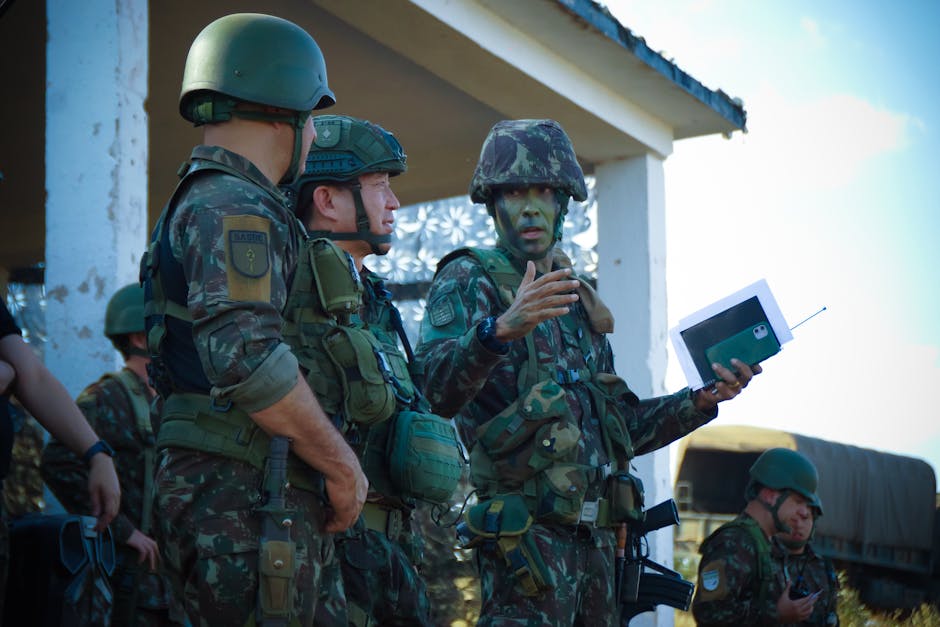
- England’s Women’s T20 team is training with the British Army to boost team dynamics and mental toughness.
- The team is skipping domestic matches to attend the army camp, prioritizing innovative preparation methods.
- The T20 World Cup is just around the corner, driving England’s pursuit of glory and competitive edge.
- The army camp offers an intense environment for players to challenge themselves and grow as individuals and a unit.
- England’s women’s team is embracing evolving sports preparation methods to stay ahead in the competitive women’s game.
In a striking move, England’s squad for the upcoming Women’s T20 World Cup will be skipping this weekend’s round of domestic matches to attend a training camp with the British Army. This unconventional approach to preparation is aimed at fostering a stronger team dynamic and mental toughness, crucial elements for success in high-pressure international tournaments. The decision underscores the team’s commitment to exploring innovative methods to gain a competitive edge. With the T20 World Cup just around the corner, England is leaving no stone unturned in its pursuit of glory.
Background and Rationale

The decision to train with the British Army is not merely a novelty but a well-thought-out strategy. Given the intense physical and mental demands of the T20 format, the team’s management believes that the army camp will provide the ideal environment for the players to challenge themselves and grow both as individuals and as a cohesive unit. This approach also reflects the evolving nature of sports preparation, where teams are increasingly looking beyond traditional training methods to gain psychological and physical advantages. As the women’s game continues to grow in popularity and competitiveness, such initiatives highlight the team’s dedication to staying ahead of the curve.
Key Details of the Army Camp

The camp, designed in collaboration with the British Army, will feature a series of physical and mental challenges tailored to push the players out of their comfort zones. From obstacle courses and endurance tests to team-building exercises and strategic planning sessions, the comprehensive program is crafted to enhance the team’s resilience, communication, and decision-making under pressure. The involvement of the British Army brings a unique dimension to the training, leveraging the military’s expertise in building strong, effective teams. By immersing themselves in this rigorous regimen, the England squad aims to develop the mental and physical fortitude necessary to navigate the challenges of the T20 World Cup.
Analysis and Expectations
Analysts and fans alike will be keenly watching the outcomes of this unorthodox training method, especially considering the intense competition expected at the T20 World Cup. The success of this approach will be measured not just by the team’s performance in the tournament but also by the long-term impact on the players’ mental and physical well-being. Experts point out that such training can have a profound effect on team cohesion and individual resilience, potentially leading to better performance under pressure. However, there are also questions about the balance between innovative training and the need for match practice, highlighting the risks and challenges associated with deviating from traditional preparation methods.
Implications for the Team and the Tournament
The implications of England’s decision to train with the British Army are far-reaching, potentially influencing not just the team’s chances in the T20 World Cup but also the broader landscape of women’s cricket. A successful campaign could pave the way for more teams to adopt similar training methods, ushering in a new era of sports preparation that blends traditional cricketing skills with military-style mental and physical toughness. Conversely, a disappointing performance could lead to scrutiny of the team’s preparation strategies. Either way, the decision reflects the team’s proactive approach to seeking a competitive advantage in a rapidly evolving sporting environment.
Expert Perspectives
Experts in the field of sports psychology and cricket coaching have offered contrasting viewpoints on the efficacy of such training methods. While some praise the innovative approach as a way to build the mental resilience needed for high-stakes tournaments, others express concern about the potential distraction from focused cricket training. The debate highlights the complexities of modern sports preparation, where the line between physical training and mental preparation is increasingly blurred. As the cricket community watches England’s experiment with interest, the upcoming T20 World Cup will provide a compelling case study on the merits of integrating military-style training into sports preparation.
Looking forward, the real test of England’s army camp strategy will come when the team takes to the field in the T20 World Cup. Will this unconventional approach yield the desired results, or will it prove a misguided experiment? The answer to this question will not only shape England’s immediate future in the tournament but could also have a lasting impact on how teams prepare for major international competitions. As the world of women’s cricket continues to evolve, England’s bold move serves as a reminder of the importance of innovation and adaptability in the pursuit of excellence.