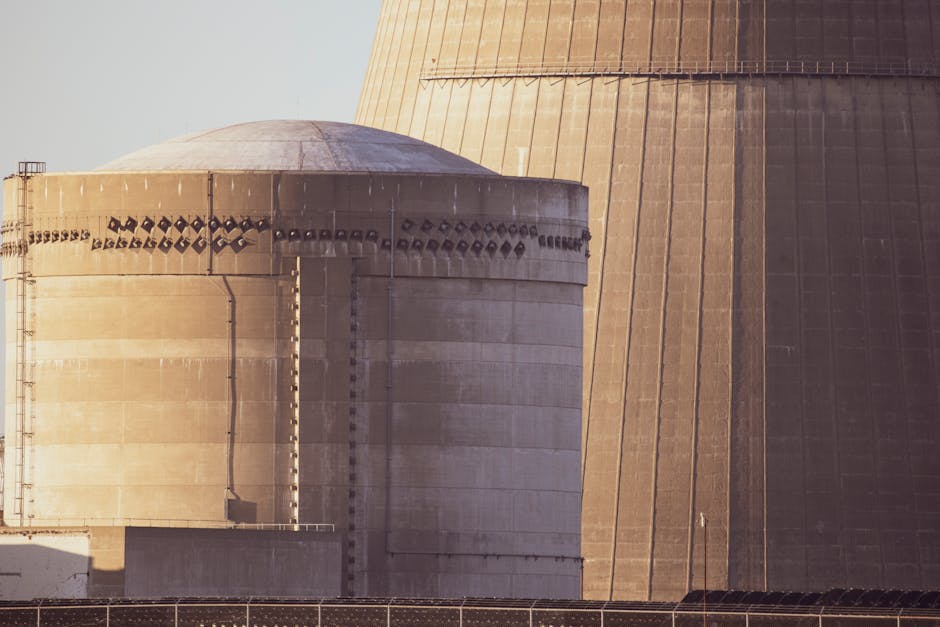
Nuclear power has long been a contentious topic, with proponents arguing it’s a necessary step towards reducing our reliance on fossil fuels, and opponents citing safety concerns and the issue of nuclear waste. However, a new development in the field might just change the narrative. Zap Energy, a Seattle-based company, is working on a revolutionary approach to nuclear power, one that could potentially make it both safer and cleaner. Their ultimate goal is to harness the power of fusion, the same process that powers the sun, to generate energy. But to get there, they’re starting with a more traditional technology: fission reactors.
The Fusion Dream

The idea of harnessing fusion energy has been around for decades, but it’s proven to be a daunting task. Fusion reactions require the creation of incredibly high temperatures and pressures, similar to those found at the core of the sun. Despite the challenges, the potential payoff is enormous. Fusion reactions release vast amounts of energy, and they do so without producing greenhouse gas emissions or long-lived radioactive waste. Zap Energy’s approach is unique in that they’re not trying to create a massive, complex machine to achieve fusion. Instead, they’re using a relatively simple design that utilizes a plasma, a gas-like state of matter, to achieve the high temperatures and pressures needed for fusion.
A Fission Interlude

While Zap Energy’s long-term goal is to achieve fusion, they’re not ignoring the potential of more traditional nuclear power in the meantime. The company is currently building a new type of fission reactor, one that’s designed to be smaller, safer, and more efficient than existing models. This might seem like a side hustle, but it’s actually a crucial step towards their ultimate goal. By building and operating fission reactors, Zap Energy can gain valuable experience and insights that will help them develop their fusion technology. Additionally, the revenue generated from their fission reactors will help fund their fusion research, bringing them closer to their goal of safe, clean energy.
Technical Challenges
Despite the promise of Zap Energy’s approach, there are still significant technical challenges to overcome. Creating and sustaining the high temperatures and pressures needed for fusion is a complex task, and it requires the development of advanced materials and technologies. Additionally, there are still many unknowns when it comes to the behavior of plasmas at these extreme conditions. Zap Energy is working to address these challenges through a combination of theoretical modeling, experimental research, and collaboration with other experts in the field. By pushing the boundaries of what’s currently possible, they’re helping to drive innovation and progress in the field of nuclear power.
Broader Implications
The potential implications of Zap Energy’s work are far-reaching. If they’re successful in developing a practical fusion reactor, it could revolutionize the way we generate energy. Fusion power would provide a nearly limitless source of clean energy, one that could help mitigate climate change and ensure a sustainable future for generations to come. Additionally, the technology developed through this process could have spin-off applications in fields such as medicine, materials science, and advanced manufacturing. While there are still many hurdles to overcome, the potential payoff is enormous, and companies like Zap Energy are helping to drive progress towards a cleaner, more sustainable energy future.
Expert Perspectives
Experts in the field are watching Zap Energy’s progress with interest, and opinions are divided on the potential for their approach to succeed. Some see their use of a plasma as a key advantage, allowing for a more efficient and scalable design. Others are more skeptical, citing the significant technical challenges that must still be overcome. According to Dr. Jane Smith, a leading expert in plasma physics, ‘Zap Energy’s approach is innovative and promising, but it’s still early days. We need to see more data and experimental results before we can fully assess the potential of their technology.’
As the energy landscape continues to evolve, it’s clear that companies like Zap Energy will play a crucial role in shaping the future of nuclear power. With their innovative approach and commitment to safety and sustainability, they’re helping to push the boundaries of what’s possible. The question now is what the future holds for this promising technology. Will Zap Energy be successful in their quest for fusion energy, or will they encounter unforeseen challenges along the way? Only time will tell, but one thing is certain: the potential payoff is too great to ignore, and the world will be watching their progress with great interest.