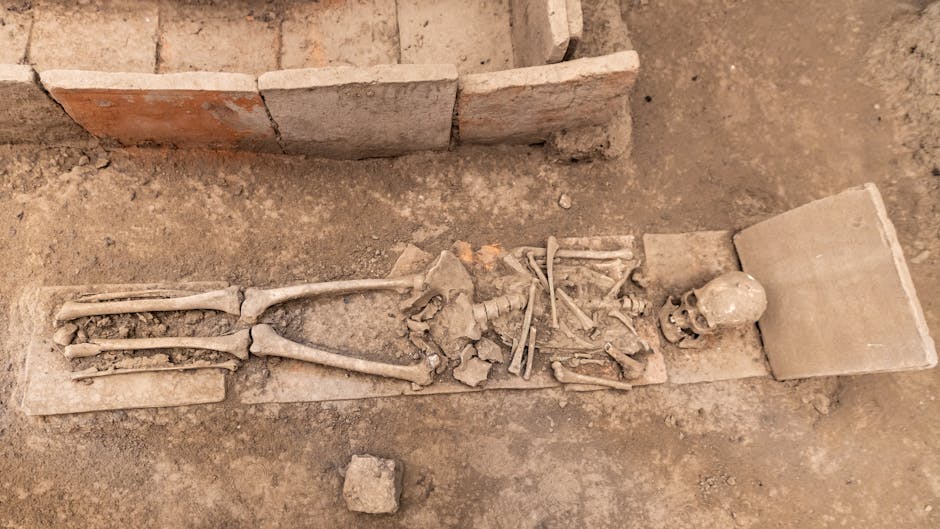
- A 1,500-year-old mass grave in Jordan reveals the devastating impact of the Plague of Justinian on ancient communities.
- The Plague of Justinian, which occurred in the 6th century AD, is believed to have killed millions of people across the Byzantine Empire.
- The mass grave contains the remains of hundreds of people who were buried within a matter of days, highlighting the rapid spread of the disease.
- The Plague of Justinian had a profound impact on the social and economic structures of the time, leading to widespread disruption and collapse.
- The discovery sheds new light on the pandemic’s toll on ancient communities and its ability to reshape how societies live and die.
The discovery of a mass grave in ancient Jordan has provided a chilling glimpse into the impact of one of history’s first pandemics, the Plague of Justinian. Dating back 1,500 years, the grave contains the remains of hundreds of people who were buried within a matter of days, a stark reminder of the devastating power of infectious disease. The Plague of Justinian, which occurred in the 6th century AD, is believed to have killed millions of people across the Byzantine Empire, and this latest discovery has shed new light on the pandemic’s toll on ancient communities.
The Plague of Justinian: A Pandemic of Unprecedented Proportions

The Plague of Justinian was a pandemic of unprecedented proportions, spreading rapidly across the Byzantine Empire and beyond. It is believed to have originated in Ethiopia and spread to Egypt, before moving on to the rest of the empire, including modern-day Jordan. The plague had a profound impact on the social and economic structures of the time, leading to widespread disruption and collapse. The fact that people who normally lived spread out across regions were suddenly concentrated in death is a powerful reminder of the pandemic’s ability to reshape how societies live and die.
Uncovering the Mass Grave: A Glimpse into the Past

The mass grave was discovered in a region of Jordan that was once a thriving city, and its excavation has provided a unique glimpse into the lives of those who lived and died during the pandemic. The grave contains the remains of hundreds of people, all of whom are believed to have died within a matter of days. The fact that they were buried so quickly and in such large numbers suggests that the plague spread rapidly, overwhelming the local population and their ability to cope with the dead. The discovery of the grave has also revealed the social and economic structures of the time, including the fact that people from all walks of life were affected by the plague.
Understanding the Pandemic’s Impact: A Historical Perspective
The discovery of the mass grave has provided a unique opportunity to understand the impact of the Plague of Justinian on ancient societies. By analyzing the remains and the grave itself, archaeologists and historians can gain a better understanding of how the pandemic spread, how it affected different communities, and how it was perceived by those who lived through it. The findings suggest that the plague had a profound impact on the social and economic structures of the time, leading to widespread disruption and collapse. The fact that people were buried in a mass grave, rather than in individual graves, suggests that the plague overwhelmed the local population and their ability to cope with the dead.
The Lasting Legacy of the Plague of Justinian
The Plague of Justinian had a lasting legacy, shaping the course of history and influencing the development of modern societies. The pandemic led to significant changes in the social and economic structures of the time, including the decline of cities and the rise of feudalism. It also had a profound impact on the way that people perceived and responded to infectious disease, leading to the development of new medical practices and public health policies. The discovery of the mass grave in Jordan is a powerful reminder of the pandemic’s impact and a testament to the enduring legacy of the Plague of Justinian.
Expert Perspectives
Experts in the field of archaeology and history have welcomed the discovery of the mass grave, describing it as a significant find that sheds new light on the impact of the Plague of Justinian. “The discovery of this mass grave is a major breakthrough in our understanding of the plague and its impact on ancient societies,” said one expert. “It provides a unique glimpse into the lives of those who lived and died during the pandemic, and it highlights the need for continued research into the history of infectious disease.”
As researchers continue to study the mass grave and its contents, they are likely to uncover even more insights into the impact of the Plague of Justinian. The discovery of the grave is a powerful reminder of the importance of understanding the past, and it highlights the need for continued research into the history of infectious disease. What will future discoveries reveal about the pandemic and its legacy, and how will they shape our understanding of the complex and often deadly relationship between humans and infectious disease?