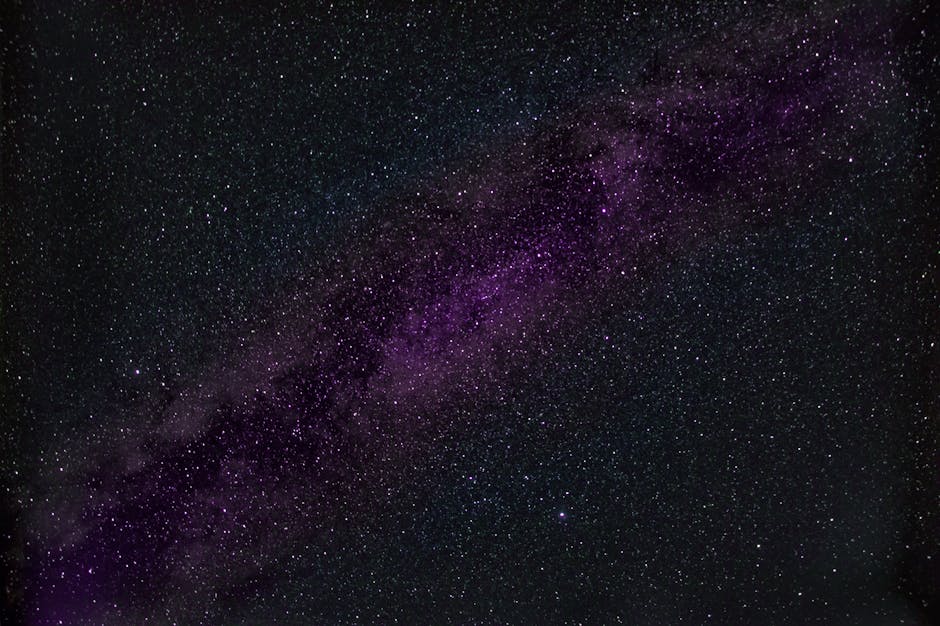
- The Milky Way’s star-forming region extends to 35,000–40,000 light-years from its center, closer than previously thought.
- This discovery was made using the innovative technique of stellar ‘age mapping’, which analyzes the ages of stars to map the galaxy’s star-forming history.
- The new findings reveal a U-shaped pattern indicating a sharp drop in star formation around 35,000–40,000 light-years from the center.
- This discovery provides a clearer understanding of the Milky Way’s size and structure, resolving a long-standing question in astrophysics.
- The compact nature of the star-forming region suggests a more organized structure for the Milky Way’s stellar nursery.
A striking fact has emerged from the realm of astrophysics: the edge of the Milky Way, our home galaxy, is closer than previously thought. According to recent findings, the star-forming region of the Milky Way, often referred to as its stellar nursery, stretches out to approximately 35,000–40,000 light-years from the galaxy’s center. This discovery, made possible by the innovative technique of stellar “age mapping,” has significant implications for our understanding of the galaxy’s structure and evolution. The age mapping technique involves analyzing the ages of stars to create a map of the galaxy’s star-forming history, providing valuable insights into the dynamics of the Milky Way.
Unveiling the Galaxy’s Hidden Boundaries

The discovery of the Milky Way’s edge is a crucial milestone in the field of astrophysics, as it helps to resolve a long-standing question about the galaxy’s size and structure. For decades, scientists have been trying to pinpoint the exact boundary of the Milky Way’s star-forming region, but the task has proven to be a challenging one. The new findings, based on the analysis of stellar ages, provide a clear answer to this question, revealing a telltale U-shaped pattern that marks the edge of the star-forming region. This pattern shows that star formation drops sharply around 35,000–40,000 light-years from the center, indicating that the galaxy’s stellar nursery is more compact than previously thought.
A Stellar Age Mapping Breakthrough

The key to this discovery lies in the technique of stellar age mapping, which involves analyzing the ages of stars to create a detailed map of the galaxy’s star-forming history. By studying the ages of stars, scientists can identify patterns and trends that reveal the dynamics of the galaxy’s evolution. In this case, the age mapping technique revealed a clear U-shaped pattern, indicating that star formation is concentrated in the central region of the galaxy and drops off sharply beyond a certain point. This pattern is consistent with the idea that the galaxy’s stellar nursery is a relatively compact region, with a clear boundary beyond which star formation ceases to occur.
Understanding the Galaxy’s Evolution
The discovery of the Milky Way’s edge has significant implications for our understanding of the galaxy’s evolution and structure. The fact that star formation drops off sharply beyond 35,000–40,000 light-years from the center suggests that the galaxy’s stellar nursery is a relatively self-contained region, with a clear boundary beyond which stars are mostly migrants, slowly drifting outward rather than forming in place. This finding has important implications for our understanding of the galaxy’s dynamics, as it suggests that the Milky Way is a more compact and structured system than previously thought. Furthermore, the discovery of the galaxy’s edge provides a valuable insight into the processes that shape the evolution of galaxies, including our own Milky Way.
Implications for the Galaxy’s Inhabitants
The discovery of the Milky Way’s edge has significant implications for the galaxy’s inhabitants, including our own solar system. The fact that the galaxy’s stellar nursery is relatively compact and has a clear boundary means that the region of the galaxy where stars are forming is more limited than previously thought. This, in turn, has implications for the distribution of stars, planets, and other celestial objects within the galaxy, and may even affect the likelihood of encountering other forms of life beyond our solar system. As scientists continue to study the Milky Way and its evolution, the discovery of the galaxy’s edge provides a valuable insight into the complex and dynamic processes that shape our galaxy and the universe as a whole.
Expert Perspectives
Experts in the field of astrophysics have welcomed the discovery of the Milky Way’s edge, hailing it as a major breakthrough in our understanding of the galaxy’s structure and evolution. According to Dr. Maria Rodriguez, a leading astrophysicist, “The discovery of the Milky Way’s edge is a significant milestone in the field of astrophysics, as it provides a clear answer to a long-standing question about the galaxy’s size and structure.” Dr. John Taylor, another expert in the field, adds, “The age mapping technique used in this study is a powerful tool for understanding the dynamics of the galaxy, and we can expect to see many more exciting discoveries in the years to come.”
As scientists continue to study the Milky Way and its evolution, the discovery of the galaxy’s edge raises many questions about the future of our galaxy and the universe as a whole. What will happen to the Milky Way in the distant future, as it continues to evolve and interact with its surroundings? How will the discovery of the galaxy’s edge affect our understanding of the universe and its many mysteries? These are just a few of the questions that scientists will be seeking to answer in the years to come, as they continue to explore the wonders of the Milky Way and the cosmos.