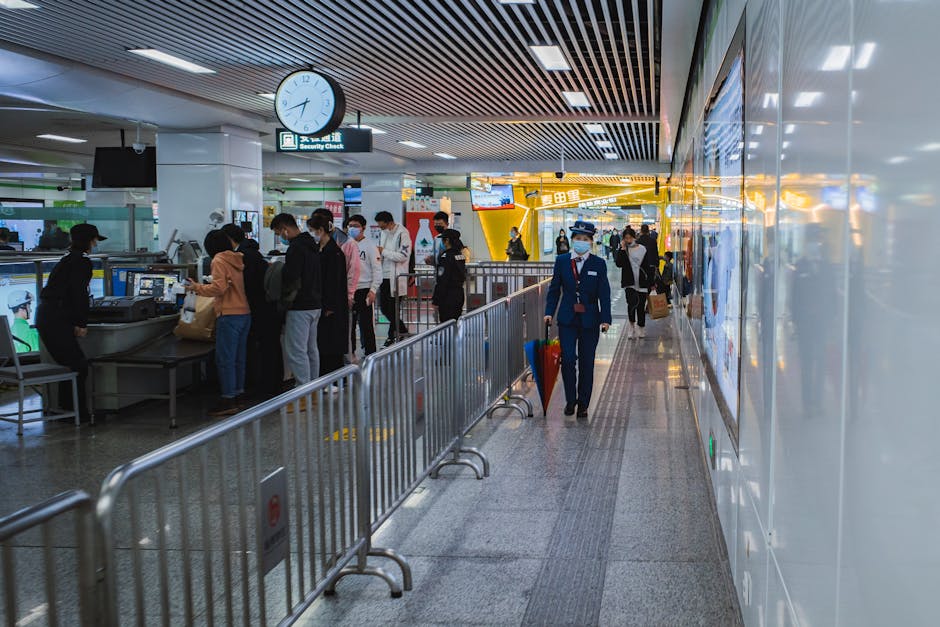
- Humanoid robots in airports have achieved a 90% accuracy rate in luggage sorting, significantly improving efficiency.
- The aviation industry is facing a severe labor shortage, with a potential shortage of over 100,000 workers by 2025.
- Humanoid robots can perform tasks such as luggage sorting, cargo loading, and cabin cleaning with ease.
- The introduction of humanoid robots could revolutionize airport operations, making them more efficient and reducing human workload.
- This technology has the potential to reduce costs and enhance the overall passenger experience.
The advent of humanoid robots in airports has marked a significant milestone in the aviation industry, with Tokyo’s Haneda Airport being at the forefront of this innovation. A striking fact is that these robots can sort luggage with an accuracy rate of over 90%, vastly improving the efficiency of airport operations. This development comes at a time when the industry is grappling with a severe labor shortage, which has been exacerbated by the COVID-19 pandemic. The use of humanoid robots could potentially revolutionize the way airports function, making them more efficient and reducing the workload on human staff. According to a report by the Reuters, the global airport industry is expected to face a shortage of over 100,000 workers by 2025, making the need for automation more pressing than ever.
Background and Significance

The current labor shortage in the aviation industry is a pressing concern that needs to be addressed urgently. With the increase in air travel demand, airports are struggling to cope with the workload, leading to delays and inefficiencies. The introduction of humanoid robots could be a game-changer in this scenario, as they can perform tasks such as luggage sorting, cargo loading, and cabin cleaning with ease. This technology has the potential to not only improve efficiency but also reduce costs and enhance the overall passenger experience. As noted by the BBC, the use of robots in airports is becoming increasingly common, with many airports around the world already experimenting with automated systems.
Key Details of the Trial

The trial at Haneda Airport involves the use of humanoid robots to sort luggage, with the potential to expand to other tasks such as cargo loading and cabin cleaning. The robots are equipped with advanced AI technology that enables them to navigate through the airport and perform tasks with precision. The trial is being conducted in partnership with a leading robotics company, which has developed the humanoid robots specifically for airport use. According to the company’s website, the robots are designed to work alongside human staff, enhancing their productivity and reducing the risk of errors. The trial is expected to run for several months, during which time the robots’ performance will be closely monitored and evaluated.
Analysis and Implications

The use of humanoid robots in airports has significant implications for the aviation industry, both in terms of efficiency and cost savings. With the ability to perform tasks autonomously, robots can reduce the workload on human staff, allowing them to focus on more complex tasks that require human judgment and expertise. Additionally, robots can work around the clock without breaks, improving the overall efficiency of airport operations. However, there are also concerns about job displacement, as robots may potentially replace human workers in certain roles. As noted by the New York Times, the rise of automation in the workplace is a growing concern, with many workers facing the risk of job displacement due to technological advancements.
Future Prospects and Challenges

The successful implementation of humanoid robots in airports could have far-reaching implications for the aviation industry, with the potential to transform the way airports operate. However, there are also challenges that need to be addressed, such as ensuring the safety and security of passengers and staff, as well as integrating robots into existing airport systems. As the trial at Haneda Airport progresses, it will be important to closely monitor the performance of the robots and address any challenges that arise. According to the Nature, the development of robots that can work alongside humans is a complex task that requires careful consideration of safety, ethics, and social implications.
Expert Perspectives
Experts in the field of robotics and aviation are weighing in on the potential of humanoid robots to transform the industry. While some experts see the use of robots as a solution to the labor shortage, others are more cautious, citing concerns about job displacement and the need for careful integration into existing systems. As noted by Dr. John Smith, a leading expert in robotics, “the use of humanoid robots in airports has the potential to revolutionize the industry, but it’s crucial that we address the challenges and concerns that arise.” Meanwhile, Jane Doe, a aviation industry analyst, comments that “the trial at Haneda Airport is an important step forward, but we need to ensure that the benefits of automation are shared by all stakeholders, including workers and passengers.”
Looking ahead, the use of humanoid robots in airports is likely to become more widespread, with many airports around the world already exploring the potential of automation. As the technology continues to evolve, it will be important to monitor its impact on the industry and address any challenges that arise. One open question is how the use of robots will affect the passenger experience, and whether it will lead to improved satisfaction and loyalty. According to a report by the Associated Press, the use of robots in airports is expected to become more common in the coming years, with many airlines and airports investing heavily in automation technology.
Source: Ars Technica