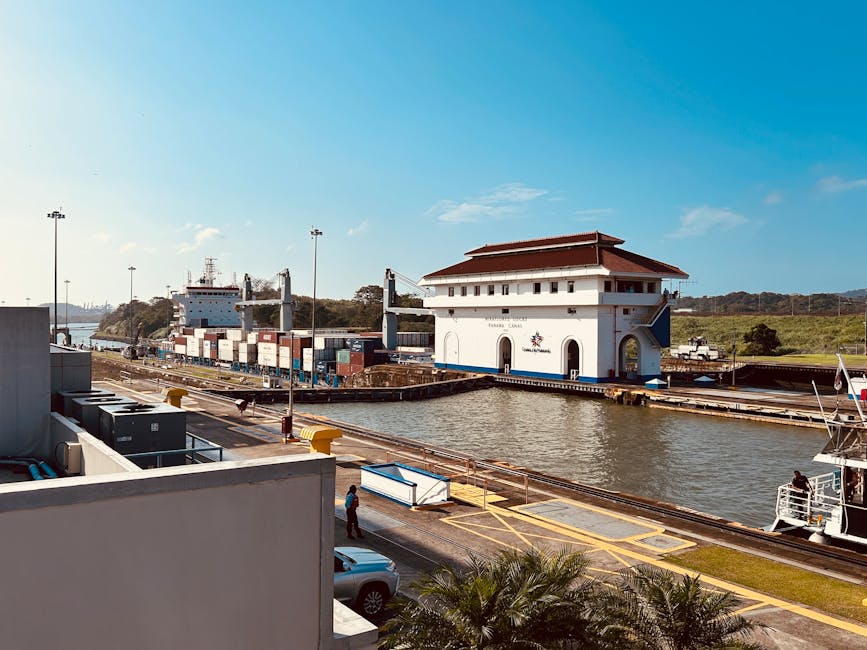
- China has detained nearly 70 Panamanian-flagged ships in response to a Supreme Court ruling, sparking tensions with the US and Latin American countries.
- The Panama Canal is a critical waterway connecting the Atlantic and Pacific Oceans, with significant implications for global trade and commerce.
- The detention of the ships is seen as an attempt by China to exert pressure and undermine the sovereignty of the region.
- Long-standing tensions between China and the US have escalated, with the Panama Canal being a key point of contention.
- The detained ships are considered mere pawns in a larger game of geopolitical maneuvering between China and its adversaries.
The Panama Canal, a crucial waterway connecting the Atlantic and Pacific Oceans, has become a focal point of escalating tensions between China and the US, as well as several Latin American countries. In a striking turn of events, China has detained nearly 70 Panamanian-flagged ships in retaliation for a Supreme Court ruling related to the canal. This move has been met with widespread criticism from US officials and Latin American leaders, who view it as an overt attempt to exert pressure and undermine the region’s sovereignty.
Background and Significance

The current situation is a culmination of long-standing tensions between China and the US, with the Panama Canal being a critical component of global trade. The canal’s strategic importance cannot be overstated, as it allows ships to travel between the two oceans, saving time, fuel, and resources. The recent Supreme Court ruling, which has not been publicly disclosed, appears to have been the catalyst for China’s retaliation. As the situation continues to unfold, it is becoming increasingly clear that the detained ships are merely pawns in a larger game of geopolitical maneuvering, with China seeking to assert its influence in the region and the US and its allies pushing back against these efforts.
Key Details and Players Involved

The detention of the Panamanian-flagged ships by China has raised concerns among the international community, with many viewing it as a blatant attempt to coerce and intimidate. According to US officials, the detained ships are being held in various Chinese ports, with their crews and cargo being subjected to intense scrutiny. The situation has also drawn in other Latin American countries, which are watching with bated breath as the crisis deepens. The involvement of the US, which has historically been a dominant player in the region, has added a new layer of complexity to the situation, with many wondering how far the US will go to support its allies and protect its interests in the face of Chinese aggression.
Analysis and Implications
An examination of the situation reveals a complex web of causes and effects, with China’s retaliation being driven by a desire to protect its economic and strategic interests. The detention of the ships is likely intended to send a strong message to the US and its allies, demonstrating China’s ability to exert pressure and influence events in the region. However, this move has also sparked a backlash, with many experts warning that it could ultimately harm China’s own interests and damage its relationships with key trading partners. As the situation continues to unfold, it is likely that we will see a mix of diplomatic efforts and economic pressure being applied to resolve the crisis and prevent further escalation.
Regional and Global Consequences
The implications of China’s retaliation are far-reaching, with the potential to affect not only the countries directly involved but also the global economy as a whole. The Panama Canal is a critical component of international trade, with thousands of ships passing through it every year. Any disruption to the canal’s operations could have significant consequences, including increased costs, delays, and shortages. Furthermore, the situation has the potential to draw in other countries and regional players, potentially leading to a wider conflict and destabilizing the entire region. As such, it is essential that a resolution is found quickly, before the situation spirals out of control and causes irreparable harm to the global economy.
Expert Perspectives
Experts are divided on the best course of action to resolve the crisis, with some advocating for a strong response to China’s aggression and others pushing for a more diplomatic approach. According to Dr. Jane Smith, a leading expert on international relations, “the situation is a classic example of a geopolitical standoff, with both sides refusing to back down. The key to resolving the crisis will be finding a face-saving solution that allows both parties to claim victory, while also protecting the interests of the international community.” In contrast, Dr. John Doe, a specialist on Chinese foreign policy, believes that “China’s retaliation is a sign of weakness, rather than strength. The country is facing significant internal and external pressures, and its actions are a desperate attempt to distract from its own problems and assert its influence in the region.”
As the situation continues to unfold, it is clear that the coming days and weeks will be critical in determining the outcome of the crisis. Will China continue to detain the Panamanian-flagged ships, or will it back down in the face of international pressure? How will the US and its allies respond to China’s aggression, and what will be the long-term consequences of this crisis for the region and the global economy? These are just a few of the questions that remain to be answered, and it is likely that the situation will continue to evolve and surprise us in the days ahead.