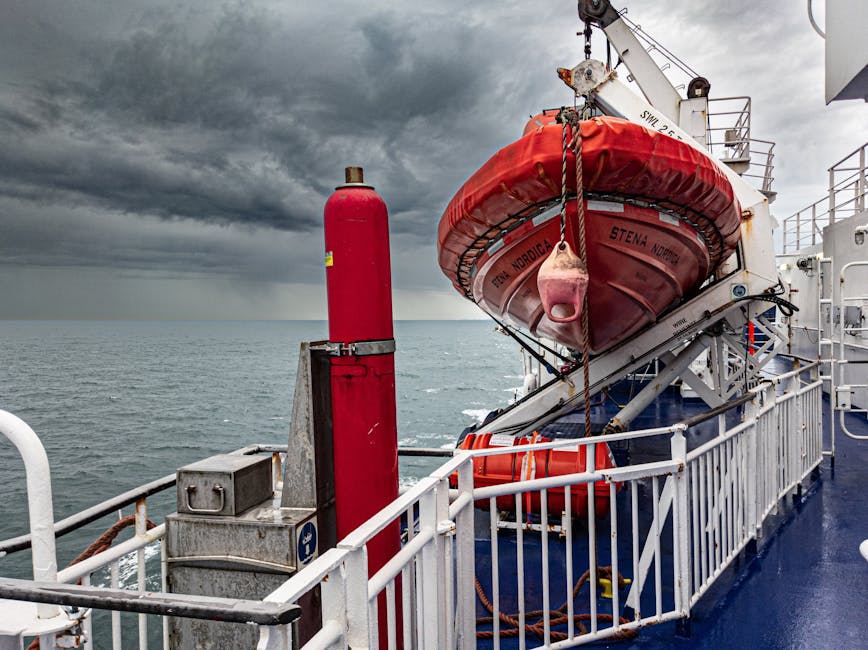
- The UKMTO is a 24-hour service monitoring the Persian Gulf, Red Sea, and Indian Ocean, responding to distress calls from ships.
- The agency has been in operation for over two decades, providing a crucial service to the global shipping community.
- The UKMTO’s primary function is to monitor ship movements and respond to distress calls, including pirate attacks and mechanical failures.
- The agency’s efforts have been significant in recent years, as tensions in the Strait of Hormuz have escalated.
- The UKMTO is equipped to handle a wide range of emergencies, making it an indispensable asset for ships operating in the region.
The Strait of Hormuz, a critical waterway connecting the Persian Gulf to the Arabian Sea, is one of the most volatile regions in the world, with numerous instances of ship seizures, pirate attacks, and naval skirmishes. Amidst this turmoil, a small U.K. agency, nestled in a military base outside Portsmouth, England, plays a vital role in ensuring the safety of ships traversing this treacherous route. The U.K. Maritime Trade Operations (UKMTO) agency, a 24-hour service, monitors the Persian Gulf, the Red Sea, and part of the Indian Ocean, responding to distress calls from ships in need of assistance, making it a 911 for ships in the region.
The UKMTO: A Critical Component of Maritime Safety

The UKMTO has been in operation for over two decades, providing a crucial service to the global shipping community. The agency’s primary function is to monitor ship movements and respond to distress calls, which can range from pirate attacks to mechanical failures. With a team of experienced personnel, including naval officers and maritime experts, the UKMTO is equipped to handle a wide range of emergencies, making it an indispensable asset for ships operating in the region. The agency’s efforts have been particularly significant in recent years, as tensions in the Strait of Hormuz have escalated, with several high-profile incidents of ship seizures and attacks.
Responding to Distress Calls: The UKMTO’s Operations

The UKMTO’s operations are centered around its 24-hour monitoring service, which utilizes advanced technology to track ship movements and detect potential threats. When a distress call is received, the agency’s team springs into action, rapidly assessing the situation and coordinating a response. This can involve alerting nearby naval vessels, dispatching rescue teams, or providing critical guidance to ships under attack. The UKMTO’s response is often a matter of life and death, as ships in distress may be facing imminent danger, and every minute counts. The agency’s expertise and efficiency have earned it a reputation as a trusted and reliable partner for ships operating in the region.
Analysis: The Complexities of Maritime Security
The UKMTO’s work is set against the backdrop of a complex and evolving maritime security landscape. The Strait of Hormuz is a critical chokepoint, with over 20% of the world’s oil passing through it, making it a highly prized and contested waterway. The region is also home to a number of rival powers, including Iran, Saudi Arabia, and the United States, each with their own interests and agendas. As a result, the UKMTO must navigate a delicate web of political and military alliances, while also contending with the ever-present threat of piracy and terrorism. The agency’s success in this environment is a testament to its expertise and adaptability, as well as the importance of its mission.
Implications: The Human Cost of Maritime Insecurity
The UKMTO’s work has a direct impact on the lives of thousands of seafarers who transit the region every year. A ship in distress can be a catastrophic event, resulting in loss of life, injury, and significant economic damage. The UKMTO’s response to these incidents is often the difference between life and death, as it provides critical support and guidance to ships in need. The agency’s efforts also have a broader impact, as they help to maintain the stability of the global shipping industry, which is critical to the world economy. By ensuring the safe passage of ships through the Strait of Hormuz, the UKMTO plays a vital role in maintaining the free flow of trade and commerce.
Expert Perspectives
Experts in the field of maritime security agree that the UKMTO’s work is essential to maintaining stability in the region. “The UKMTO is a critical component of the international effort to secure the Strait of Hormuz,” said a senior naval officer. “Their expertise and rapid response capabilities make them an indispensable asset for ships operating in the region.” However, others have noted that the agency’s work is not without its challenges, as the complexities of the region and the evolving nature of the threats it faces require constant adaptation and innovation. “The UKMTO must stay ahead of the curve, anticipating new threats and developing effective responses,” said a maritime security expert.
As the situation in the Strait of Hormuz continues to evolve, the UKMTO’s role will only become more critical. With tensions in the region showing no signs of abating, the agency’s expertise and rapid response capabilities will be essential in maintaining the safety and security of ships transiting the region. As the world watches the developments in the Strait of Hormuz with bated breath, one thing is certain: the UKMTO will remain a vital component of the international effort to secure this critical waterway, and its work will continue to have a direct impact on the lives of seafarers and the global economy.