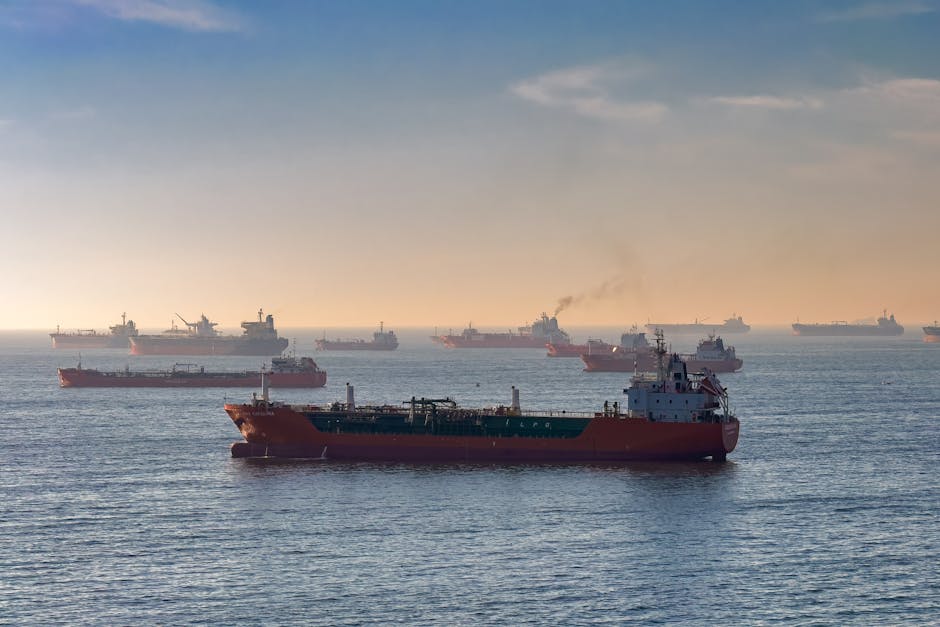
- The Strait of Hormuz, a vital waterway, handles over 20% of global oil trade, making disruptions a significant concern.
- Escalating geopolitical tensions in the region have sparked concerns among oil market participants and global economists.
- A disruption to oil supplies through the Strait of Hormuz could lead to higher fuel prices and slower economic growth.
- The potential for disruption is linked to historical, cultural, and economic factors, including the US withdrawal from the JCPOA.
- The global economy is still recovering from the COVID-19 pandemic, making it vulnerable to oil supply chain disruptions.
The Strait of Hormuz, a narrow waterway connecting the Persian Gulf to the Arabian Sea, is once again at the center of geopolitical tensions, with potential disruptions to global oil supply chains looming large. The Strait, which handles over 20% of global oil trade, has long been a flashpoint for regional conflicts, and the latest escalation in tensions has sparked concerns among oil market participants. With the global economy still recovering from the COVID-19 pandemic, a disruption to oil supplies could have far-reaching consequences, from higher fuel prices to slower economic growth.
Geopolitical Context

The current tensions in the region are rooted in a complex web of historical, cultural, and economic factors. The Strait of Hormuz has long been a contested territory, with Iran, the United Arab Emirates, and Oman vying for control. The latest escalation in tensions has been driven by a combination of factors, including the US withdrawal from the Joint Comprehensive Plan of Action (JCPOA) and the subsequent reimposition of sanctions on Iran. As the situation continues to unfold, it is clear that the potential for disruption to global oil supplies is very real, and the implications for the global economy could be significant.
Oil Market Dynamics

The potential disruption to oil supplies through the Strait of Hormuz has already begun to impact oil market dynamics. Oil prices have surged in recent weeks, with Brent crude oil prices rising by over 10% in a single day. The increase in prices has been driven by a combination of factors, including the potential for supply disruptions and the subsequent increase in risk premia. As the situation continues to unfold, it is likely that oil prices will remain volatile, with the potential for further increases if the situation escalates. The impact of higher oil prices will be felt across the globe, from increased fuel costs for consumers to higher production costs for businesses.
Economic Implications
The potential disruption to oil supplies through the Strait of Hormuz has significant implications for the global economy. A prolonged disruption to oil supplies could lead to higher fuel prices, slower economic growth, and increased inflation. The impact will be felt across industries, from transportation and manufacturing to agriculture and construction. As the situation continues to unfold, it is clear that the potential for economic disruption is very real, and policymakers will need to be vigilant in their response. The International Monetary Fund (IMF) has already warned of the potential risks to the global economy, and it is likely that other organizations will follow suit in the coming days.
Regional Implications
The potential disruption to oil supplies through the Strait of Hormuz will have significant implications for the region. The Middle East is already a volatile region, with ongoing conflicts in countries such as Yemen and Syria. A disruption to oil supplies could exacerbate these tensions, leading to further instability and conflict. The impact will also be felt in other regions, including Asia and Europe, which are heavily reliant on oil imports from the Middle East. As the situation continues to unfold, it is clear that the potential for regional instability is very real, and policymakers will need to be proactive in their response.
Expert Perspectives
Experts are divided on the potential impact of a disruption to oil supplies through the Strait of Hormuz. Some have warned of the potential for catastrophic consequences, including a significant increase in oil prices and a subsequent slowdown in economic growth. Others have been more sanguine, arguing that the impact will be limited and that alternative supply routes can be quickly established. As the situation continues to unfold, it is clear that the potential for disruption is very real, and experts will be closely watching developments in the region.
Looking ahead, it is clear that the situation in the Strait of Hormuz will continue to be a major focus for oil market participants and policymakers. The potential for disruption to oil supplies is very real, and the implications for the global economy could be significant. As the situation continues to unfold, it will be important to closely monitor developments in the region and to be prepared for any eventuality. The question on everyone’s mind is what will happen next, and how will the situation be resolved. One thing is certain, however: the Strait of Hormuz will remain a critical component of global oil supply chains for the foreseeable future, and any disruption to supplies will have significant implications for the global economy.