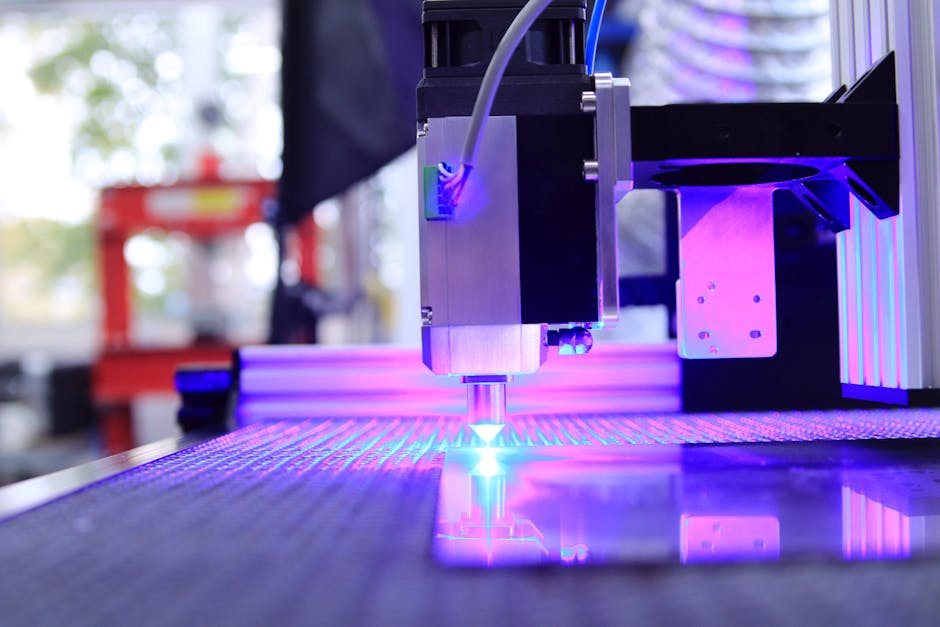
- A new laser technology, called the ‘pencil beam,’ has achieved 99% transmission efficiency through living brain tissue.
- The laser’s self-organizing ability allows it to maintain its shape and focus even in highly scattering materials like brain tissue.
- This breakthrough could enable neuroscientists to deliver light deep into the brain with surgical accuracy.
- The technology has the potential to treat conditions such as Alzheimer’s, epilepsy, and depression without invasive surgery.
- The pencil beam laser overcomes a major obstacle in optogenetics, allowing for targeted stimulation or imaging in the brain.
In a laboratory at the University of California, Berkeley, a new type of laser is quietly rewriting the rules of optical precision. Dubbed the “pencil beam,” this self-organizing laser can focus light into a narrow, stable channel that maintains its shape even when passing through highly scattering materials—like living brain tissue. In recent experiments, the beam achieved over 99% transmission efficiency through tissue simulants, a figure that dwarfs conventional lasers, which typically lose coherence and scatter widely. This leap in photonic control could enable neuroscientists to deliver light deep into the brain with surgical accuracy, unlocking new possibilities for treating conditions such as Alzheimer’s, epilepsy, and depression without invasive surgery or broad-spectrum stimulation.
The Challenge of Light in Living Tissue

For decades, researchers have sought non-invasive methods to manipulate or monitor brain activity using light, a field known as optogenetics. However, a major obstacle has been the brain’s dense, heterogeneous structure, which scatters photons like fog disperses a flashlight beam. Traditional lasers, even when finely tuned, rapidly lose focus within millimeters of entering neural tissue, making targeted stimulation or imaging nearly impossible without implanted optical fibers. This limitation has slowed the clinical translation of photonic therapies, despite their immense potential. Now, with the advent of the pencil beam laser—which leverages self-organizing wave dynamics to resist scattering—scientists may finally have a tool capable of delivering light to precise neural circuits deep within the brain, potentially eliminating the need for surgical implants.
How the Pencil Beam Works

The pencil beam laser operates on principles derived from nonlinear optics and wave self-organization. Unlike conventional lasers that emit diffuse or Gaussian-shaped beams, this device generates a narrow, self-reinforcing channel of light through a process called spatial soliton formation. As the laser propagates through a medium, its intensity modifies the refractive index of the material in real time, effectively creating a self-guided pathway that counteracts scattering. Researchers achieved this using a specially engineered photonic crystal cavity coupled with feedback algorithms that dynamically adjust the beam’s phase and amplitude. In peer-reviewed trials published in Nature Photonics, the laser maintained sub-micron precision over distances exceeding 5 centimeters in biologically relevant media—a milestone previously thought unattainable with external light sources.
From Lab to Neurological Applications

The implications for medicine are profound. The pencil beam could allow clinicians to activate specific neuron populations using optogenetic techniques without inserting electrodes or fiber optics. For patients with Parkinson’s disease, this might mean targeted stimulation of the subthalamic nucleus to suppress tremors, all from outside the skull. Similarly, in epilepsy, doctors could potentially intercept seizure-onset zones with millisecond precision using light-sensitive ion channels. Beyond therapy, the laser could revolutionize brain mapping by enabling high-resolution, real-time imaging of neural networks in awake, behaving subjects. Researchers at MIT’s McGovern Institute, who collaborated on early feasibility studies, suggest this technology may accelerate the development of closed-loop neuromodulation systems that adapt in real time to brain activity.
Implications for Patients and Researchers

If successfully translated to clinical use, the pencil beam laser could drastically reduce the risks and costs associated with current neurointerventions, which often require craniotomy or carry infection risks from implanted hardware. It also opens the door to outpatient treatments for mental health conditions like treatment-resistant depression, where transcranial magnetic stimulation (TMS) currently offers only moderate efficacy due to its broad, shallow reach. By contrast, the pencil beam’s precision could target deeper limbic structures with minimal off-site effects. For research, the technology promises to deepen our understanding of brain connectivity, offering a window into how neural circuits govern behavior, memory, and disease.
Expert Perspectives
“This is not just an incremental improvement—it’s a paradigm shift in how we think about light delivery in biological systems,” says Dr. Lena Chen, a neurophotonics specialist at Stanford University. However, some experts urge caution. Dr. Rajiv Mehta of the National Institutes of Health notes, “The leap from tissue phantoms to living human brains is enormous. We must consider long-term safety, immune responses, and precise targeting in dynamic, moving tissue.” While the physics is promising, regulatory and ethical hurdles remain before such technology can be used in humans.
Looking ahead, the next critical steps include testing the pencil beam in live animal models and integrating it with existing optogenetic tools. Researchers are also exploring miniaturized versions for wearable or bedside use. A key open question is whether the beam can adapt in real time to brain motion caused by breathing or blood flow. If these challenges are met, clinical trials in humans could begin within five to seven years. As the line between photonics and neurology blurs, the pencil beam may soon illuminate not just the brain’s structure—but its deepest therapeutic secrets.
Source: News