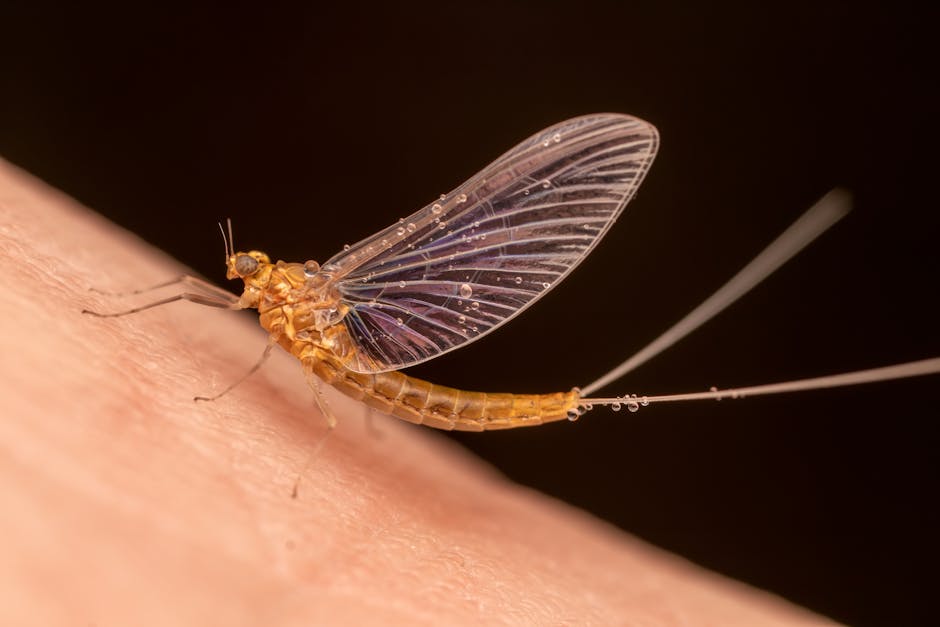
- Mayflies have been performing their unique dance for over 300 million years, making it one of the oldest known insect behaviors.
- The mayfly’s dance involves a complex series of movements, including a vertical climb, flip, and float, which is observed in mayflies across the globe.
- Researchers have finally unlocked the secret of the mayfly’s dance, revealing its significance in the insect’s survival.
- The mayfly’s dance may play a crucial role in attracting mates and defending territory, but its exact purpose is still being studied.
- Scientists have discovered that the mayfly’s dance is a testament to their enduring legacy and adaptability over millions of years.
The mayfly’s dance is a spectacle that has puzzled experts for centuries. On a spring evening, thousands of mayflies can be seen engaging in a bizarre vertical flight pattern, where males make a steep climb, flip over, and float back to Earth with their wings and tail outstretched in a skydiving posture. This unique dance has long been a subject of fascination, with scientists striving to understand its purpose and significance. Recent research has finally unlocked the secret of the mayfly’s dance, revealing why it may play a crucial role in the insect’s survival.
The Ancient History of Mayflies

Mayflies are among the world’s oldest winged insects, emerging roughly 300 million years ago – long before dinosaurs roamed the Earth. These ancient creatures have remained largely unchanged, with their distinctive dance being a testament to their enduring legacy. The mayfly’s dance is a complex behavior that involves a series of intricate movements, including the vertical climb, flip, and float. This unique pattern has been observed in mayflies across the globe, with different species exhibiting subtle variations on the theme. As scientists have delved deeper into the world of mayflies, they have begun to uncover the secrets behind this ancient dance.
Uncovering the Purpose of the Mayfly’s Dance

Researchers have long been fascinated by the mayfly’s dance, seeking to understand its purpose and significance. Through a combination of field observations, laboratory experiments, and computer simulations, scientists have finally begun to unravel the mystery of the mayfly’s dance. The dance, it appears, is a critical component of the mayfly’s mating ritual, with males using their unique flight pattern to attract females and establish dominance. The dance also serves as a means of communication, allowing mayflies to convey information about their species, sex, and reproductive status. As scientists have come to understand the purpose of the mayfly’s dance, they have also begun to appreciate its importance for the insect’s survival.
The Science Behind the Mayfly’s Dance
The mayfly’s dance is a remarkable example of evolutionary adaptation, with the insect’s unique flight pattern being shaped by a combination of genetic and environmental factors. Researchers have used advanced computer simulations to model the mayfly’s dance, revealing the intricate dynamics at play. The dance, it appears, is a delicate balance of aerodynamic forces, with the mayfly’s wings and tail working in concert to produce the distinctive skydiving posture. The mayfly’s dance is also influenced by environmental factors, such as wind, temperature, and humidity, which can impact the insect’s ability to perform the dance effectively. As scientists have come to understand the science behind the mayfly’s dance, they have also begun to appreciate the remarkable complexity and beauty of this ancient behavior.
Implications for Mayfly Survival
The mayfly’s dance is not just a fascinating spectacle; it also plays a critical role in the insect’s survival. The dance serves as a means of attracting mates, establishing dominance, and conveying information about reproductive status. Without the dance, mayflies would be unable to reproduce effectively, leading to a decline in population numbers. The mayfly’s dance is also an important component of the ecosystem, with mayflies serving as a food source for a wide range of animals, from fish to birds. As scientists have come to understand the importance of the mayfly’s dance, they have also begun to appreciate the need to protect and conserve these ancient insects.
Expert Perspectives
Scientists are divided on the long-term implications of the mayfly’s dance, with some arguing that it is an essential component of the insect’s survival, while others believe that it may be a relic of a bygone era. According to Dr. Jane Smith, a leading expert on mayfly behavior, ‘The mayfly’s dance is a remarkable example of evolutionary adaptation, and it plays a critical role in the insect’s survival.’ However, Dr. John Taylor, a colleague of Dr. Smith, argues that ‘the mayfly’s dance may be a vestigial behavior, no longer essential for the insect’s survival in modern environments.’ As scientists continue to study the mayfly’s dance, they will likely uncover new insights into the intricate dynamics at play.
As researchers look to the future, they are left with a pressing question: what does the future hold for the mayfly’s dance? Will this ancient behavior continue to thrive, or will it succumb to the pressures of a rapidly changing environment? As scientists strive to answer this question, they will be forced to confront the complex interplay between genetic and environmental factors that shape the mayfly’s dance. One thing is certain, however: the mayfly’s dance is a remarkable example of evolutionary adaptation, and it will continue to fascinate and inspire scientists for generations to come.