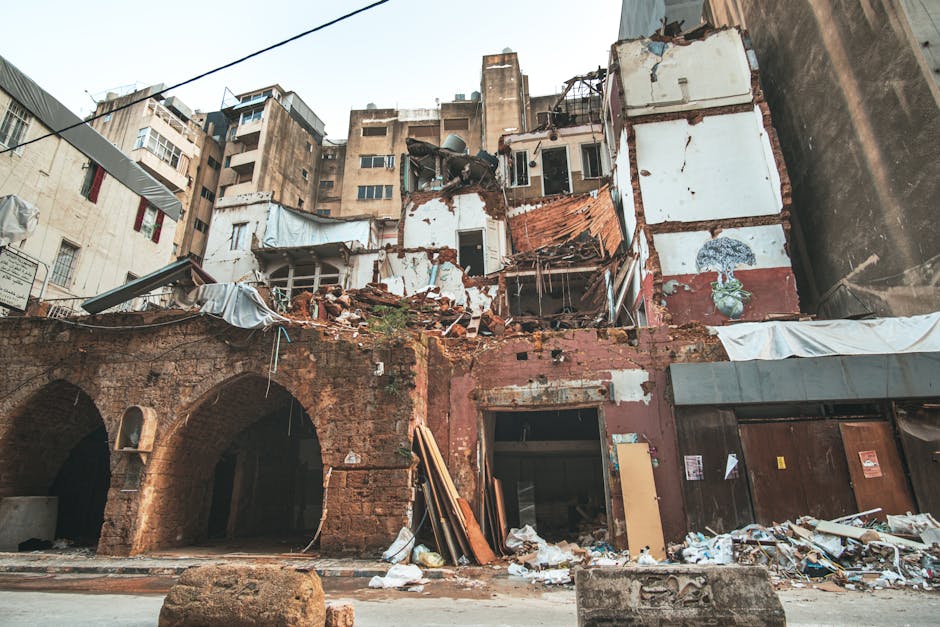
- Lebanese PM Najib Mikati accuses Israel of war crimes, citing violation of international law protecting civilians and humanitarian workers.
- Recent escalation of violence between Israel and Lebanon results in death of 3 rescue workers, sparking widespread condemnation.
- International community calls for calm and restraint from both parties amid deteriorating situation in the region.
- Attack highlights need for lasting solution to decades-long conflict between Israel and Lebanon.
- Long history of tensions and disputes over territory, resources, and ideology fuels ongoing conflict.
The recent escalation of violence between Israel and Lebanon has resulted in the deaths of three rescue workers, sparking widespread condemnation and accusations of war crimes. Lebanese Prime Minister Najib Mikati has slammed Israel’s actions, stating that they constitute a clear violation of international law, which protects civilians and humanitarian workers. The incident has raised concerns about the deteriorating situation in the region and the potential for further escalation. With tensions running high, the international community is calling for calm and restraint from both parties. The attack has also highlighted the need for a lasting solution to the conflict, which has been ongoing for decades.
Background and Context

The current conflict between Israel and Lebanon is rooted in a long history of tensions and disputes over territory, resources, and ideology. The two countries have been technically at war since Israel’s inception in 1948, and the situation has been further complicated by the presence of militant groups such as Hezbollah. The recent attack on Lebanese soil has sparked outrage and condemnation from the international community, with many calling for an immediate ceasefire and a return to diplomatic negotiations. The Lebanese government has also been criticized for its response to the situation, with some arguing that it has not done enough to protect its citizens. As the situation continues to unfold, it is clear that a lasting solution will require a comprehensive and nuanced approach that addresses the complex web of issues at play.
Key Details of the Incident

The attack on the rescue workers occurred in the early hours of the morning, when an Israeli airstrike hit a vehicle carrying the workers. The incident has been widely condemned, with Lebanese President Joseph Aoun stating that Israel’s actions constitute a clear violation of international law. The United Nations has also issued a statement, calling for an immediate investigation into the incident and emphasizing the need for all parties to respect international humanitarian law. The incident has also raised concerns about the safety of humanitarian workers in the region, who often find themselves caught in the crossfire of conflict. As the investigation into the incident continues, it is clear that the international community will be watching closely to see how the situation develops.
Analysis and Implications
The attack on the rescue workers has significant implications for the region, and raises important questions about the role of international law in preventing such incidents. The use of airstrikes in densely populated areas is a highly contentious issue, and one that has been the subject of much debate and discussion in recent years. Many argue that such tactics are inherently disproportionate and indiscriminate, and that they inevitably lead to civilian casualties. Others argue that they are a necessary evil in the fight against terrorism, and that they can be used in a targeted and proportionate manner. As the situation in Lebanon continues to unfold, it is clear that the international community will need to grapple with these complex issues and find a way to balance the need to protect civilians with the need to prevent terrorist attacks.
Humanitarian Consequences
The attack on the rescue workers has had a significant impact on the humanitarian situation in Lebanon, where many are already struggling to access basic necessities such as food, water, and shelter. The incident has also raised concerns about the safety of humanitarian workers, who often find themselves caught in the crossfire of conflict. Many organizations have suspended their operations in the region, citing the high risk of attack and the lack of protection for their staff. As the situation continues to deteriorate, it is clear that the international community will need to take urgent action to address the humanitarian needs of the affected population and to find a way to protect those who are working to provide aid and assistance.
Expert Perspectives
Experts are divided on the implications of the attack, with some arguing that it marks a significant escalation of the conflict and others arguing that it is a isolated incident. Some have called for a strong response from the international community, including economic sanctions and diplomatic pressure on Israel. Others have argued that such measures would be counterproductive, and that a more nuanced approach is needed. Dr. Mona Yacoubian, a senior advisor at the United States Institute of Peace, has stated that the incident highlights the need for a comprehensive and sustainable solution to the conflict, one that addresses the complex web of issues at play. As the situation continues to unfold, it is clear that the international community will need to engage in a nuanced and informed discussion about the best way forward.
Looking to the future, it is clear that the situation in Lebanon will require close monitoring and attention from the international community. The incident has raised important questions about the role of international law in preventing such attacks, and the need for a lasting solution to the conflict. As the investigation into the incident continues, it is likely that we will see further developments and potentially even more violence. The international community must be prepared to respond quickly and effectively to any further escalation, and to work towards a comprehensive and sustainable solution to the conflict. One key question that remains to be answered is how the international community can balance the need to protect civilians with the need to prevent terrorist attacks, and what measures can be taken to prevent such incidents in the future.