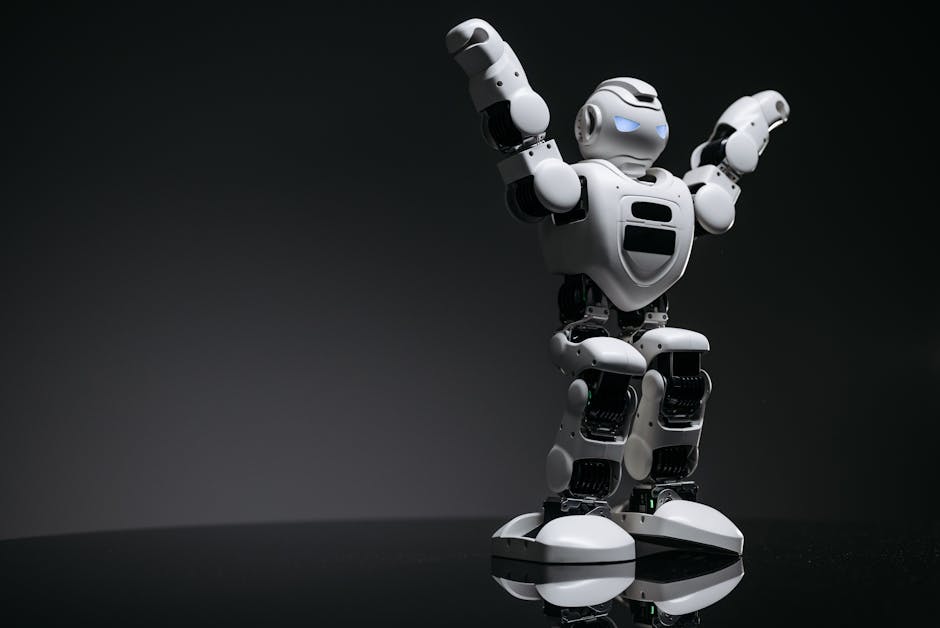
- A humanoid robot recently completed a half-marathon faster than human competitors, highlighting the rapid advancements in robot running capabilities.
- The current fastest robot for 100-metre sprints is only 0.3 seconds behind the human world record, suggesting a near-future breakthrough is likely.
- Robotic speed has been propelled by improvements in AI, materials science, and mechanical engineering, making them versatile for various applications.
- The pursuit of faster robots is not limited to sports but includes tasks like search and rescue, indicating a broader impact on real-world scenarios.
- As robots become more agile and human-like, they could transform industries through advanced interaction and response capabilities.
At the recent robotics competition in Japan, a humanoid robot stunned the audience by completing a half-marathon in under an hour, leaving its human counterparts in the dust. This remarkable feat is not an isolated incident, as robots have been steadily improving their running capabilities over the past few years. In fact, the current record holder for the fastest 100-metre sprint by a robot is a mere 0.3 seconds shy of the human world record, sparking intense speculation about when, not if, a robot will break the prestigious record. With robots now capable of outrunning humans in long-distance events and rapidly closing in on sprint records, the question on everyone’s mind is: what’s driving companies to create such speedy machines?
The Pursuit of Speed

The development of fast and agile robots is not a new phenomenon, but recent breakthroughs in artificial intelligence, materials science, and mechanical engineering have accelerated progress in this field. As a result, robots are now being designed to perform a wide range of tasks that require speed, agility, and endurance, from search and rescue operations to sports and entertainment. While the idea of robots participating in sports may seem like the stuff of science fiction, it has significant implications for the development of more advanced robotic systems that can interact with and respond to their environment in a more human-like way. The potential applications of such technology are vast, ranging from healthcare and transportation to education and manufacturing, making the pursuit of speed a crucial aspect of robotics research.
Key Players and Technologies

Several companies, including Boston Dynamics, Honda, and SoftBank Robotics, are at the forefront of developing fast and agile robots. These companies are leveraging cutting-edge technologies, such as advanced actuators, sophisticated control systems, and lightweight materials, to create robots that can run, jump, and manipulate objects with ease. For example, Boston Dynamics’ Atlas robot is capable of running at speeds of up to 10 km/h and can perform a variety of tasks, including obstacle navigation and object manipulation. Similarly, Honda’s ASIMO robot can run at speeds of up to 6 km/h and is equipped with advanced sensors and control systems that enable it to interact with its environment in a more human-like way. The development of such robots is not only pushing the boundaries of what is possible with robotics but also driving innovation in related fields, such as artificial intelligence and materials science.
Analysis and Implications
The rapid progress being made in the development of fast and agile robots has significant implications for a wide range of industries and applications. For instance, robots that can run and navigate complex environments could be used in search and rescue operations, disaster response, and environmental monitoring. Similarly, robots that can manipulate objects with precision and speed could be used in manufacturing, healthcare, and logistics. However, the development of such robots also raises important questions about safety, ethics, and responsibility, particularly as they become more autonomous and interact with humans in increasingly complex ways. As robots become faster, stronger, and more agile, it is essential to consider the potential risks and benefits of such technology and to develop appropriate regulatory frameworks and safety protocols to ensure that they are used for the benefit of society as a whole.
Breaking Records and Barriers
The possibility of a robot breaking the 100-metre sprint record is not only a testament to the rapid progress being made in robotics but also a reflection of the increasing convergence of human and machine capabilities. As robots become more advanced and sophisticated, they are likely to challenge human dominance in a wide range of areas, from sports and entertainment to education and the workforce. While this may seem like a daunting prospect, it also presents significant opportunities for innovation, collaboration, and growth, particularly as humans and machines learn to work together in increasingly complex and dynamic environments. The breaking of the 100-metre sprint record by a robot would be a historic moment, marking a significant milestone in the development of robotics and artificial intelligence.
Expert Perspectives
According to Dr. Marc Raibert, founder of Boston Dynamics, the development of fast and agile robots is a crucial step towards creating machines that can interact with and respond to their environment in a more human-like way. “The ability to run, jump, and manipulate objects is essential for robots to be able to perform a wide range of tasks, from search and rescue operations to manufacturing and healthcare,” he says. In contrast, Dr. Hiroshi Ishiguro, a renowned robotics researcher, believes that the focus on speed and agility is misplaced and that more emphasis should be placed on developing robots that can interact with humans in a more social and emotional way. “The development of robots that can run and jump is impressive, but it is not necessarily the most important or useful application of robotics technology,” he argues.
As the development of fast and agile robots continues to accelerate, it is likely that we will see significant advances in a wide range of areas, from artificial intelligence and materials science to healthcare and transportation. The question on everyone’s mind is: what’s next? Will we see robots competing in the Olympics, or will they be used to revolutionize industries such as manufacturing and logistics? One thing is certain: the future of robotics is exciting, dynamic, and rapidly evolving, and it will be fascinating to watch as humans and machines continue to push the boundaries of what is possible.