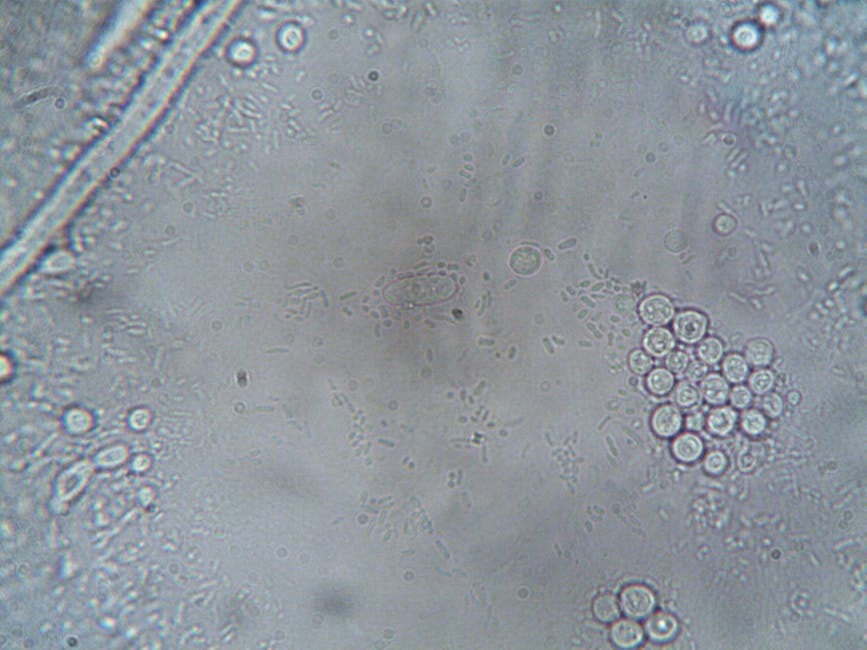
- Researchers have developed microrobots that are 50 times thinner than a human hair, capable of actively hunting and capturing bacterial cells.
- These microrobots operate with precision at the scale of viruses and cellular organelles, unlike passive nanoparticles.
- The robots use catalytic reactions to propel themselves through fluids, responding to chemical gradients like white blood cells.
- This development marks a turning point in nanorobotics, potentially revolutionizing infection treatment, drug delivery, and microbial community manipulation.
- The microrobots are designed to be autonomous, unlike previous micro- and nanoscale machines that required external guidance.
In a leap that blurs the line between robotics and microbiology, researchers have created microrobots so small they are 50 times thinner than a human hair—capable of actively hunting, capturing, and relocating individual bacterial cells. These devices, measuring just 300 nanometers in diameter, operate with precision at the scale of viruses and cellular organelles, a feat once thought impossible without complex external control systems. Unlike passive nanoparticles, these microrobots are engineered to move autonomously in liquid environments, responding to chemical gradients in a manner similar to how white blood cells chase pathogens. According to a study published in Nature Nanotechnology, the robots use catalytic reactions to propel themselves through fluids, effectively swimming toward bacterial signals. This development marks a turning point in nanorobotics, demonstrating for the first time that synthetic microstructures can perform targeted tasks in complex biological environments—potentially revolutionizing how we treat infections, deliver drugs, and manipulate microbial communities.
A New Era in Nanoscale Engineering

The significance of these microrobots lies not just in their size, but in their autonomous functionality. While previous attempts at micro- and nanoscale machines often required magnetic or acoustic guidance from outside the body, these new robots are designed to function independently, driven by internalized chemical reactions. This autonomy is critical for future medical applications, where real-time navigation through blood, mucus, or biofilms is essential. The timing of this breakthrough coincides with growing interest in precision medicine and microbiome modulation, areas where conventional antibiotics and broad-spectrum treatments are increasingly inadequate. With rising antimicrobial resistance and the recognition that microbial ecosystems play a vital role in human health, the ability to selectively target harmful bacteria—without disrupting beneficial ones—has become a top priority. These microrobots offer a potential solution, acting as microscopic surgeons that can isolate and neutralize pathogens at the source.
Design and Functionality of the Microbots

The microrobots are constructed from biocompatible polymers and coated with a platinum-based catalyst that reacts with hydrogen peroxide in their environment, generating oxygen bubbles that propel them forward in a process known as self-electrophoresis. While hydrogen peroxide is not naturally abundant in most biological systems, researchers have designed future iterations to use more biologically compatible fuels, such as glucose or urea. The robots are also functionalized with specific ligands—molecular ‘hooks’—that bind selectively to certain bacterial surface proteins, allowing them to latch onto target microbes. In controlled experiments, the robots successfully located and transported Escherichia coli and Staphylococcus aureus across microfluidic chambers, demonstrating both motility and specificity. The team, led by engineers at the Max Planck Institute for Intelligent Systems, used high-speed microscopy and AI-powered tracking to monitor the robots’ movements in real time, confirming their ability to follow chemical trails released by bacteria.
From Lab to Real-World Applications

The implications of this technology stem from its dual potential in medicine and environmental science. In clinical settings, such microrobots could be deployed to treat localized infections, such as those in the urinary tract, lungs, or dental biofilms, without systemic exposure to antibiotics. This would drastically reduce side effects and slow the development of resistant strains. Beyond healthcare, these robots could be used to monitor and manipulate microbial communities in soil, water, or industrial bioreactors, enhancing bioremediation or optimizing fermentation processes. The current prototypes are still in early testing phases and face challenges, including fuel source limitations, long-term biocompatibility, and scalable manufacturing. However, the success of autonomous navigation and bacterial interaction proves the core concept is viable. Experts note that integrating sensing, decision-making, and communication capabilities into future versions could lead to swarms of microrobots that coordinate like immune cells, collectively identifying and responding to threats.
Implications for Medicine and Biotech

If scaled successfully, these microrobots could redefine how we approach infectious diseases and microbiome engineering. Patients with chronic infections, such as those associated with cystic fibrosis or prosthetic implants, could benefit from targeted, non-invasive treatments. The technology may also enhance diagnostic methods, allowing for real-time sampling and transport of pathogens for analysis. Furthermore, in the field of synthetic biology, microrobots could serve as delivery platforms for engineered bacteria or gene-editing tools, enabling precise interventions in complex ecosystems. However, ethical and regulatory questions loom: how do we control synthetic micro-machines inside the human body? What safeguards prevent unintended interactions with host cells or ecological disruption? These concerns will need to be addressed as the technology matures.
Expert Perspectives
Dr. Linda Zhang, a nanomedicine researcher at MIT not involved in the study, called the work ‘a masterclass in bio-inspired engineering,’ noting that ‘the robots mimic natural motility without relying on external control—a major step forward.’ However, she cautioned that ‘translation to humans will require overcoming biocompatibility and fuel challenges.’ Meanwhile, Dr. Raj Mehta, a microbiologist at the University of Edinburgh, emphasized the ecological risks: ‘Introducing synthetic microswimmers into natural environments could disrupt microbial balance, especially if they persist or replicate.’ Both agree that while the potential is immense, rigorous safety testing and international oversight will be essential before deployment.
Looking ahead, the next frontier lies in swarm intelligence and biodegradability. Researchers are exploring ways to program microrobot collectives to perform complex tasks, such as forming temporary scaffolds or releasing therapeutics in response to environmental cues. Equally important is ensuring these robots can safely dissolve after completing their mission. With continued advancements, microrobotic systems could become as routine as antibiotics are today—ushering in a new era of microscopic medicine.
Source: Scitechdaily