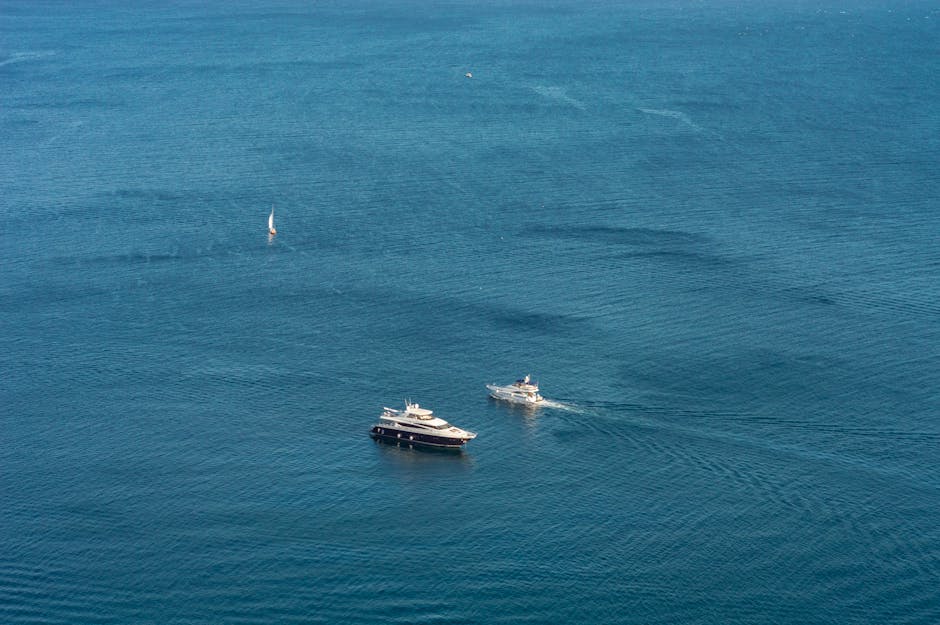
- A sanctioned oligarch’s 464-foot superyacht, Nord, has transited the Strait of Hormuz, a high-risk waterway.
- The transit raises questions about the effectiveness of sanctions on high-value assets linked to Kremlin elites.
- Shipping records suggest longstanding ties between Nord and Russian steel tycoon Aleksei A. Mordashov.
- The global sanctions regime targeting Russian oligarchs is under strain due to systemic weaknesses.
- Enforcement has been inconsistent, particularly at sea, where vessels can easily evade detection.
In a move that underscores the porous nature of international sanctions, the 464-foot superyacht Nord — believed to be connected to Russian steel tycoon Aleksei A. Mordashov, who is under U.S. and European Union sanctions — has transited the Strait of Hormuz, one of the world’s most geopolitically sensitive waterways. Maritime tracking data confirms the vessel passed through the narrow chokepoint, located between Iran and the Arabian Peninsula, which handles nearly 20% of the world’s traded oil. The transit comes amid heightened tensions in the region and raises urgent questions about how effectively sanctions on high-value assets linked to Kremlin elites are enforced. Despite being flagged under the Cayman Islands registry and officially listed as unaffiliated with any sanctioned individual, shipping records, corporate filings, and investigative reports suggest longstanding ties between the Nord and Mordashov, whose net worth once exceeded $28 billion before the Ukraine war.
Sanctions Under Strain Amid Maritime Loopholes

The reappearance of Nord in a high-risk conflict zone highlights systemic weaknesses in the global sanctions regime targeting Russian oligarchs. When Western governments imposed sweeping penalties on Russian elites following the 2022 invasion of Ukraine, hundreds of luxury assets — including yachts, private jets, and real estate — were frozen or seized. However, enforcement has been inconsistent, particularly at sea, where vessels can obscure ownership through shell companies, reflag under permissive registries, and operate beyond the reach of judicial authorities. Mordashov, CEO of steel giant Severstal and a close ally of Vladimir Putin, was sanctioned by the U.S. Treasury in March 2022 and by the EU shortly thereafter. Despite this, the Nord has remained operational, sailing across the Mediterranean, the Red Sea, and now into the Persian Gulf, suggesting either deliberate evasion or gaps in monitoring by international maritime enforcement bodies.
Behind the Nord: Ownership and Sanction Evasion Tactics

The Nord, built by German shipyard Lürssen in 2016, is valued at over $600 million and features a helipad, submarine docking system, and accommodations for up to 36 guests. While the vessel is officially registered to a Cayman Islands-based entity, investigative reporting by Reuters and the Organized Crime and Corruption Reporting Project (OCCRP) has traced its beneficial ownership through a network of offshore holding companies back to Mordashov. Documents reveal that the yacht’s management has shifted multiple times since 2022, with previously named operators cutting ties after sanctions were imposed. Nonetheless, the Nord has continued to receive maintenance, crew rotations, and logistical support — services typically restricted under EU and U.S. sanctions. This raises concerns that third-party service providers, insurers, or port authorities may be turning a blind eye, either due to lack of enforcement capacity or financial incentive.
Strategic Risks and Geopolitical Calculations

The transit of the Nord through the Strait of Hormuz is not merely a legal or compliance issue — it is a geopolitical flashpoint. The strait, just 21 miles wide at its narrowest, has long been a site of naval confrontations, including attacks on oil tankers and seizures by Iranian forces. The presence of a high-profile vessel linked to a sanctioned Russian oligarch in this zone introduces new risks, particularly if Iran or proxy forces target it to signal defiance of Western powers. Conversely, the Kremlin may view the movement of such assets as a form of soft power projection — a demonstration that sanctions, however severe on paper, do not fully constrain the mobility or influence of its elite. Maritime analysts warn that the lack of coordinated tracking mechanisms among NATO and allied navies allows sanctioned assets to exploit jurisdictional gray zones, especially in international waters where boarding requires legal justification and diplomatic coordination.
Implications for Sanctions Enforcement and Maritime Law

The Nord’s journey exposes critical vulnerabilities in the international system designed to isolate Russian oligarchs financially and symbolically. If high-value assets can continue operating and traversing conflict zones with impunity, the deterrent effect of sanctions erodes. Port states, insurers, and maritime service providers are legally obligated under EU and U.S. rules to avoid facilitating transactions involving sanctioned individuals, yet enforcement relies heavily on self-reporting and voluntary compliance. Countries like Iran, Venezuela, and certain Southeast Asian ports have become refuges for blacklisted vessels, where oversight is minimal and geopolitical alignment with Moscow reduces cooperation with Western authorities. The case also underscores the need for a centralized, real-time database of sanctioned maritime assets — a proposal previously floated by the U.S. State Department but not yet implemented at a global level.
Expert Perspectives
“Sanctions only work if enforcement is credible and universal,” said Emily Landis, a sanctions expert at the Center for Strategic and International Studies (CSIS). “When a $600 million yacht linked to a top oligarch sails through one of the world’s most dangerous straits without interception, it sends a message that the rules don’t apply equally.” However, some legal scholars caution against overreach. “Flag state sovereignty and freedom of navigation are bedrock principles of international law,” noted Raj Bhala, a trade law professor at the University of Kansas. “Stopping a vessel without clear jurisdictional authority could escalate into diplomatic incidents, especially in contested waters like the Strait of Hormuz.”
Going forward, the trajectory of the Nord and similar vessels will be closely watched by enforcement agencies and foreign policy analysts. The Biden administration and EU officials have signaled plans to strengthen maritime tracking through satellite surveillance and artificial intelligence-driven vessel behavior analysis. Whether these tools can close existing loopholes — and whether nations will act decisively when sanctioned assets enter volatile regions — remains an open question. As long as geopolitical rivalries and legal ambiguities persist, the seas may remain a sanctuary for the world’s most controversial elites.
Source: The New York Times