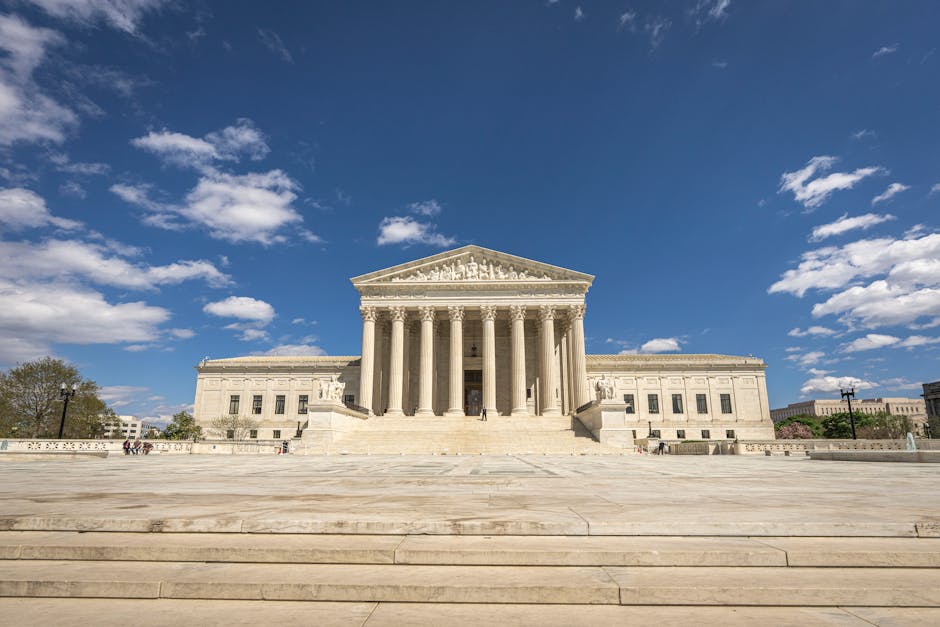
The US Supreme Court’s decision to reinstate a Republican-favoured Texas electoral map has sent shockwaves through the political landscape, with potentially significant implications for the balance of power in Congress. The reinstated map, which was backed by President Donald Trump, could flip key districts to Republicans, altering the electoral calculus in the state. This move has been seen as a major victory for Republicans, who have been trying to consolidate their power in the state. The map’s reinstatement has also raised concerns among Democrats, who fear that it could lead to a decline in their representation in the state.
Background and Context

The Texas electoral map has been at the centre of a long-running dispute between Republicans and Democrats, with both sides accusing each other of gerrymandering. The map was originally drawn by Republican lawmakers in 2011, but it was challenged by Democrats and minority groups, who argued that it was designed to dilute the voting power of minority communities. The case has been winding its way through the courts for years, with various rulings and appeals. The Supreme Court’s decision to reinstate the map is the latest twist in this saga, and it has significant implications for the future of electoral politics in the state.
The Ruling and Its Implications

The Supreme Court’s ruling was a major victory for Republicans, who have been fighting to preserve their control over the Texas electoral map. The court’s decision means that the map will be used in upcoming elections, potentially giving Republicans an advantage in key districts. The ruling has been welcomed by Republican lawmakers, who argue that it will help to ensure the integrity of the electoral process. However, Democrats have been quick to condemn the decision, arguing that it will lead to a decline in minority representation and undermine the democratic process. The ruling has also been criticised by civil rights groups, who argue that it will have a disproportionate impact on minority communities.
Analysis and Expert Opinion
Experts say that the Supreme Court’s decision to reinstate the Texas electoral map is a significant development, with potentially far-reaching implications for electoral politics in the state. The map’s reinstatement could lead to a shift in the balance of power in Congress, with Republicans potentially gaining seats in key districts. However, the ruling has also been criticised for its potential impact on minority communities, who may see their voting power diluted as a result of the map’s reinstatement. According to some analysts, the ruling is a clear example of the Supreme Court’s willingness to intervene in electoral politics, and it has significant implications for the future of democracy in the United States.
Implications and Consequences
The reinstatement of the Texas electoral map has significant implications for the future of electoral politics in the state. The map’s reinstatement could lead to a decline in minority representation, as well as a shift in the balance of power in Congress. The ruling has also raised concerns about the potential for gerrymandering, with some arguing that the map was deliberately designed to favour Republicans. The implications of the ruling are far-reaching, and they will be closely watched by politicians, analysts, and civil rights groups in the coming months.
Expert Perspectives
Experts are divided on the implications of the Supreme Court’s decision to reinstate the Texas electoral map. Some argue that the ruling is a significant victory for Republicans, who will potentially gain seats in key districts. Others, however, argue that the ruling is a blow to democracy, and that it will lead to a decline in minority representation. According to one expert, the ruling is a clear example of the Supreme Court’s willingness to intervene in electoral politics, and it has significant implications for the future of democracy in the United States. Another expert argued that the ruling is a major setback for civil rights, and that it will have a disproportionate impact on minority communities.
Looking ahead, the reinstatement of the Texas electoral map raises important questions about the future of electoral politics in the United States. Will the ruling lead to a shift in the balance of power in Congress, or will it have a more limited impact? How will the ruling affect minority communities, and what implications will it have for the democratic process? These are just a few of the questions that will be closely watched in the coming months, as the implications of the Supreme Court’s decision continue to unfold.