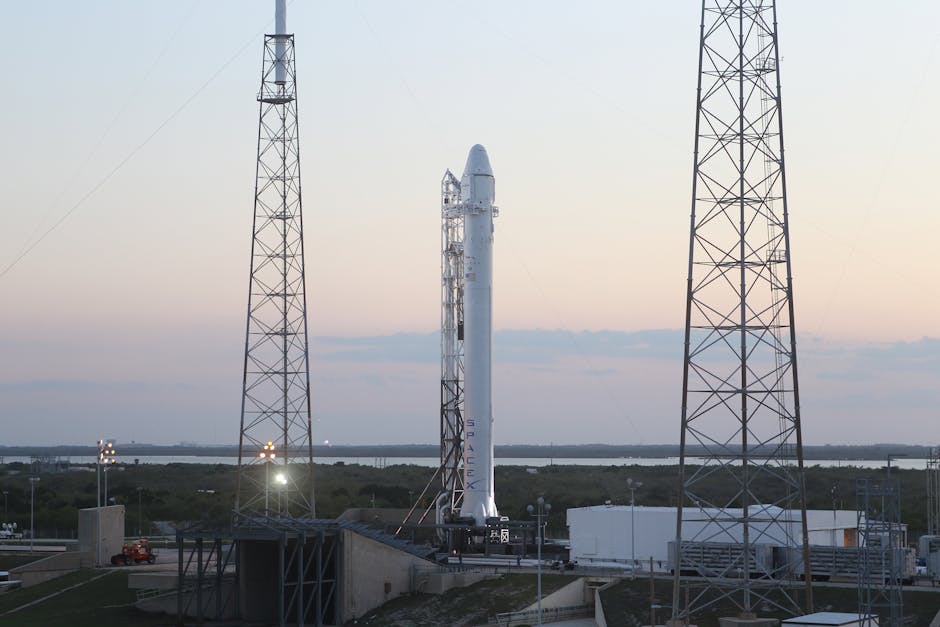
- NASA’s Artemis program successfully orbited the moon with the Artemis I mission, setting the stage for a crewed landing in 2025.
- China’s Chang’e program continues to advance, with plans for Chang’e 6 to return samples from the moon’s south pole, a region rich in resources.
- Both the US and China are competing to establish the first permanent human settlement on the moon, emphasizing the strategic and scientific importance of lunar bases.
- The renewed focus on lunar exploration by both nations highlights the technological and geopolitical significance of space for the 21st century.
- Lunar exploration aims to test new technologies and establish a sustainable presence on the moon, which could lead to significant advancements in space travel and resource utilization.
In a striking replay of the Cold War era’s space race, the United States and China are now vying for dominance on the lunar surface. On December 1, 2023, NASA successfully sent four astronauts around the moon, marking a significant milestone in its Artemis program. However, the real challenge lies ahead: achieving a crewed lunar landing and establishing a permanent presence on the moon. China, with its ambitious Chang’e program, is making rapid strides and may well be the first to plant its flag on the lunar soil.
The New Space Race Heats Up

The world watched in awe as NASA’s Artemis I mission orbited the moon, a testament to the resurgence of interest in lunar exploration. This mission, while unmanned, sets the stage for the eventual crewed landing planned for 2025. Meanwhile, China has been quietly but steadily advancing its space capabilities. The Chang’e program, named after the Chinese moon goddess, has already achieved several firsts, including the first soft landing on the far side of the moon with Chang’e 4 in 2019. The next phase, Chang’e 6, is scheduled to return samples from the moon’s south pole, a region of significant scientific and resource interest.
Competing Lunar Ambitions

Both the US and China have set their sights on building inhabited lunar bases, which would represent the first human settlement on another celestial body. These bases are not just about national pride; they are crucial for testing the technologies and systems needed for future missions to Mars. The US plans to establish the Artemis Base Camp near the moon’s south pole by the mid-2030s, while China aims to have its own base operational by 2030. The race is on, and the stakes are high. The moon’s south pole, in particular, is rich in water ice, a vital resource for sustaining long-term human presence and for producing rocket fuel.
Technological Advancements and Strategic Moves
The key to success in this new lunar race lies in technological innovation and strategic planning. NASA’s Artemis program leverages advanced propulsion systems, such as the Space Launch System (SLS), and cutting-edge rovers like the VIPER (Volatiles Investigating Polar Exploration Rover) to search for water ice. China, on the other hand, is investing heavily in its Long March rocket series and developing a new generation of lunar landers and rovers. The Chang’e 5 mission, which successfully returned lunar samples in 2020, demonstrated China’s capability to execute complex space operations. The upcoming Chang’e 6 and Chang’e 7 missions will further solidify China’s position as a leading space power.
Implications for Global Space Policy
The implications of this lunar race extend far beyond the scientific community. The establishment of inhabited bases on the moon could redefine international space law and set precedents for resource exploitation in space. The US, through the Artemis Accords, has sought to establish norms for peaceful and sustainable exploration, but these accords are not universally accepted. China, meanwhile, has emphasized the importance of international cooperation and has invited other countries to participate in its lunar missions. The outcome of this race could influence the geopolitical landscape and the future of space exploration.
Expert Perspectives
Dr. John Logsdon, a space policy expert at George Washington University, believes that the US has a technological edge but warns that China’s determination and rapid progress should not be underestimated. ‘China has a clear and well-funded plan, and they are executing it efficiently,’ he says. Dr. Joan Johnson-Freese, a professor at the US Naval War College, adds, ‘The US needs to be more strategic and collaborative to maintain its leadership in space.’
As the US and China continue to push the boundaries of space exploration, the question remains: who will be the first to establish a permanent human presence on the moon? The next few years will be critical, with both nations likely to unveil new technologies and strategies that could tip the balance. The world watches with bated breath, eager to see the next chapter in this epic space race.